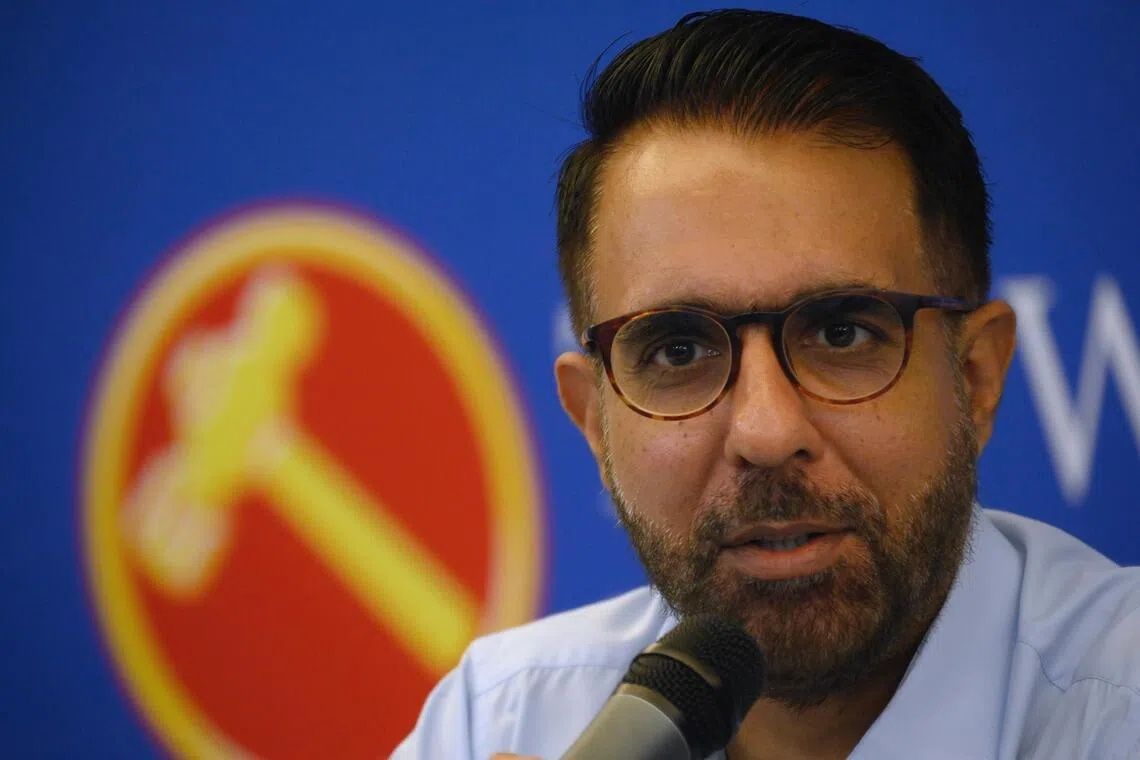
The future of Pritam Singh's leadership of Singapore's Workers' Party hangs in the balance as a restive faction within the opposition movement prepares to mount a formal challenge at internal elections on June 28. The planned contest represents an unprecedented breach in the party's leadership stability, marking the first time since Singh assumed the secretary-general post eight years ago that he will face organized opposition from within party ranks.
The push for leadership change stems directly from a December 2025 High Court ruling that upheld Singh's conviction for providing misleading testimony to a parliamentary committee. This legal setback has crystallised long-simmering frustrations among party cadres who argue that Singh's continued leadership undermines the Workers' Party's carefully cultivated brand as a force for principled opposition politics. For party members who view integrity as their primary competitive advantage against the ruling People's Action Party, the conviction of their leader represents a strategic liability that cannot be overlooked.
According to party insiders, approximately 25 cadres formally requested the special conference that will precede the regular elections, with these members including former central executive committee representatives and previous election candidates. This group has made explicit calls for Singh to step down voluntarily, while simultaneously preparing contingency plans for a secret ballot vote on his leadership should he choose to remain in position. The intensity of this organizing effort signals that the dissenters are not merely registering symbolic protest but are actively pursuing Singh's removal through established party procedures.
The search for a viable challenger has taken on urgency in recent weeks, with party insiders indicating that discussions have involved several senior Members of Parliament including Aljunied GRC's Gerald Giam, Hougang's Dennis Tan, and Sengkang GRC's He Ting Ru and Jamus Lim. Notably, the latter two served on the disciplinary panel that initially found Singh to have violated party constitution provisions in relation to his conviction. However, none of these potential candidates have publicly confirmed their willingness to contest the election, likely because party rules permit disciplinary action against members who openly criticize the leadership.
The timing of these internal tensions reflects broader grievances accumulating over several years. The immediate trigger centres on Singh's handling of former Sengkang GRC MP Raeesah Khan's parliamentary falsehood, which she fabricated in August 2021 but only admitted in November that year. The court found that Singh had guided Khan in perpetuating the untruth rather than immediately pressing her to clarify the record. For many cadres, this episode exemplified a failure in moral leadership that sits uneasily with the party's positioning as a voice for honest governance and anti-corruption principles.
Compounding this reputational damage is Singh's removal as Leader of the Opposition in January 2026 by Prime Minister Lawrence Wong. When invited to nominate a replacement from its parliamentary contingent, the Workers' Party declined, instead closing ranks behind Singh. This strategic choice to forgo elevated parliamentary prominence has generated private criticism among some cadres who question whether the party ultimately serves its own interests or the broader opposition cause by maintaining unwavering support for a discredited leader. The decision appears increasingly costly as critics argue it sacrifices institutional influence for symbolic loyalty.
The party's electoral performance in 2025 has further strained internal cohesion. While many cadres believed the party's slate was sufficiently strong to capture additional constituencies, the Workers' Party made no electoral gains and actually retreated from Marine Parade-Braddell Heights GRC on Nomination Day—a decision Singh made unilaterally. This combination of outcomes has disappointed members who anticipated forward momentum and has raised questions about strategic judgment within the leadership circle.
Formally, the June 28 proceedings will unfold in two distinct phases. The special conference will convene first, providing an opportunity for Singh to account for his actions leading to the conviction. Should he not resign at this juncture, cadres will conduct a secret ballot to determine his fate. Subsequently, the party will hold its regularly scheduled biennial cadres' conference to elect the full leadership slate, including the secretary-general position. This structure means that even if Singh is voted out in the first meeting, he retains the technical option to seek re-election in the second. Party insiders suggest that whatever emerges from the initial special conference may determine whether a challenger materializes for the leadership ballot itself.
The crucial wild card in this unfolding drama is Low Thia Khiang, the former Workers' Party chief who led the organization from 2001 to 2018 and engineered its breakthrough 2011 GRC victory in Aljunied. Though now formally retired from the leadership, Low remains a central executive committee member and retains considerable influence over the party's veteran cadre base. Rumours circulating within party circles suggest that Low voted against Singh during the CEC discussion of the disciplinary panel's findings, potentially signalling a shift in his political calculations. However, current and former cadres told media that they do not anticipate Low contesting for secretary-general himself.
What remains genuinely uncertain is whether Low will actively endorse and mobilize support behind an alternative candidate. Senior party insiders estimate that approximately 30 cadres are currently dissatisfied with Singh's leadership, with perhaps another dozen potentially persuadable. If Low's considerable prestige and network align with this dissident faction, observers suggest the arithmetic could prove sufficient to unseat the incumbent. The parallel to 2016 is instructive: at that year's party elections, Chen Show Mao, then Aljunied GRC MP, challenged Low but ultimately lost, supported by some of the same veteran cadres who now seek Singh's removal. This indicates that the current discontent taps into enduring organizational fault lines.
The ideological substance behind the challenge extends beyond personal grievance to fundamental questions about opposition politics in Singapore's constrained environment. Cadres pushing for leadership change argue that the Workers' Party derives its electoral appeal and political legitimacy precisely from its reputation for clean governance and principled conduct. A leader convicted of misleading Parliament, in their analysis, cannot credibly present himself as an alternative to a government also periodically accused of opacity and misrepresentation. This argument—that moral authority is the opposition's most irreplaceable asset—reflects a sophisticated understanding of why voters in authoritarian or semi-authoritarian contexts support challenger parties despite structural disadvantages.
The party's decision-making process remains genuinely fluid, with multiple cadres noting that alignments could shift significantly between now and June 28. The outcome will likely depend on whether a credible candidate steps forward, whether Low Thia Khiang breaks silence to endorse an alternative, and how party members interpret Singh's performance at the special conference. For Malaysian observers of regional opposition politics, the Singapore Workers' Party drama offers lessons about internal party discipline, the consequences of leadership missteps, and the precarious nature of political legitimacy built primarily on claims to moral superiority rather than institutional strength or programmatic achievement.

