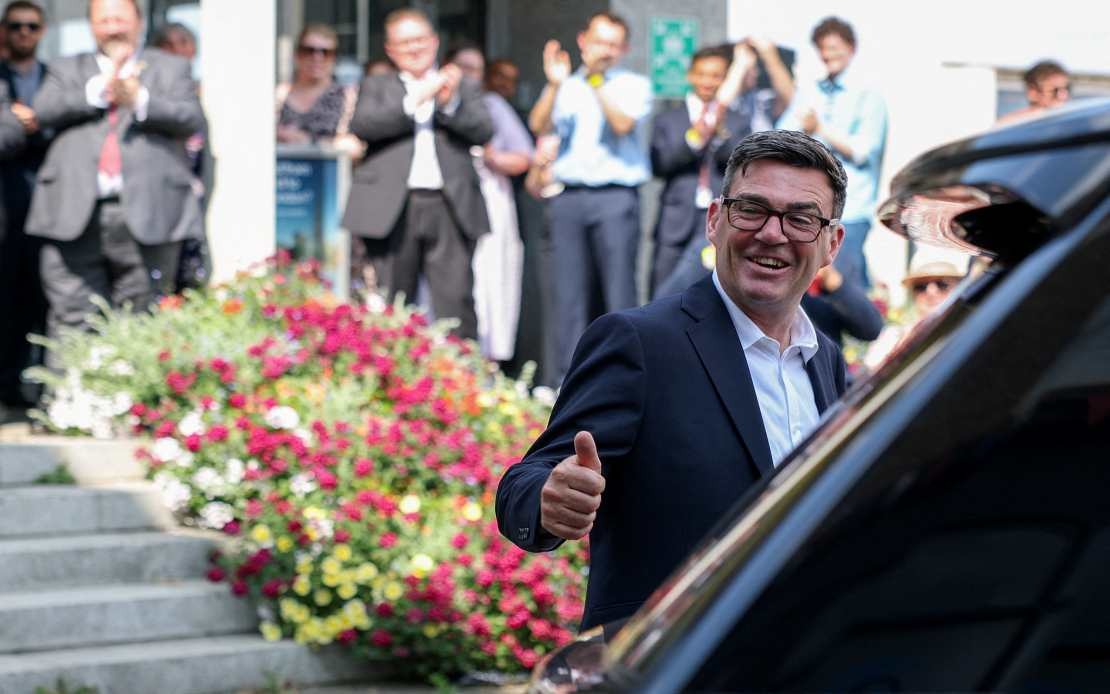
Singapore's Prime Minister Lawrence Wong has extended formal congratulations to Andy Burnham following his appointment as the United Kingdom's new prime minister, marking an important moment in bilateral relations as both nations navigate an increasingly complex geopolitical landscape. The greeting came via congratulatory letter on Monday, shortly after Burnham was officially invited by King Charles III to form a government, cementing Labour Party's return to power after the previous Conservative administration's tenure.
In his message, Wong articulated Singapore's confidence in Burnham's leadership during what he characterized as a period of "profound geopolitical and economic change." The framing reflects Singapore's broader concern with global volatility, from escalating tensions in the Indo-Pacific to economic uncertainties affecting trade-dependent nations. Wong's emphasis on the challenges ahead suggests Singapore views this transition in British leadership not merely as a domestic UK matter, but as part of a wider restructuring of international alignments that directly impacts Southeast Asian interests and stability.
The Singapore Prime Minister underscored the historical depth of ties between the city-state and Britain, anchoring his message in what he termed the "Strategic Partnership" connecting both nations. This characterization is significant: Singapore emerged as an independent state amid British decolonization in 1965, and Britain's historical military presence in the region—notably through its continued deployment in the Five Power Defence Arrangements—remains a foundational element of regional security architecture. Wong's invocation of decades of trust-building serves to remind Burnham that Singapore expects continuity in this relationship regardless of political transitions in London.
More immediately, Wong outlined specific sectors where Singapore and the UK might deepen cooperation. Innovation, science and technology, and defence were explicitly mentioned as priority areas. For Malaysian and broader Southeast Asian readers, this signals Singapore's strategy of positioning itself as a crucial partner for major powers seeking technological and strategic footholds in the region. The emphasis on defence cooperation is particularly noteworthy, as it underscores Britain's ongoing role as a counterbalance to rising powers in the Indo-Pacific, a dynamic that affects regional military procurement, naval operations, and strategic partnerships across ASEAN.
Wong also stressed Singapore's appreciation for Britain's engagement with ASEAN as a Dialogue Partner, a formal status that grants the UK voice in discussions on regional issues while stopping short of full membership. This diplomatic distinction matters because it allows Britain to participate in shaping Southeast Asian consensus without the responsibilities of regional membership. For Singapore, which chairs ASEAN this year, Britain's sustained involvement in regional forums is valuable insurance against the exclusion of Western perspectives from discussions increasingly dominated by Chinese and Indian interests.
The Five Power Defence Arrangements warrant particular attention for Malaysian observers. This Cold War-era grouping linking Britain, Singapore, Malaysia, Australia, and New Zealand has quietly remained one of Southeast Asia's most important security mechanisms, though it operates largely outside public scrutiny. Wong's emphasis on this arrangement suggests Singapore wishes to ensure Burnham's government maintains London's commitment to these trilateral and multilateral defence dialogues, which have grown more relevant as regional maritime tensions and great-power competition intensify.
Wong also highlighted a remarkable convergence of responsibilities: Singapore will hold the ASEAN Chairmanship during the same period when the UK holds the G20 Presidency in 2027. This temporal overlap creates opportunities for the two nations to coordinate on global governance issues, from climate change to digital regulation. For Malaysia and other ASEAN members, this coordination could either enhance the bloc's collective voice in global forums or risk fragmenting ASEAN positions if Singapore aligns too closely with Western G20 priorities at the expense of regional consensus.
The broader context of this exchange reveals something important about Singapore's strategic positioning in an era of competing power blocs. By quickly establishing working relationships with newly elevated leaders—whether in London, Washington, or elsewhere—Singapore maintains its traditional role as a hub connecting the Western and Asian spheres. This is particularly crucial for a small, trade-dependent nation whose prosperity depends on keeping global commerce flowing and great powers invested in regional stability.
Burnham's rise to the British premiership also carries implications for how London's Asia policy develops. Labour has historically emphasized multilateralism and climate action—areas where the UK's existing commitments to ASEAN cooperation, particularly through ASEAN Regional Forum participation, align well. Whether Burnham will prioritize Indo-Pacific engagement as intensely as his Conservative predecessor remains an open question, though Wong's message diplomatically assumes continuity while gently signalling Singapore's hope for deeper involvement.
The exchange also reflects the diplomatic formality that characterizes Singapore's foreign relations. Wong's carefully worded message—expressing confidence, emphasizing partnership, and proposing concrete cooperation—follows a template refined through decades of managing relationships with larger powers. For Malaysia and other ASEAN nations, Singapore's approach offers a template for maintaining relevance with shifting global powers without sacrificing strategic autonomy.
Looking ahead, the relationship between Singapore and Britain under Burnham will likely deepen in practical ways through increased trade negotiations, defence technology sharing, and collaborative research initiatives. However, the real test will come when interests diverge—whether on China policy, climate finance terms, or maritime security arrangements. Wong's congratulatory letter has set a positive tone, but the substance of the partnership will be determined by how both nations navigate the genuine tensions between Britain's Global Britain strategy and Singapore's need to maintain balanced relations across the Indo-Pacific.

