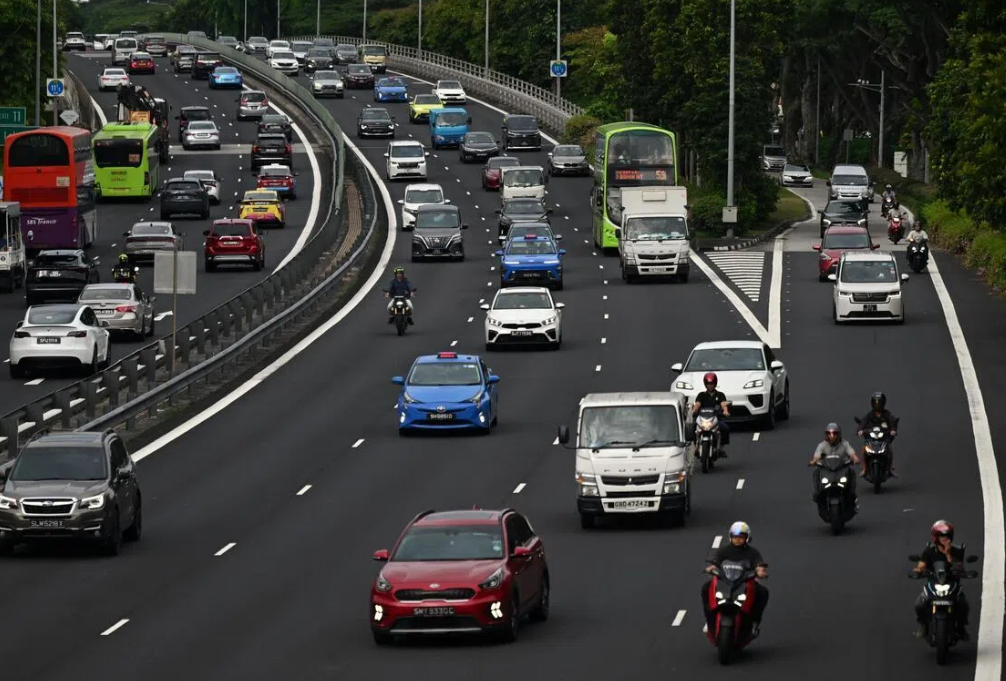
Singapore's largest ride-hailing operators have agreed to keep additional driver fees in place through the end of September, acknowledging the persistent squeeze on driver incomes from higher fuel and operational costs. ComfortDelGro, Grab, Gojek and Tada made the announcement through the National Private Hire Vehicles Association (NPHVA), which represents private-hire drivers across the city-state's point-to-point transportation sector. The decision reflects an ongoing dialogue between transport platforms and driver advocates about how best to sustain the gig economy workforce without pricing commuters completely out of the market.
The specifics of each platform's surcharge structure reveal a nuanced approach to managing the cost burden. ComfortDelGro, Singapore's dominant taxi operator, implemented its fee in March and will continue charging an additional $0.50 for fares below $15 and $0.80 for fares of $15 or more. These charges apply across all booking channels—its mobile application, cross-border journeys, premium limousine services and hourly rentals. The company is also retaining a $0.01 per-kilometre rate increase, meaning passengers in a Toyota Prius will pay $0.27 for every 400 metres travelled on trips under 10 kilometres. By contrast, the ride-hailing platforms Grab, Gojek and Tada introduced their own driver fees in April at $0.90 per trip, except for Tada which charges a higher $1.20 on journeys exceeding $18.
Crucially, these surcharges do not represent additional profit margins for the platforms themselves. The NPHVA explicitly stated that driver fees are transferred in full to drivers and bypass the normal commission structure that platforms typically deduct from fares. This distinction matters for transparency and for understanding the genuine economic pressure facing the driver workforce. The policy effectively creates a carve-out within the existing business model, ensuring that temporary cost relief actually reaches those struggling with fuel expenditure rather than being absorbed into corporate revenue.
The root cause of these fee extensions traces back to volatile global energy markets and geopolitical disruption. In late February, military operations involving the United States and Israel targeting Iran created uncertainty around the Strait of Hormuz, a critical chokepoint for global energy shipments. While the immediate closure never fully materialised, the incident triggered price instability that persisted through the subsequent months. Retail fuel prices in Singapore have remained significantly elevated compared to the baseline that preceded the geopolitical tension, demonstrating how international shocks ripple through Southeast Asian economies and ultimately affect everyday commuters.
The magnitude of the petrol price increase is substantial enough to materially impact driver economics. In March, when ComfortDelGro first introduced its surcharge, 95-octane petrol cost between $2.91 and $2.92 per litre across major stations. By late July, prices had climbed to $3.36 or $3.37 at the five largest petrol station networks—Caltex, Shell, Esso, SPC and Sinopec. This represents roughly a 15 per cent increase over four months. For professional drivers spending several hundred dollars monthly on fuel, such increases genuinely threaten profitability, particularly when ride volumes fluctuate seasonally or when competitive pricing pressure limits their ability to raise base fares.
The extended fee structure also reflects a pragmatic middle ground in a difficult policy environment. Completely removing surcharges now would likely force drivers to absorb losses that could prompt many to exit the profession or reduce hours, potentially degrading service quality and availability for commuters. Conversely, maintaining indefinite surcharges risks normalising price increases and undermining the platforms' competitive positioning, particularly as consumer sentiment toward gig economy companies remains mixed in Singapore. By setting a clear end date of September 30, all four platforms signal that this is a temporary accommodation rather than a permanent pricing adjustment, which may help manage customer expectations and retain goodwill.
The NPHVA's role in brokering this arrangement underscores the importance of structured labour representation in the gig economy. Affiliated with the National Trades Union Congress (NTUC), the association functions as a quasi-union for private-hire drivers who lack traditional employment relationships with platform operators. By collectively advocating for driver interests, the NPHVA achieves outcomes that individual drivers negotiating alone would struggle to secure. This model offers a template for how Southeast Asian countries grappling with gig economy regulation might balance platform flexibility with worker protections.
For Malaysian readers, the Singapore experience carries several implications. Malaysia's own ride-hailing market, dominated by Grab with presence from other operators, faces similar cost pressures from global fuel price movements. The approach taken by Singapore's platforms—transparent temporary surcharges coupled with clear expiration dates—provides a practical precedent for how Malaysian platforms might address driver cost concerns without permanently reshaping the cost structure. Additionally, as Malaysia's inflation and fuel costs fluctuate, the question of how to sustain driver incomes while keeping rides affordable will become increasingly urgent.
The decision also highlights how effectively organised driver advocacy can influence corporate behaviour. While private-hire drivers lack the formal employment status that would grant them collective bargaining rights in many jurisdictions, the NPHVA's structured engagement with platform operators demonstrates that organised representation still carries weight. The association's commitment to regular ongoing consultation suggests that further fee adjustments or extensions may be negotiated as global energy markets evolve.
Looking ahead, the September 30 deadline creates a natural inflection point. If fuel prices moderate during the intervening weeks, the platforms may feel comfortable removing surcharges as planned. However, if prices remain elevated or climb further, another extension becomes likely, further normalising the additional charges. The outcome will partly depend on factors entirely beyond Singapore's control—Middle Eastern geopolitics, global supply and demand dynamics, and currency movements all influence retail fuel costs in the city-state. This underscores how vulnerable Singapore's service economy remains to international energy shocks, despite its sophisticated financial sector and diversified economy.

