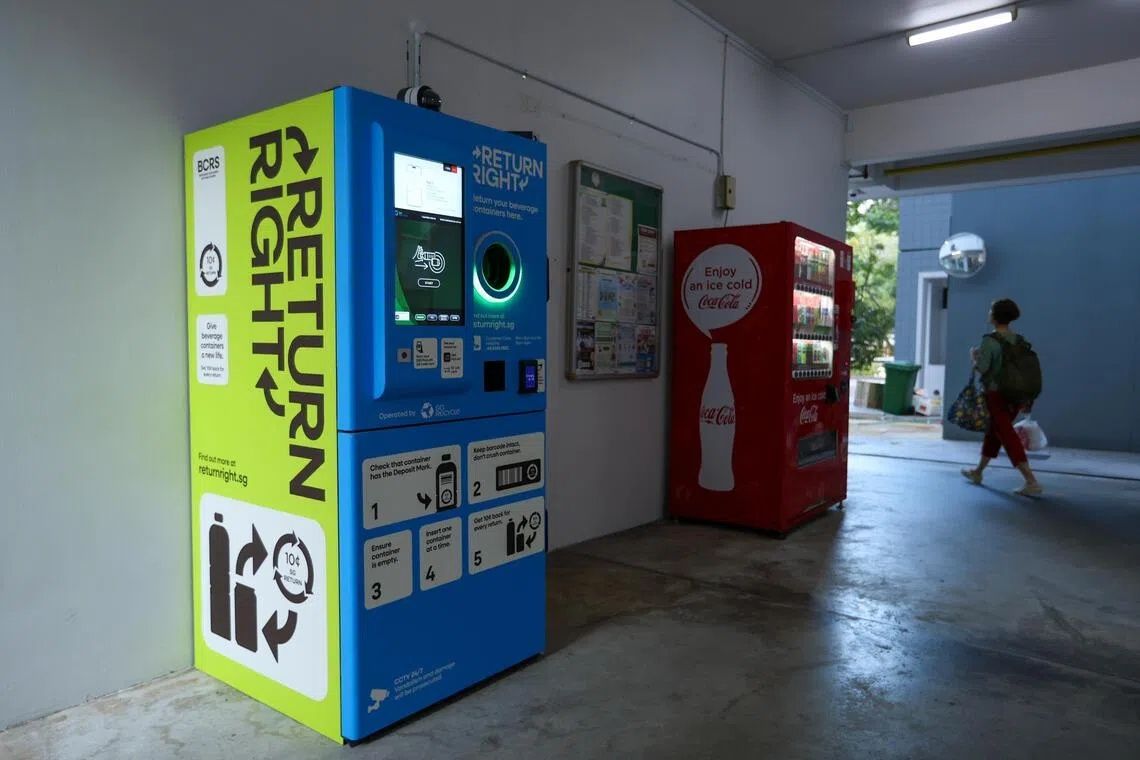
Singapore's National Environment Agency has dismissed accusations of financial impropriety surrounding its Beverage Container Return Scheme, stating that online criticism stems from a fundamental misunderstanding of how the recycling programme operates. The agency's rebuttal, posted on social media in mid-August, came in response to public discussions questioning the relationship between the number of beverage containers returned and the deposit amounts paid back to consumers under the deposit-return initiative.
The controversy arose after Singapore's Senior Minister of State for Sustainability and the Environment Janil Puthucheary informed Parliament that between April and July, the scheme had processed more than one million successful refunds across 5.5 million used bottles and cans deposited at reverse vending machines. Some online commenters interpreted this data to suggest that deposits were refunded for only a fraction of the containers actually returned, raising concerns about whether the remaining deposits had been properly accounted for or retained inappropriately.
The National Environment Agency moved quickly to clarify the apparent discrepancy, explaining that the mathematics underlying the refund figures were straightforward once the scheme's transaction structure was understood. The agency emphasised that consumers do not receive a separate refund notification for each individual container returned. Instead, when customers use the reverse vending machines, they can deposit multiple containers in a single transaction and receive a combined refund for all items processed together in that session.
This operational detail proves crucial to understanding the numbers. Across the approximately one million separate transactions, consumers deposited an average of 5.5 containers per visit. The National Environment Agency calculated that with each container carrying a standardised 10-cent deposit, the total amount refunded to consumers amounted to around S$550,000 in the four-month pilot period from April through July. The agency stated categorically that any allegations of misappropriation or corruption were therefore fundamentally without merit.
The Beverage Container Return Scheme itself operates on a straightforward incentive structure designed to encourage recycling among Singapore consumers. When purchasing canned or bottled beverages, customers pay an additional 10 cents per container as a deposit, which they recover in full upon returning the empty container to any of the reverse vending machines located around the island. The scheme launched on April 1 with the intention of reducing beverage container waste while creating a financial incentive for participation.
The initial rollout experienced some operational challenges that provided context for the subsequent public confusion. Consumers reported difficulties obtaining refunds due to machine malfunctions, with some individuals having to contact the scheme operator directly via email to resolve their deposit claims. Additionally, some customers encountered situations where the reverse vending machines rejected their containers, preventing immediate refund processing and generating frustration about whether deposits were being properly tracked and returned.
When questioned in Parliament about these implementation issues, Janil acknowledged that while the vast majority of transactions proceeded smoothly, isolated technical problems did occur at certain machines. He indicated that the scheme operator, BCRS, had worked collaboratively with equipment providers to respond promptly to resolve identified issues and minimise further customer dissatisfaction. This official acknowledgement of technical difficulties, though framed as limited in scope, provided the backdrop against which some observers began scrutinising the financial figures more closely.
The scheme's governance structure includes built-in transparency measures intended to prevent financial mismanagement. BCRS is required to submit comprehensive annual reports to the National Environment Agency documenting both operational metrics and financial accounts. These reporting requirements theoretically create an oversight mechanism through which irregularities or discrepancies could be detected and investigated. The mandatory disclosure framework reflects an understanding that public confidence in such programmes depends partly on documented accountability.
For Malaysian observers and readers in Southeast Asia, the Singapore episode illustrates both the growing importance of deposit-return schemes across the region and the communication challenges that can emerge when the public lacks clear understanding of how such programmes function operationally. Similar initiatives have been discussed or implemented in various forms throughout Southeast Asia as governments respond to mounting plastic waste. The Singaporean experience demonstrates how straightforward operational details, when inadequately explained to the public, can generate unfounded suspicions that require official clarification and potentially damage public confidence in environmental initiatives.
The incident also underscores how technical implementation issues, even when resolved relatively quickly, can leave lasting impressions that fuel broader questions about programme integrity. The early machine failures and processing delays experienced by BCRS customers appear to have seeded doubts that persisted even after most problems were rectified. This dynamic has implications for how Southeast Asian governments might design public communications around new environmental schemes, particularly those involving financial transactions or digital systems that some consumers may find unfamiliar.
The National Environment Agency's response represents a standard approach to addressing public misconceptions: releasing clarifying data and explaining the underlying operational logic. Whether such explanations fully reassure sceptics remains an open question, particularly in an era when social media discussions can rapidly circulate alternative interpretations before official responses gain traction. The episode may prompt the agency to consider enhanced public education about how the scheme functions, potentially including visual demonstrations or clearer communications during the initial pilot phase of similar future initiatives.

