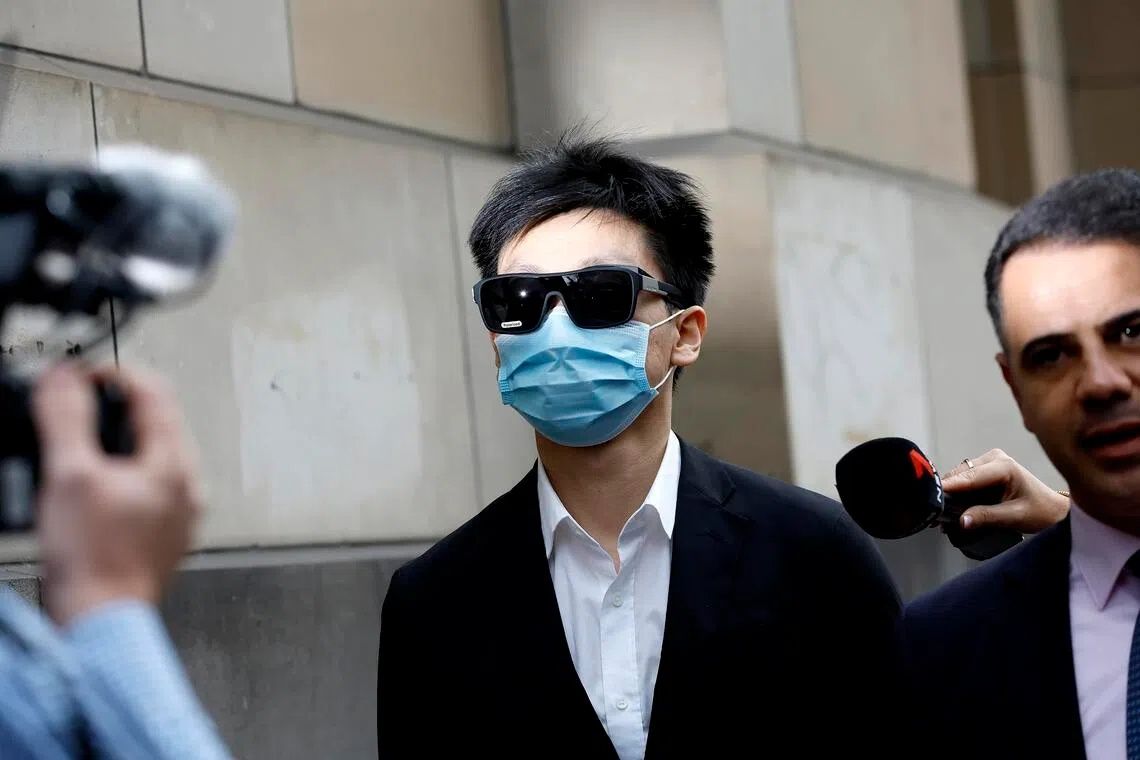
A 28-year-old trainee doctor from Singapore entered guilty pleas on Thursday at the Melbourne Magistrates Court to a series of charges stemming from an extensive and coordinated campaign to secretly film hundreds of his colleagues in private settings at three major hospitals in the Australian city. Ryan Cho acknowledged culpability across 13 consolidated counts, including stalking, installation of hidden recording devices to capture intimate images, and production of non-consensual intimate material. The case represents one of Australia's most serious workplace violations and has already prompted investigations into hospital security protocols and employment safeguarding practices across the nation's medical sector.
Chо's arrest in July 2025 followed the discovery of a concealed mobile phone hidden in a mesh bag placed strategically in a staff toilet at the Austin Hospital. Hospital staff alerted authorities, and subsequent police searches of his residence uncovered an extraordinary cache of digital material documenting his offences. Detectives recovered more than 10,000 video and photograph files across multiple electronic devices, including a laptop, hard drive, and mobile phone. The sheer scale of the collection underscores the systematic and deliberate nature of the violations, with victims numbering more than 500 individuals who had no awareness they were being recorded. Victorian police ultimately laid 910 charges, though prosecutors and the defence agreed to consolidate these into the 13 counts to which Cho entered his pleas.
The incidents occurred across the three hospitals where Cho worked between 2021 and 2025 following his medical studies at Monash University. During this period, he was employed at the Austin Hospital, Royal Melbourne Hospital, and the Peter MacCallum Cancer Centre, providing him with legitimate access to staff facilities while he exploited those privileges to conduct his voyeuristic activities. Beyond the hospital settings, Cho also filmed individuals who shared residential accommodation with him during the same timeframe, indicating that his behaviour extended beyond workplace environments. His actions went undetected for approximately four years until the discovery at Austin Hospital exposed the systematic violations. The medical registration authority in Australia subsequently suspended his medical credentials in 2025, effectively ending his professional career in the country.
Magistrate Michelle Mykytowycz presided over a hearing that lasted just under 30 minutes, during which Cho was asked to formally acknowledge each charge. Standing in the courtroom, he stated "Guilty" to all 13 counts. The magistrate noted the court's satisfaction that sufficient evidentiary weight existed that would permit a jury to convict on these charges, establishing the viability of the prosecution's case. Several victims attended the hearing in person, while others watched proceedings remotely via video link, a provision that allowed those affected to witness the defendant's acknowledgment of guilt without requiring physical attendance. The brevity of the hearing reflected the straightforward nature of the guilty pleas, though it belied the profound impact on the large number of individuals whose privacy had been violated.
Chо's legal representation by barrister Julian McMahon has characterised the defendant as a "complicated young professional man" struggling with what legal counsel described as "complex psychological issues" requiring appropriate medical intervention. This framing introduces the mental health dimension that often emerges in cases of sexual misconduct, though such characterisations do little to mitigate the systematic nature of Cho's conduct or diminish the trauma experienced by his victims. McMahon noted that Cho maintains no prior criminal record, a fact that has not influenced the severity of charges or the approach to bail conditions. The defence strategy appears to be positioning the case as arising from psychological disturbance rather than simple criminality, potentially influencing the sentencing determination expected in November.
Chо's bail conditions remain exceptionally restrictive, reflecting both the seriousness of the offences and the risk assessment conducted by the court. He must report to police three times weekly, maintain no contact whatsoever with any witness or potential witness, and refrain from attending hospitals except in genuine emergencies with prior police approval. Significantly, he has been denied access to photographic or video recording devices outside his home environment, a direct measure designed to prevent any repetition of his filming activities. He has surrendered his passport to authorities and is required to undergo appropriate medical treatment as part of his bail conditions. A surety of A$50,000 (S$44,850) was lodged by his parents, who have committed to residing in Melbourne throughout the legal proceedings to ensure their son's compliance with bail requirements.
Chо has resided in Australia since 2017 and was granted permanent residency status in April 2025, just months before his arrest. His father, Wilson Cho, a Singapore-based logistics manager, has attended court proceedings and previously stated his shock at the allegations, claiming to have had no awareness of his son's behaviour. The fact that Cho had achieved permanent residency status and was progressing through medical training suggests he had successfully navigated immigration and professional screening processes, highlighting potential gaps in vetting mechanisms or the difficulty of detecting psychological pathology before it manifests in criminal conduct. The case raises uncomfortable questions about institutional oversight in both immigration and medical education systems.
The legal ramifications extend well beyond Cho's criminal proceedings. Approximately 100 victims, predominantly female, have lodged formal complaints with the Australian Human Rights Commission against all three hospitals, alleging sexual harassment and discrimination in the workplace. These complaints argue that the hospitals failed to maintain adequate security measures and safeguarding protocols that could have detected and prevented the filming activities. Tony Carbone, managing partner at Carbone Lawyers, has indicated that his firm is handling litigation on behalf of victims and expects additional hospital employees to join the claims being pursued before the human rights commission. This civil litigation track represents a separate avenue through which victims can seek recognition of systemic failures and obtain compensation for their suffering.
The sentencing hearing, scheduled to commence on November 23 and continuing for three days, will occur in the County Court and represent a critical juncture in determining the consequences of Cho's conduct. The court will hear comprehensive impact statements from victims, allowing those affected to articulate the psychological, professional, and personal harm caused by the filming and subsequent discovery of the violations. The severity of the sentence will likely reflect the number of victims, the duration of the offending, the breach of professional trust inherent in Cho's position as a medical professional, and the aggravating feature that the conduct occurred in sensitive institutional settings where privacy expectations are particularly heightened.
For Malaysian medical professionals and healthcare workers, this case carries considerable significance. Australia represents a primary destination for Malaysian doctors seeking international training and career advancement, and the case highlights the importance of robust workplace safeguarding measures and the need for medical regulatory bodies to implement comprehensive vetting and monitoring protocols. The violation of collegial trust and institutional safety at Australian hospitals of the calibre of the Royal Melbourne Hospital and Peter MacCallum Cancer Centre demonstrates that serious breaches can occur even in well-established medical institutions. Malaysian healthcare organisations and medical schools should examine their own protocols for staff conduct, facility security, and psychological screening to identify and address potential risks before they materialise into serious criminal conduct.
The case also underscores the evolution of technology-enabled crimes, where miniaturised recording devices allow perpetrators to conduct widespread violations with minimal detection risk until discovery occurs. The 10,000 files recovered from Cho's devices represent an archival testament to sustained predatory behaviour, and the involvement of more than 500 victims demonstrates how a single bad actor within an institution can cause harm on a massive scale. For regulatory authorities across the region, the case emphasises the critical importance of integrating cybercrime awareness and facility security audits into institutional risk management frameworks. The Australian outcome will likely influence how medical institutions throughout Southeast Asia approach workplace surveillance risks and victim support protocols following the discovery of such violations.

