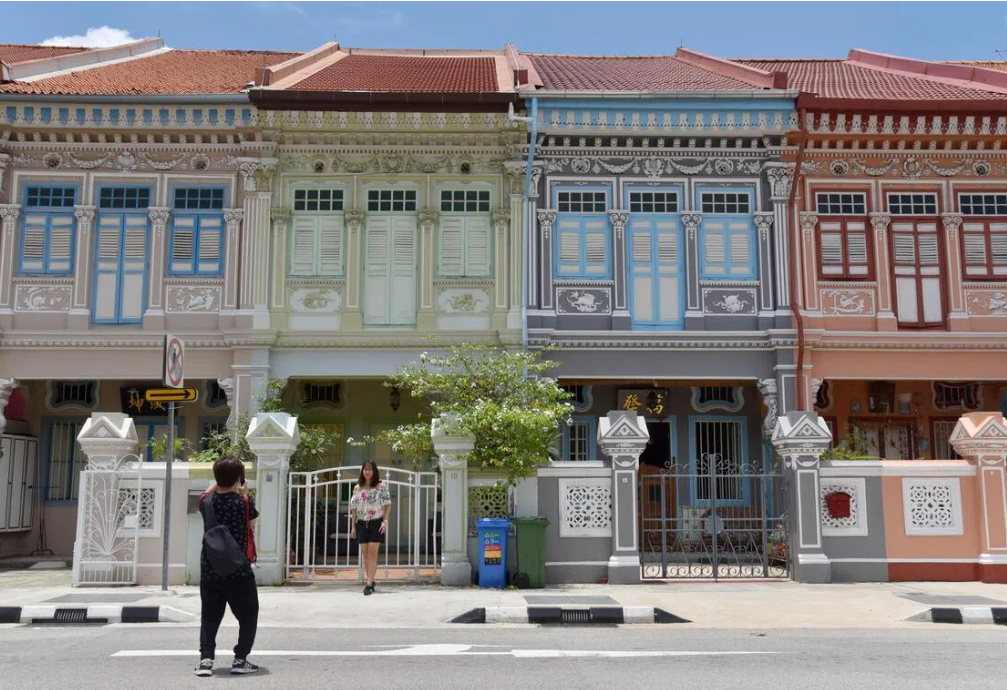
Singapore's tourism authorities are deploying targeted incentives through ride-hailing platform Grab to attract international visitors during the final quarter of the year, a period that encompasses major events and seasonal tourism peaks. The Singapore Tourism Board and Grab unveiled a campaign on August 11 offering travellers who sign up for the Grab Travel Pass two distinct sets of ride vouchers designed to encourage exploration of distinct neighbourhoods and evening entertainment zones across the island-city.
The promotional structure reflects a sophisticated approach to visitor behaviour. The first voucher provides a 20 per cent discount applicable to journeys connecting travellers to four specifically targeted precincts—Katong-Joo Chiat, Tiong Baru, Mandai and Sentosa—with the benefit capped at two uses per customer. These destinations represent a curated selection emphasising heritage, nature, and leisure experiences that anchor Singapore's identity as a diverse destination beyond its central business and shopping districts.
The second incentive targets a different temporal and experiential market segment: visitors exploring Singapore's nightlife ecosystem. Between 7pm and 4am, customers receive a one-time 20 per cent discount on any Grab ride to four established entertainment precincts—Holland Village, Clarke Quay, Boat Quay and Robertson Quay. This after-dark focus recognises the growing demographic of younger tourists seeking evening and nocturnal experiences, a shift in travel motivations that Singapore has deliberately cultivated in recent years.
Accessing these vouchers requires visitors to enrol in the Singapore Grab Travel Pass upon arrival, a bundled offering encompassing discounts across transport, food, and travel activities. The three-month campaign window, running from August through October, strategically aligns with two major events that traditionally spike tourist arrivals. The Singapore Grand Prix, scheduled for October 2 to 11, has become a marquee international sporting event drawing dedicated fans and premium visitors. Concurrently, the Singapore River Festival, held September 11 to 20, caters to cultural and festival-oriented travellers seeking authentic local experiences.
Grab Singapore's managing director Alejandro Osorio framed the initiative as facilitating neighbourhood-by-neighbourhood discovery, positioning the vouchers as tools enabling visitors to move beyond standard tourist circuits. His commentary emphasised the experiential diversity available across Singapore's geography, from heritage and culinary exploration in established enclaves to nature pursuits and contemporary entertainment venues. This messaging aligns with broader positioning of Singapore as a sophisticated destination offering layered experiences rather than singular attractions.
The Singapore Tourism Board's executive director for South-East Asia, Terrence Voon, highlighted the campaign's cross-regional distribution strategy. By leveraging Grab's established presence and consumer penetration across South-East Asian markets, the partnership extends promotional reach into nine territories including China, Indonesia, Thailand and Vietnam. Targeted digital advertising will precede tourist arrivals, allowing prospective visitors to plan itineraries and familiarise themselves with precinct-specific incentives before departure.
This initiative builds upon the Tourism Board's February launch of the "We don't wait for fun" campaign, which specifically targets younger affluent demographics aged 25 to 39. That broader campaign has already been rolled across the nine key markets and highlights emerging neighbourhoods such as New Bahru and Joo Chiat that lack the mainstream recognition of traditional tourist zones. The Grab voucher programme essentially deepens implementation of this strategic repositioning by reducing economic friction for visitors attempting to access these curated discovery destinations.
Singapore's tourism sector has demonstrated robust growth trajectory. In 2025, tourism receipts reached an unprecedented $32.8 billion, while international visitor arrivals climbed to 16.9 million, representing growth from 16.5 million in 2024. These figures establish momentum upon which current campaigns build. The Tourism Board projects that by 2026, annual international arrivals will reach between 17 million and 18 million, with corresponding tourism spending of $31 billion to $32.5 billion. Achieving these targets requires sustained visitor acquisition across multiple source markets and deliberate diversification of in-destination spending patterns.
Government commitment to tourism sector expansion was signalled in May when Singapore's Minister-in-charge of Trade Relations Grace Fu, who also holds the Sustainability and Environment portfolio, announced a $740 million injection into tourism projects over the subsequent five years. This substantial investment signal reflects recognition that tourism's economic contribution extends beyond hospitality sectors, supporting retail, food and beverage, entertainment, and cultural institutions. The Grab campaign represents early deployment of this expanded tourism development framework.
For Malaysian and broader South-East Asian readers, this campaign illuminates Singapore's intensifying competition for regional leisure and business tourism. As destinations across the region upgrade tourism infrastructure and experiences, Singapore's approach of coupling incentive-based trial with digital marketing and themed events demonstrates how established tourism leaders maintain competitive positioning. The emphasis on neighbourhood exploration and experiential diversity also reflects evolving traveller preferences that prioritise authenticity and local engagement over conventional attractions, a trend reshaping tourism development priorities across South-East Asia.

