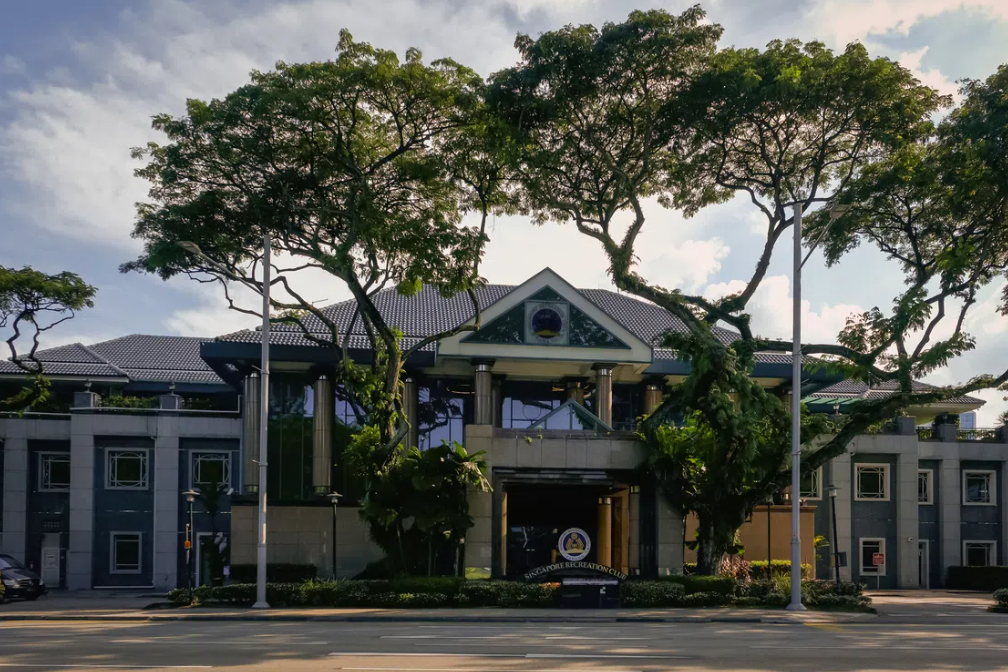
The governance row roiling Singapore Recreation Club took a significant procedural turn on August 26 when a High Court judge determined that a lawsuit challenging the conversion of the club's venerable billiards room deserves a full trial. Senior Judge Chan Seng Onn's written decision to overturn an earlier ruling that would have dismissed the case entirely opens the door to a substantive hearing on whether the club's management committee properly executed the controversial vote.
The dispute centres on a contentious decision made in October 2025 to transform the historic billiards facilities into a modern co-working space. Two members of the billiards section, Sean Kerwin Mathews and Mu Yee Shyong, launched legal action in November seeking to invalidate the resolution passed at an extraordinary general meeting. They argue that the club's governing Constitution requires such major decisions to be backed by an outright majority of members who physically attended the meeting—at least 280 of the 559 present—rather than simply a majority of votes cast.
This technical constitutional argument hinges on whether 151 votes in favour actually constitutes sufficient endorsement. The defendants maintained that the resolution passed with 54.7 per cent of valid votes cast, but Mathews and Mu contend this calculation improperly excludes blank votes that ought to be counted as opposition. Had their interpretation prevailed, the 180 combined votes against would have clearly defeated the measure. The judge found these arguments sufficiently complex to warrant full examination at trial rather than summary dismissal.
The underlying project had already navigated considerable complexity. The club, which boasts approximately 7,000 members and sits as a venerable institution in Singapore's social landscape, initially approved a $16.6 million transformation plan in March 2024. That scheme encompassed relocating the billiards room from level 2 to basement 2 whilst constructing the modern workspace on the vacated upper level. The initial budget incorporated $1.5 million as a contingency for potential land betterment charges—a form of tax on increased land value arising from development.
When those charges eventually ballooned to $4.9 million, substantially exceeding the budgeted reserve, the management committee faced an uncomfortable decision: either absorb the unexpected cost or abandon the relocation entirely. Rather than proceed unilaterally, the MC called an extraordinary general meeting to present the changed circumstances to the broader membership. This decision to seek renewed approval reflects a principled commitment to democratic process, though it created the conditions for the current dispute.
The voting mechanism itself became a flash point. Members received two separate voting slips designed to permit only one of three alternative paths forward. The first slip allowed them to endorse the relocation and authorise the higher charges, with explicit instructions that the second slip would be invalid if they ticked "yes". The second slip then presented a choice between two mutually exclusive options: either convert the billiards room to co-working space alone, or integrate it within a larger co-working facility. This structure prevented members from voting against all three propositions—a constraint that Judge Chan identified as potentially problematic.
When results were tallied from 514 total votes cast, the mathematics revealed the ambiguity at the heart of the dispute. Of these, 151 voted for the conversion resolution, 125 opposed it, whilst 183 ballots were marked in ways the committee deemed invalid and 55 were left entirely blank. The management committee treated only the 151 affirmative votes as relevant, calculating 54.7 per cent approval and declaring the resolution passed. However, Mathews and Mu argued that blank votes, like spoilt ones, represented silent rejection in a context where members had been denied a clear option to oppose all options.
Judge Chan's reasoning offered a sophisticated analysis of voting rights and fairness. While generally blank and spoilt votes do not count either for or against a resolution, he found this case presented unusual circumstances. The constraining voting structure meant members could not simultaneously reject both alternative paths and thereby preserve the status quo. "With such constraints on voting and with no option for members to reject [both resolutions], the MC arguably ran afoul of the club members' voting entitlement," Chan observed, finding sufficient grounds for trial to examine whether the constitutional rule requiring physical attendance by a majority truly governed this decision.
The management committee argued that invalidating the resolution would serve no useful purpose and would leave the club paralysed between conflicting member preferences. Chan rejected this pragmatic objection, noting that a fresh vote conducted according to clearer procedures could resolve the matter. The judge expressed scepticism that complex constitutional questions should be eliminated merely because they create temporary inconvenience. "The present proceedings could not be characterised as serving no useful purpose when what the claimants were seeking was simply a fair vote on the matter," he wrote, encapsulating a fundamental principle about institutional legitimacy.
For Malaysian observers, this dispute illuminates broader governance questions affecting regional clubs and member-based organisations. Similar institutions across Southeast Asia operate under constitutions drafted in earlier eras, sometimes creating friction between inherited governance frameworks and contemporary decision-making practices. The case highlights how procedural legitimacy matters alongside substantive outcomes, particularly when major capital expenditures and physical transformations affect the character of institutions members value.
The trial will ultimately determine whether the Constitution's requirement for majority approval of physically present members truly applied to this transformed circumstances voting scenario. The decision also raises questions about how membership organisations can present complex choices to large bodies whilst preserving meaningful voting options. As Asian cities increasingly grapple with updating recreational facilities and mixed-use development, this Singapore case may establish important precedents for how member consent should be sought and validated.
Beyond the immediate legality question, the dispute reflects broader tensions between preservation and modernisation affecting heritage institutions. The billiards room represented something historically valued by club members, whilst co-working space represented adaptation to changing member needs and potential revenue generation. These competing visions of institutional purpose sometimes prove harder to reconcile through voting mechanisms alone, particularly when governance rules contain ambiguities about the threshold required for major changes.
The full trial will examine not merely the voting tallies but the entire constitutional framework governing extraordinary decisions. Depending on how the court interprets the Constitution's provisions, the judgment could reshape how Singapore Recreation Club and similar institutions structure member consultations on consequential matters. The case also underscores the importance of clarity in constitutional drafting, particularly regarding what constitutes valid votes in scenarios where members have constrained choices or face unprecedented circumstances.

