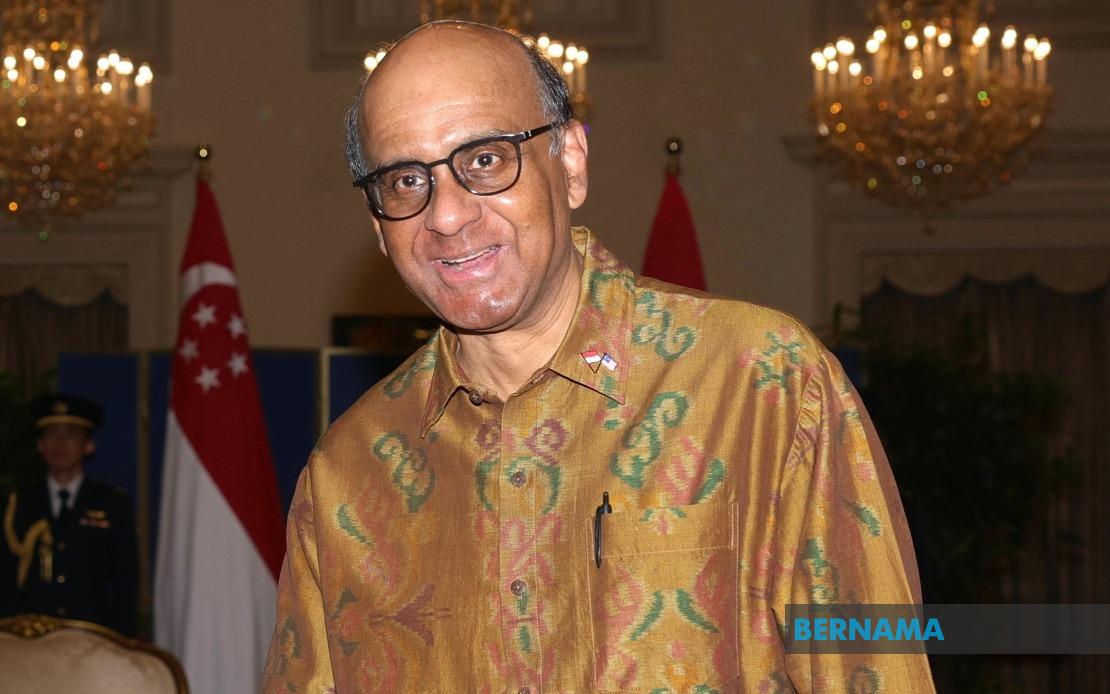
Singapore President Tharman Shanmugaratnam will arrive in Malaysia for a three-day state visit beginning July 13, marking his inaugural official journey to the country since taking office as Singapore's ninth president in September 2023. The visit, extending through July 15, has been arranged at the personal invitation of His Majesty Sultan Ibrahim, King of Malaysia, and represents a continuation of the two nations' high-level diplomatic engagement.
This visit directly reciprocates the state visit undertaken by His Majesty to Singapore on May 6 and 7, 2024, demonstrating the balanced nature of bilateral relations between the two neighbouring nations. Malaysia's Foreign Ministry characterised the presidential visit as evidence of the "strong and enduring partnership" binding the countries, particularly through expanding cooperation in domains of shared strategic importance. The exchange of high-level visits at this calibre underscores the significance both governments place on maintaining robust diplomatic channels and reinforcing mutual commitment to regional stability.
President Tharman will bring an official delegation that includes his spouse, Jane Ittogi Shanmugaratnam, alongside several ministerial colleagues and senior government officials. This composition reflects Singapore's intention to underscore the multifaceted nature of the bilateral relationship, encompassing political, economic, and social dimensions. The accompanying delegation signals that discussions during the visit will likely extend beyond ceremonial interactions to substantive dialogue on pressing regional concerns.
During his stay, the President will participate in formal protocol events befitting a state visit of this magnitude. He will receive a State Welcoming Ceremony upon arrival, followed by an official audience with His Majesty at Istana Negara, the royal palace that serves as the seat of the Malaysian monarchy. These ceremonies will be complemented by a State Banquet, where both delegations can engage in informal discussions while celebrating the bilateral relationship. Prime Minister Datuk Seri Anwar Ibrahim has also scheduled a courtesy call with the President, providing an opportunity to address contemporary bilateral and regional matters directly.
The economic relationship between Malaysia and Singapore remains exceptionally robust, constituting one of Southeast Asia's most substantial bilateral trading partnerships. Singapore operates as Malaysia's second-largest trading partner globally, whilst simultaneously serving as Malaysia's premier trading partner within the ASEAN grouping. This economic centrality reflects the deep integration of their supply chains, financial systems, and commercial networks accumulated over decades of cooperation.
Bilateral trade volumes underscore this economic interdependence. Total trade between the two nations reached RM402.35 billion, equivalent to approximately US$93.97 billion, during 2025, representing growth of 1.5 per cent compared with the preceding year. More recent data from the initial five months of 2026 demonstrates accelerated expansion in bilateral commerce, with trade growing 14.5 per cent to RM189.90 billion (US$47.87 billion) compared with RM165.93 billion (US$37.65 billion) during the identical period in 2025. This trajectory suggests sustained momentum in economic ties despite the challenging global trading environment.
The strengthening trade performance reflects robust demand across multiple sectors and demonstrates that despite occasional bilateral tensions over specific issues, the underlying economic complementarities between the two economies remain powerful drivers of exchange. Malaysian exporters have benefited from Singapore's role as a regional entrepôt and financial hub, whilst Singapore's service sector and manufacturing interests find significant market opportunities within Malaysia's larger domestic economy.
This visit arrives at a juncture when both nations are navigating complex regional dynamics, including evolving great power competition, supply chain reorganisation, and climate transition imperatives. By renewing high-level engagement through this state visit, Malaysia and Singapore reaffirm their commitment to maintaining bilateral relations as a stabilising force within the broader Southeast Asian context. For Malaysian policymakers, the visit provides an opportunity to align positions on regional security matters and coordinate responses to transnational challenges.
The visit also carries symbolic weight for Singapore's presidency itself. As Tharman undertakes his first state visit abroad since assuming office, Malaysia's prominence in this inaugural diplomatic journey reflects both nations' priority placed on their bilateral relationship. The choice to reciprocate Sultan Ibrahim's visit promptly demonstrates mutual respect and acknowledgement of the relationship's importance to both governments' foreign policy orientations.
For Malaysian observers, this state visit reinforces the enduring centrality of Singapore within Malaysia's regional strategic calculus. Despite historical tensions and contemporary disagreements on specific issues, the two nations continue to invest in high-level diplomatic engagement and economic integration. The sustained strength of bilateral trade and the maintenance of regular state visits suggest that both governments recognise their interconnected interests and the value of preserving functional, if occasionally complex, relations. As ASEAN continues to grapple with external pressures and internal divergences, the Malaysia-Singapore partnership remains a crucial pillar of regional stability.

