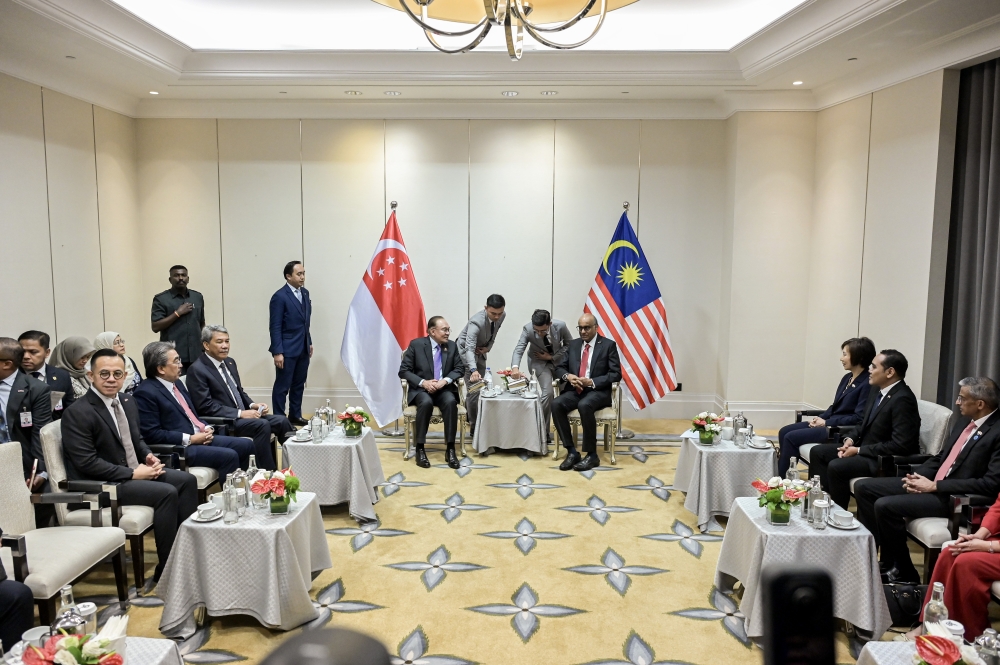
Singapore President Halimah Yacob engaged in a focused 40-minute discussion with Prime Minister Datuk Seri Anwar Ibrahim at his official residence in Kuala Lumpur on Monday, signalling the importance both nations place on maintaining strong diplomatic channels at the highest levels. The meeting between the two leaders moved beyond ceremonial pleasantries typical of state visits, with conversations centring on concrete areas of cooperation and the trajectory of bilateral relations between the two neighbouring economies.
The visit by President Halimah represents a significant diplomatic moment for Malaysia, coming at a time when both countries face evolving regional dynamics and shared challenges spanning security, trade, and transnational issues. Her presence in the capital underscores Singapore's continued commitment to its closest neighbour, even as both nations navigate shifting geopolitical circumstances in Southeast Asia. The timing of such high-level engagement often reflects efforts to reset or reinvigorate cooperation frameworks that may have encountered friction or require renewal.
Bilateral relations between Malaysia and Singapore have historically been complex, marked by both deep economic interdependence and periodic tensions over maritime boundaries, water supply agreements, and transportation infrastructure. These longstanding issues require ongoing dialogue at leadership level to prevent misunderstandings from escalating into diplomatic incidents. The meeting provided both leaders with an opportunity to address outstanding matters directly and explore fresh approaches to persistent challenges.
Trade and economic cooperation typically dominate discussions between Kuala Lumpur and Singapore, given the tight integration of their markets and the role both nations play as regional financial and logistics hubs. Malaysia remains a significant trading partner for Singapore, while Singaporean investments in Malaysian manufacturing and services sectors provide employment for thousands of workers. Beyond commerce, conversations likely touched upon coordinating responses to transnational crime, terrorism financing, and maritime security threats that affect the entire region.
The substantive nature of the 40-minute engagement suggests both leaders utilised the time productively rather than limiting discussion to scripted remarks. Such focused sessions at the presidential and prime ministerial level are carefully scheduled and require advance preparation by diplomatic teams, indicating that specific agenda items had been identified for discussion. The relatively substantial duration reflects mutual interest in covering multiple topics rather than a perfunctory courtesy call.
For Malaysia, engagement with Singapore carries particular weight given the latter's economic influence and its role within the broader Association of Southeast Asian Nations framework. Singapore's opinions on regional matters often carry outsized influence in international forums, making consistent bilateral communication essential for ensuring Malaysian interests receive fair consideration. President Halimah's visit provided an avenue for the Malaysian government to articulate its positions on key regional and global issues.
The meeting also served diplomatic purposes beyond immediate policy discussions. By hosting a formal state visit with substantive engagement, Malaysia reinforced its commitment to maintaining stable relations with a crucial neighbour and trading partner. Such gestures matter in international relations, as they signal respect and the willingness to treat bilateral concerns with seriousness at the highest governmental levels. President Halimah's reception reflected Malaysian protocols for senior state visitors.
Regional observers often view Malaysia-Singapore relations as a barometer for Southeast Asian stability more broadly. The two nations' ability to manage their relationship constructively influences confidence levels among other regional players and affects the overall health of ASEAN cooperation. Positive high-level meetings thus send reassuring signals beyond the immediate bilateral context, suggesting that the region's most developed economies can work collaboratively despite occasional disagreements.
Looking forward, the outcome of such meetings typically informs follow-up discussions at official and ministerial levels, where technical teams develop concrete agreements and coordinate on implementation. The courtesy call between President Halimah and Prime Minister Anwar likely set the direction for these lower-level negotiations and established priorities for bilateral cooperation over coming months. Regular leadership engagement helps prevent grievances from festering and allows both nations to align on strategic objectives.
The focus on substantive discussion during President Halimah's visit reflects evolving expectations for state visits in an era of complex regional challenges. Rather than viewing such occasions as merely ceremonial, both Malaysia and Singapore appear committed to using high-level meetings as working sessions where real diplomacy occurs. This pragmatic approach to bilateral engagement enhances the value of presidential and prime ministerial time, ensuring that national resources invested in hosting and attending state visits yield tangible outcomes for both societies.

