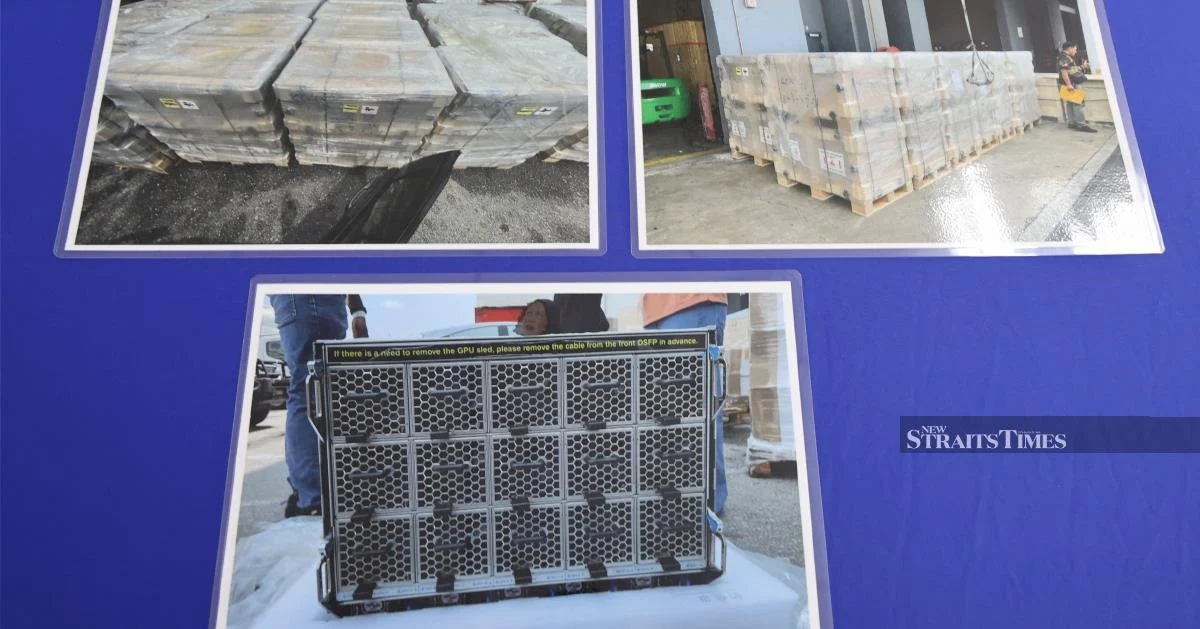
Singapore police have moved to confiscate a luxury residential property valued at more than US$40 million as investigations deepen into alleged fraudulent schemes involving the unlawful transfer of artificial intelligence semiconductors that breached United States export restrictions. The seizure, announced Wednesday, represents a significant escalation in Singapore's enforcement of international trade laws governing sensitive technology.
The bungalow seizure forms part of a broader investigation into fraud allegations intertwined with suspected violations of US export control regimes that govern the sale and distribution of advanced AI chips. These restrictions exist to prevent sophisticated computing technology from reaching jurisdictions or entities deemed to pose national security risks. Singapore, as a major regional financial and technology hub, has increasingly become a focal point for examining cross-border transactions in sensitive semiconductors and computing components.
The investigation underscores the complexity of policing technology transfers in Southeast Asia, where Singapore's strategic location and business-friendly environment can inadvertently create opportunities for regulatory arbitrage. As tensions between the United States and China intensify over semiconductor technology access, enforcement agencies across the region have heightened scrutiny of shipments, company structures, and financial flows connected to advanced chip manufacturing and distribution. The seizure signals that Singapore takes seriously its obligation to uphold international trade standards and prevent circumvention of US sanctions regimes.
Luxury property confiscations in financial crime investigations are relatively uncommon in Singapore, where real estate has traditionally been regarded as a secure asset class. The decision to seize this particular bungalow indicates that investigators believe the property was directly acquired through proceeds stemming from the alleged illegal transactions. Such asset seizures serve dual purposes: they disrupt the financial incentives that motivate transnational trade violations while also preventing criminal proceeds from being laundered through Singapore's property market.
For Malaysian and Southeast Asian observers, this development carries important implications for understanding how enforcement operates at the region's financial centre. Singapore's police force has demonstrated capability and willingness to pursue complex international financial crime cases, particularly those involving technology and trade violations. The seizure demonstrates that even high-value assets are vulnerable to confiscation when authorities can establish links to prohibited transactions.
The investigation also highlights the challenge faced by regulators attempting to distinguish legitimate technology commerce from illicit schemes. AI semiconductors have legitimate uses across manufacturing, finance, and research sectors throughout Southeast Asia. Yet the same chips can be repurposed or diverted to destinations falling outside permitted supply chains. This ambiguity creates investigative complexity, requiring authorities to reconstruct transaction patterns, examine corporate structures, and analyse the ultimate end-use of components that cross borders.
US export controls on advanced semiconductors have tightened considerably in recent years, particularly regarding AI-capable chips that might enhance computational power in sensitive applications. American authorities have imposed licensing requirements and outright prohibitions on sales to certain countries and entities. These restrictions inevitably generate incentives for sophisticated actors to devise schemes intended to circumvent controls through intermediaries, shell companies, or misdeclared end-uses. Singapore's investigation appears to have identified one such scheme.
The enforcement action reflects broader regional anxieties about maintaining compliance with international trade frameworks during a period of technological competition and geopolitical tension. Malaysia and other ASEAN nations must navigate similar pressures, balancing openness to technology commerce with obligations to enforce export controls and prevent sanctions evasion. Singapore's aggressive prosecution of such cases sets a precedent that may influence compliance behaviour among regional businesses and financial institutions handling technology transactions.
Property confiscation as an enforcement tool has become more prominent in recent years as authorities recognise that targeting financial assets proves more effective than pursuing individual criminal prosecutions alone. Seizing valuable real estate sends unmistakable signals about the consequences of engaging in prohibited trade. For the affluent individuals often targeted in such investigations, the loss of prime residential assets frequently proves more consequential than criminal penalties.
The investigation's focus on Singapore is noteworthy given the city-state's significance as a logistics and financial hub for technology companies operating throughout Asia. Many multinational semiconductor firms, chipmakers, and technology distributors maintain regional headquarters or trading operations in Singapore. This concentration creates opportunities for both legitimate commerce and potential violations. Distinguishing between the two requires sustained regulatory vigilance and sophisticated forensic investigation.
Looking forward, this seizure is likely to prompt increased scrutiny of high-value property transactions in Singapore involving individuals or entities with technology sector connections. Real estate agents, financial institutions, and legal professionals may face elevated due diligence requirements when handling transactions that could be linked to semiconductor commerce. The investigation serves as a reminder that regulatory enforcement in the technology sector increasingly extends beyond manufacturing facilities and corporate offices into the broader financial ecosystems that enable transnational business activities.

