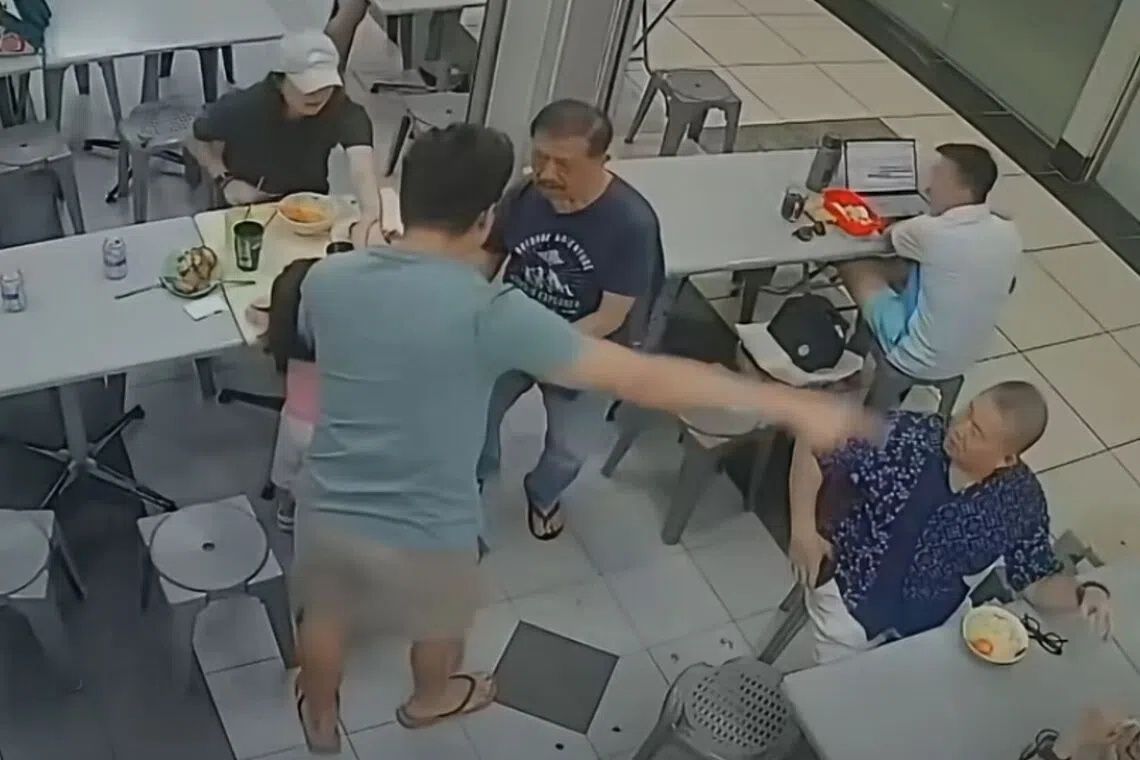
Singapore's police force has launched an investigation into a contentious incident at an East Coast coffee shop involving an elderly man who was allegedly pushed to the ground following a seemingly innocuous gesture towards a child. The authorities confirmed on Sunday, 16 August, that a report had been filed and that inquiries into the matter are proceeding, responding to growing public interest in the case after it gained traction on social media.
The incident came to light through a Facebook post published on 15 August by the elderly man's son, who identified himself as Bei-ing Wanton Noodle. The poster sought the public's assistance in identifying the person responsible for pushing his father, describing how the confrontation unfolded and appealing for witnesses or information that might help locate the individual involved. This social media appeal underscores how Singaporeans increasingly use online platforms to seek justice and accountability when traditional avenues feel inadequate or slow.
According to the son's account, his father was in his 70s and operated with significant mobility constraints, relying on assistance for daily activities. Rather than remaining at home, the elderly man continued to contribute meaningfully to his family's livelihood by helping at their food stall within the coffee shop premises. This detail is particularly significant as it demonstrates the common practice in Singapore's informal food service sector where family members of varying ages and abilities work together, often without formal employment arrangements or workplace protections.
Security camera footage attached to the original post provides a visual record of the confrontation. The video shows the elderly man navigating through the coffee shop by holding onto tables on either side as he walks, a necessity given his difficulty with mobility. His movements appear deliberate and careful, reflecting his physical limitations. As he passes by a table where a young girl is seated, he reaches out and pats her on the head—a gesture that, in many Asian cultures including Singapore's, is traditionally considered an innocent and affectionate form of interaction, particularly between elderly people and children.
The situation rapidly escalated when a woman seated at the girl's table intervened, attempting to prevent further contact by pushing the elderly man's hand away. This defensive action suggests she perceived the head-patting as unwelcome or inappropriate, though her perspective and reasoning remain unexplained in the available account. More significantly, a man who had been at the table—presumably a family member or guardian of the girl—immediately returned and began verbally engaging with the elderly man in what appears to have been a confrontational manner.
What followed was the physical altercation that prompted the police investigation. The man shoved the elderly man forcefully to the ground, an action that carries particular gravity given the victim's age and physical vulnerabilities. For a person in his 70s with documented mobility issues, such a fall poses serious health risks including fractures, head injuries, and other trauma that could significantly impact quality of life and independence. The incident highlights the dangers of physical confrontation involving elderly individuals, where disproportionate force can result in severe consequences.
In a follow-up to his initial post, the son provided additional context that complicates the narrative. He revealed that the man who pushed his father subsequently apologized and offered his father a drink, suggesting a moment of reflection or remorse immediately after the altercation. This detail raises questions about whether the perpetrator acted impulsively without fully considering the consequences of his actions, particularly against an elderly person. However, such an apology does not erase the incident's physical and emotional toll on the victim.
The aftermath of the confrontation brought tangible suffering to the elderly man. According to his son, the victim began experiencing severe back pain following the incident, a common and potentially chronic consequence of falls in the elderly population. Back injuries in this age group can lead to long-term mobility issues, chronic pain, and reduced quality of life, potentially necessitating medical treatment and physiotherapy. The pain serves as a stark reminder of how quickly a moment of social friction can translate into lasting physical harm.
By 16 August, the son posted again to thank members of the public for their concern and for providing additional information about the incident. Nevertheless, despite the community's engagement and the social media attention the case garnered, he indicated that he still lacked sufficient details to identify the man responsible. This gap between public interest and concrete information availability reflects challenges in crowdsourced investigations, where collective concern does not always translate into actionable leads.
The incident raises broader questions for Singapore regarding social norms around physical contact with children, appropriate responses to perceived boundary violations, and proportionate use of force. The case sits at the intersection of cultural practices—where elderly individuals patting children's heads is relatively normalized—and modern sensitivities around child safety and personal space. How Singaporean society, through both official channels and community discourse, resolves this tension will likely influence public behavior and expectations around intergenerational interactions in shared public spaces.
For Southeast Asian readers, the case resonates within a regional context where similar cultural practices around affectionate gestures from elders toward children are commonplace. Yet it also underscores growing concerns about personal boundaries and the potential for misunderstanding in increasingly diverse and fast-paced urban environments. The police investigation's outcome may set precedent for how such incidents are adjudicated across the region, particularly regarding the balance between respecting traditional cultural expressions and protecting individuals from unwanted physical contact or disproportionate responses.

