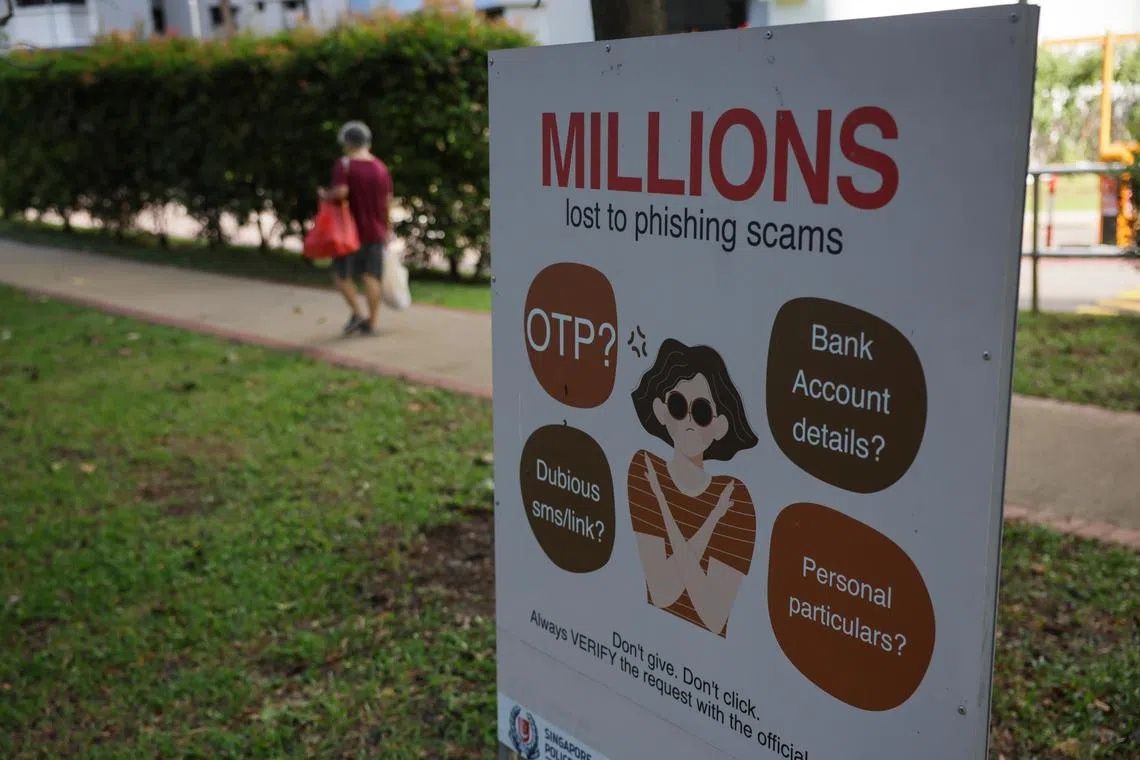
Singapore's police force has concluded a major two-week enforcement operation that has netted 230 suspects implicated in an extensive fraud ecosystem spanning multiple scam categories. The scale of the investigation underscores the persistent challenge that Southeast Asian authorities face in combating organised financial crime, with the youngest detainee just 16 years old. The operation, conducted jointly by the Commercial Affairs Department and all seven police land divisions between June 18 and July 1, represents a coordinated crackdown on networks that authorities believe orchestrated losses totalling approximately S$9 million across the city-state.
The arrested individuals comprise 159 men and 71 women, ranging in age from 16 to 77 years old. While a minority appear to be core perpetrators directing scam operations, the majority are believed to have functioned as money mules—individuals who unwittingly or knowingly facilitate the movement of illicit funds through their bank accounts or mobile payment systems. This bifurcated structure is characteristic of modern scam syndicates, which deliberately recruit low-level operatives to insulate higher-ranking members from direct prosecution. The participation of a teenager in such networks reflects a concerning trend across Asia where young people, often driven by financial desperation or peer pressure, become entry points for criminal organisations seeking plausible deniability.
The scope of fraudulent activities uncovered during the operation reveals the sophistication and diversity of schemes now prevalent in Singapore's digital economy. Investigators identified over 713 distinct scam incidents categorised across six primary methodologies: e-commerce fraud, where victims are deceived into purchasing non-existent goods or services; friend impersonation schemes, which exploit social trust by mimicking known contacts; employment scams that dangle lucrative job opportunities to extract personal information or upfront fees; government official impersonation, leveraging state authority to coerce victims into compliance; investment fraud involving false promises of returns; and rental scams targeting property seekers. This multipronged approach allows criminal networks to adapt rapidly as law enforcement targets individual schemes, essentially creating a portfolio strategy to maximise victimisation across demographic segments.
The legal consequences facing the detained individuals reflect Singapore's stringent framework for combating financial crime. Those convicted of cheating face sentences of up to a decade in prison alongside financial penalties. Money laundering convictions carry identical imprisonment terms but with substantially higher fines reaching S$500,000. Individuals operating unlicensed payment services face up to three years imprisonment and fines of S$125,000. However, for organisers and recruiters directly orchestrating scams, Singapore imposes mandatory caning—a punishment not found in Malaysian law—ranging from six to 24 strokes. Money mules face lighter but still substantial penalties of up to 12 cane strokes. Beyond criminal sanctions, convicted individuals involved in money movement face banking service restrictions and mobile subscription prohibitions, measures designed to prevent future participation in fraud networks.
The timing of this operation coincides with improving trends in Singapore's broader anti-scam statistics, though the absolute figures remain alarming. Official data released in February 2026 indicates that reported scam cases declined from over 50,000 in 2024 to 37,308 in 2025—a substantial 25 percent reduction. Similarly, financial losses attributable to scammers fell from S$1.1 billion to S$913.1 million year-on-year. These improvements likely reflect a combination of enhanced public awareness, technological countermeasures, and enforcement actions such as the two-week operation announced this week. However, the persistence of over 37,000 cases annually suggests that scamming remains a lucrative enterprise despite heightened official scrutiny.
Within Singapore's scam landscape, e-commerce fraud emerged as the most prevalent category in 2025, accounting for 6,703 reported cases and causing S$16.7 million in aggregate losses. This dominance reflects the expanding digital retail market across Southeast Asia, where transaction volumes have surged but consumer protections and merchant verification systems remain inconsistent. The average loss per e-commerce scam victim, approximately S$2,490, represents a significant sum for middle-income families and underscores why such schemes attract criminal investment. The prevalence of this fraud type suggests that perpetrators have identified structural vulnerabilities in online marketplaces—delayed payment processes, insufficient seller verification, and weak refund mechanisms—that create windows of opportunity for theft before victims realise deception has occurred.
The investigation's outcome carries implications beyond Singapore's borders, particularly for Malaysia and other ASEAN economies where similar criminal networks operate across jurisdictional boundaries. Scam syndicates increasingly leverage transnational infrastructure, with operations centres potentially located in one country while money mules are recruited from another and victims targeted across multiple regions. The presence of a teenager in Singapore's detected network suggests that criminal organisations actively recruit from younger demographics with digital fluency, a pattern that Malaysian authorities should monitor closely. Additionally, the identification of over 230 suspects in a single two-week operation indicates that such networks are substantially larger than public awareness suggests, with individual enforcement actions capturing only fragments of broader criminal ecosystems.
Singapore's multi-agency approach, combining the Commercial Affairs Department with district-level police divisions, offers a model that regional partners including Malaysia might study for enhanced coordination. The centralised Commercial Affairs Department brings specialised investigative expertise in financial crimes, while land divisions provide localised intelligence and community connections necessary for identifying money mule networks. This integrated structure contrasts with fragmented approaches in some jurisdictions where financial crimes units operate separately from community policing, reducing operational effectiveness. For Malaysian authorities managing similar challenges across a substantially larger population and geographic footprint, adopting comparable coordination mechanisms could amplify detection and prosecution rates.
The arrest of money mules, who constitute the majority of detainees, reflects growing recognition that disrupting scam operations requires targeting not only masterminds but also the infrastructure enabling fund flows. Money mules, whether coerced or voluntarily recruited, represent the critical link converting victim losses into criminal profits. By restricting their future access to banking services and mobile subscriptions, Singapore's authorities are attempting to reduce their residual value to criminal organisations. This preventive approach, while controversial regarding individual liberty, acknowledges that repeat recruitment of mules represents scammers' most reliable method of operation. Malaysian policymakers considering similar measures would need to balance effectiveness against civil liberties protections, particularly for younger or coerced participants who may be victims of exploitation rather than willing criminals.
The broader context of scam operations across Southeast Asia reveals economic drivers that enforcement alone cannot address. The persistent recruitment of money mules—particularly young individuals and financially vulnerable populations—reflects limited legitimate income opportunities and inadequate financial literacy. Scammers exploit these conditions systematically, offering quick monetary compensation for services that participants may not fully comprehend as illegal or harmful. Addressing the root causes of scam participation requires complementary policy interventions including youth employment programmes, financial education, and stronger regulation of gig economy platforms that scammers exploit for recruiting money mules. Singapore's enforcement focus must ultimately be paired with preventive social measures to reduce the pool of recruitable individuals available to criminal networks.
Civil society organisations and financial institutions play essential roles in the emerging anti-scam ecosystem that Singapore is developing. Public awareness campaigns, victim support services, and merchant education programmes all contribute to reducing both victimisation rates and the perceived profitability of scamming operations. Singapore's ScamShield initiative, offering free resources at www.scamshield.gov.sg and a dedicated helpline at 1799, represents investment in victim assistance and public awareness infrastructure. These complementary measures work alongside enforcement to create comprehensive defences. Malaysian authorities managing equivalent challenges should consider whether comparable victim support infrastructure exists domestically and whether resource allocation between enforcement and prevention reflects actual effectiveness data regarding which interventions most substantially reduce scam incidence.
Moving forward, the two-week operation's results will inform Singapore's law enforcement strategy as investigators analyse financial flows, communication networks, and recruitment pathways revealed during the investigation. Intelligence derived from 230 detained suspects can illuminate broader syndicate structures that remain under surveillance. The consistent pattern of multi-category scam operations—rather than specialisation in single fraud types—suggests that criminal organisations maintain flexibility and diversified revenue streams. This operational resilience requires corresponding adaptability from authorities, with enforcement strategies evolving as scammers innovate delivery mechanisms and target selection. For regional observers including Malaysia, the operation demonstrates both the feasibility of large-scale scam network disruption and the substantial ongoing challenge that financial fraud represents across Southeast Asia.

