Singapore authorities arrested a 49-year-old woman on August 6 in connection with the Fun Coffee investment platform, marking an escalation in regional law enforcement action against what appears to be a sophisticated multi-jurisdictional fraud operation. Police confirmed the arrest on August 8, revealing that the woman had played an active role in promoting the scheme and enlisting fresh participants into the venture, which has left investors across multiple Asian economies unable to recover their money.
The Fun Coffee scheme operated through a deceptively simple mechanism designed to encourage maximum participation and financial commitment. Prospective investors were required to download a mobile application and then transfer Tether, a stablecoin cryptocurrency pegged to the United States dollar, into wallet addresses accessible via the platform. This cryptocurrency-based approach likely appealed to tech-savvy younger investors while simultaneously creating obstacles for regulatory oversight and fund recovery, as digital assets remain difficult for authorities to trace and reclaim once transferred.
Central to the scheme's appeal was a promise that appears consistent with virtually all pyramid operations: unrealistically high investment returns paired with lucrative recruitment commissions. The combination proved irresistible to participants already familiar with multi-level marketing structures. However, once investors sought to withdraw funds from their Fun Coffee accounts, they discovered a critical problem—the application no longer permitted withdrawals, leaving capital permanently trapped within the system. This pattern of initial accessibility followed by sudden lockout is characteristic of pyramid schemes designed to extract maximum capital before collapse.
Singapore's police moved quickly to apply existing legal frameworks designed to combat such fraud. The woman faces charges under the Multi-Level Marketing and Pyramid Selling (Prohibition) Act, legislation that recognises the particular harm caused by recruitment-dependent schemes. If convicted, she faces potential imprisonment for up to five years, financial penalties reaching S$200,000, or a combination of both sentences. The relatively severe penalties reflect Singapore's determination to deter participation in and operation of such schemes within its jurisdiction.
The Fun Coffee operation claims a Vietnamese base in Phu Quoc and maintains on its website an elaborate corporate façade, positioning itself as a "lifestyle brand combining coffee, wellness and digital innovation into a community experience." This branding strategy—combining a tangible product (coffee) with wellness trends and technology innovation—provides the scheme with a veneer of legitimacy that distinguishes it from purely financial operations. The company asserts assets exceeding US$1 billion and an operational team comprising more than 5,000 individuals, figures that appear designed to instil confidence in prospective investors.
The regional scope of the fraud demonstrates how digital platforms and cryptocurrency enable scammers to operate across multiple countries simultaneously. Hong Kong and Macau authorities have arrested eight individuals connected to the scheme, with local investigations revealing approximately 200 victims who collectively lost nearly HK$100 million. A single Singapore victim interviewed by The Straits Times reported investing approximately S$400,000 with no recovery prospects whatsoever. These figures underscore the substantial financial damage inflicted on individual investors, many of whom may have committed life savings or borrowed funds based on promised returns.
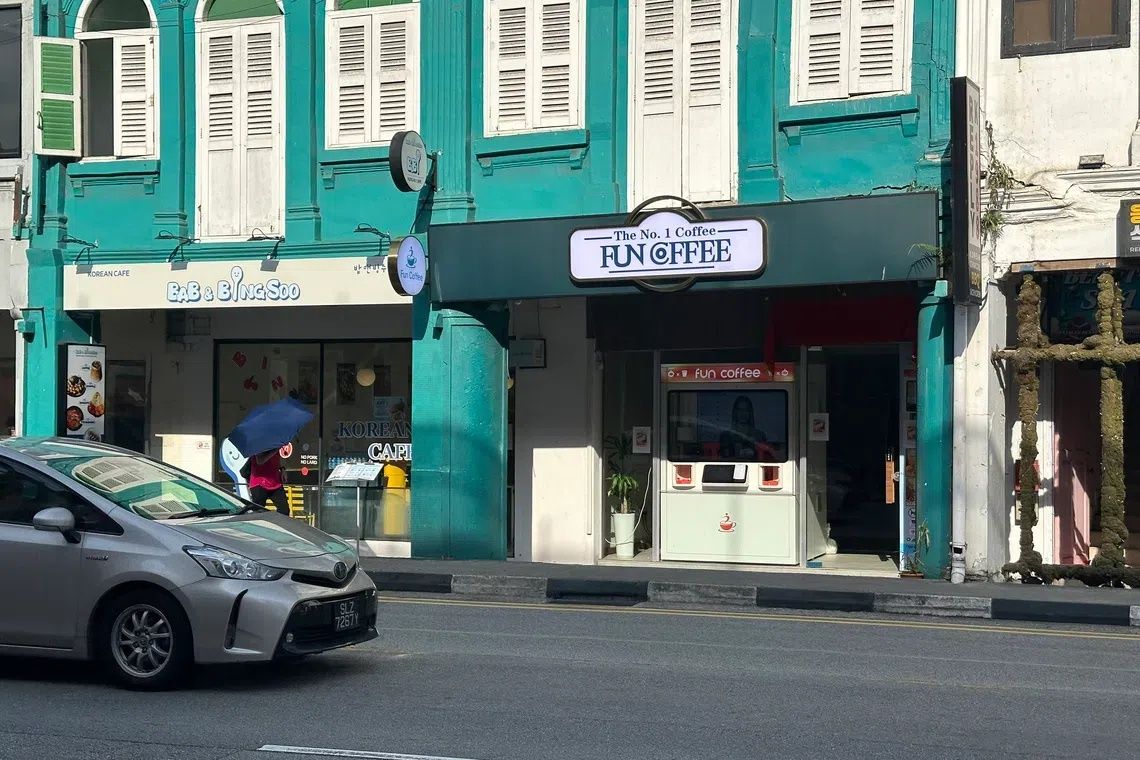
When The Straits Times investigated Fun Coffee's registered Singapore address at 202 Jalan Besar on August 7, journalists discovered a coffee vending machine positioned at the entrance. Handwritten instructions were attached to the machine, guiding customers through scanning a QR code to process payments. This physical presence, however minimal, served to reinforce the scheme's facade of operating a legitimate beverage business, blurring the distinction between a retail operation and an investment platform in ways designed to confuse and reassure potential investors.
Singapore's police have issued explicit warnings to the public regarding ongoing recruitment attempts and payment solicitations connected to Fun Coffee. Authorities emphasise that individuals should resist making further contributions to the scheme, whether approached directly by purported representatives or through notifications generated within the Fun Coffee application itself. The police specifically highlighted several warning signs that should trigger immediate suspicion: payment requests routed through private PayNow QR codes, personal mobile telephone numbers, or accounts held overseas. These red flags reflect common tactics deployed by fraudulent operations seeking to obscure the trail of financial flows and evade detection.
The escalating law enforcement response across Singapore, Hong Kong, and Macau suggests that regional authorities are increasingly coordinating efforts to combat digital investment fraud. The cryptocurrency dimension of Fun Coffee presents particular enforcement challenges, as blockchain transactions are pseudonymous and irreversible, complicating asset recovery. Malaysia, given its own recent experiences with cryptocurrency-related schemes and investment fraud, would do well to monitor Fun Coffee's potential expansion into the Malaysian market and proactively warn investors against similar platforms employing identical recruitment and return-promise mechanisms.
The Fun Coffee case illustrates a troubling evolution in pyramid scheme operations, whereby operators leverage contemporary technologies, cryptocurrency infrastructure, wellness trends, and legitimate-seeming retail components to construct an appearance of legitimacy. As cryptocurrency adoption accelerates across Southeast Asia and younger demographics become increasingly comfortable with digital assets, such hybrid schemes will likely proliferate unless regulatory frameworks evolve in tandem. Malaysian investors should remain vigilant regarding any investment platform promising unusually high returns, emphasising recruitment, and operating across multiple jurisdictions with minimal transparent corporate governance.

