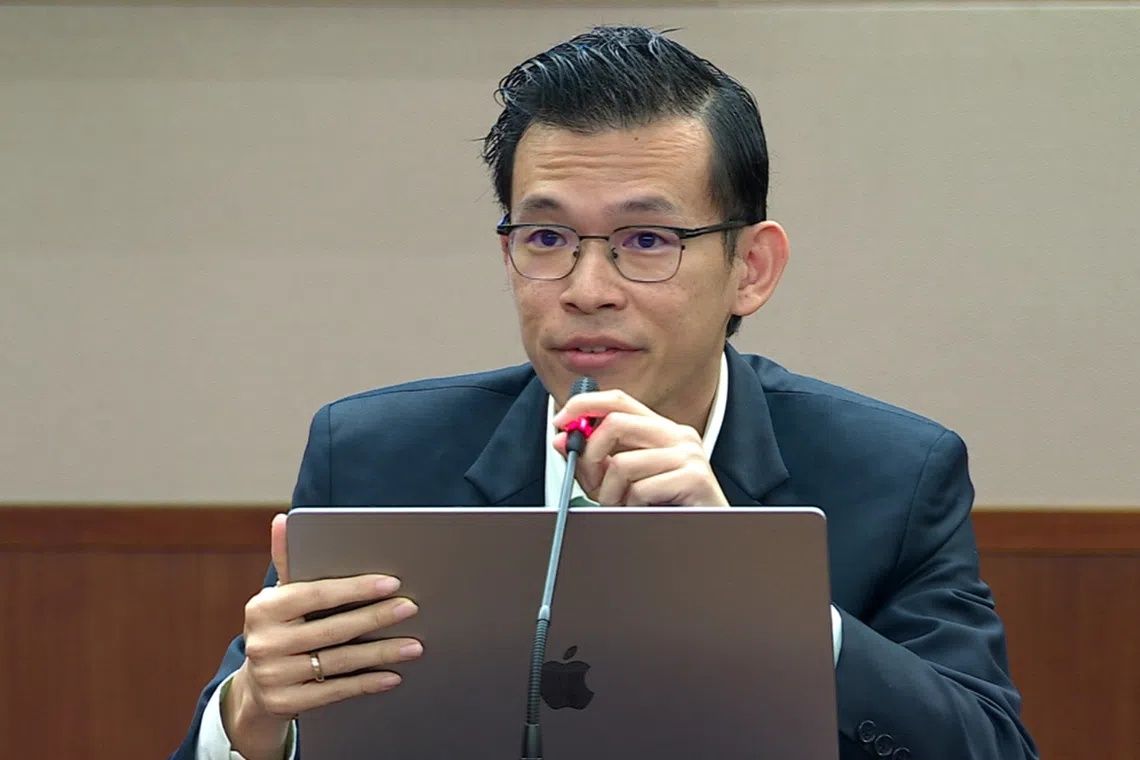
Singapore's Parliament has endorsed an amended motion concerning the country's economic trajectory following a marathon nine-hour debate that exposed significant philosophical differences between the ruling People's Action Party (PAP) and the opposition Workers' Party (WP) over how the nation should pursue prosperity. The affirmation came after the PAP introduced four amendments to the original motion moved by Workers' Party MP Kenneth Tiong, with the WP rejecting the first amendment and ultimately voting against the final version with all 12 of its MPs dissenting from the approved text.
The debate centred on a fundamental question of economic philosophy: whether Singapore should pursue growth first and then redistribute wealth through targeted programmes, or whether fair distribution should be embedded within the growth model itself. Kenneth Tiong articulated the Workers' Party's vision of an economy built on dynamic local enterprises with robust domestic demand, where Singaporean businesses and capital venture globally with confidence. This contrasts sharply with what Tiong characterised as Singapore's traditional dependence on large foreign multinational corporations (MNCs), a model he argued has failed to generate quality employment for younger workers and has constrained the development of local enterprises that could serve as genuine engines of growth and job creation.
Minister for Trade and Industry Tan See Leng responded to these critiques by reaffirming the government's long-standing position that economic growth has consistently been a means to an end rather than an objective pursued for its own sake. He emphasised that Singapore's development strategy has demonstrably delivered high-quality employment opportunities, income growth and upward social mobility across multiple generations of Singaporeans. The minister stressed that the government's contemporary challenge lies in ensuring this economic model continues to perform effectively in a markedly different global environment characterised by geopolitical tensions, technological disruption and shifting trade patterns.
Tan's response reflected a nuanced understanding of Singapore's development paradox: the MNCs that have been central to the nation's prosperity have simultaneously constrained local entrepreneurship, yet complete withdrawal from this model could prove destabilising. He illustrated this tension through his personal entrepreneurial narrative, recounting how he co-founded Healthway Medical Group at 27 without formal business training. Rather than facing competition from MNCs that might have driven him out of business, Tan found that meeting the rigorous standards of these multinational firms actually enhanced his own company's credibility and market access, ultimately enabling expansion rather than stifling it.
This experience led Tan to articulate what might be characterised as a framework for managed economic transition. He acknowledged that while the government cannot guarantee business success, job security or painless transitions for workers, it can maintain institutional frameworks that provide fair opportunities, clear pathways for progress and support for those experiencing setbacks. However, his remarks also carried an implicit warning to those advocating for greater state intervention: government must provide the infrastructure and conditions for enterprise, not become the business model itself.
The minister outlined five distinct capability gaps that government policy can help bridge for entrepreneurs and companies. These range from initial aspiration through to first venture, research and development through to commercial innovation, early product development through to first customers, initial traction through to sustained scaling, and domestic consolidation through to global expansion. This framework suggests a carefully calibrated approach where government interventions are targeted at specific junctures in a company's development rather than representing blanket subsidies or protectionist measures.
Several government schemes were highlighted as exemplifying this targeted approach. The Startup SG Founder programme provides early-stage capital, mentorship and networking infrastructure to test serious business concepts. The Partnerships for Capability Transformation scheme facilitates collaboration between local small and medium enterprises and multinational corporations, enabling SMEs to integrate into sophisticated global supply chains. The Startup SG Equity scheme channels investment toward early-stage and growth-stage deep-technology companies, recognising that innovation capacity is essential for long-term competitiveness.
The Enterprise Singapore Scale-Up programme offers perhaps the most concrete evidence of this approach's effectiveness. Among its first seven cohorts of 80 companies, participating firms generated combined additional revenue of S$2.5 billion within three years, with S$1 billion derived from overseas expansion. These figures suggest that targeted government support can catalyse significant private sector growth without requiring permanent state involvement or subsidisation. The programme effectively serves as proof that Singapore can nurture globally competitive local champions while maintaining market discipline.
Yet the Workers' Party's persistent concerns deserve serious consideration for regional policymakers. The opposition's emphasis on fair distribution built into growth rather than addressed through post-hoc redistribution reflects anxieties about inequality that have gained traction across developed economies. Singapore's reliance on foreign direct investment and MNC employment, while economically successful, may create vulnerable pockets of the workforce that lack the skills or social capital to transition into higher-value sectors. For Malaysia and other Southeast Asian nations watching Singapore's development model, this debate highlights the tension between attracting foreign investment and developing indigenous entrepreneurial capacity.
The breadth of parliamentary engagement on this issue, with 23 speakers before the minister's closing remarks, suggests substantial cross-party consensus on several foundational principles despite disagreements on implementation. Both the PAP and WP acknowledged the importance of fulfilling careers, competitive incomes, and globally successful domestic enterprises. The debate was not about whether Singapore should pursue these goals, but rather about the mechanisms through which they should be achieved and the role government should play in facilitating or directing economic activity.
Tan's emphasis that government cannot guarantee success reflects a mature recognition of market realities that many developing economies struggle to accept. His assertion that entrepreneurs must build business teams, find customers and make commercial decisions themselves represents a rejection of both excessive laissez-faire economics and the planning-intensive state-directed development models that characterised earlier decades. For Malaysian observers, this middle path offers instructive lessons about how a small open economy can maintain dynamism while addressing legitimate concerns about inclusive growth and local enterprise development.
Moving forward, Singapore faces the challenge of deepening local entrepreneurial capacity while maintaining the foreign investment flows that have underpinned prosperity. The government's targeted intervention framework suggests awareness that passive reliance on market forces may inadequately address capability deficits in certain sectors, yet the explicit rejection of larger government cheques as a path to creating champions indicates commitment to competitive discipline. Whether this calibrated approach can satisfy the Workers' Party's concerns about distributional fairness while maintaining the business investment and dynamism that Singapore requires remains an open question that will likely resurface in future parliamentary sessions.

