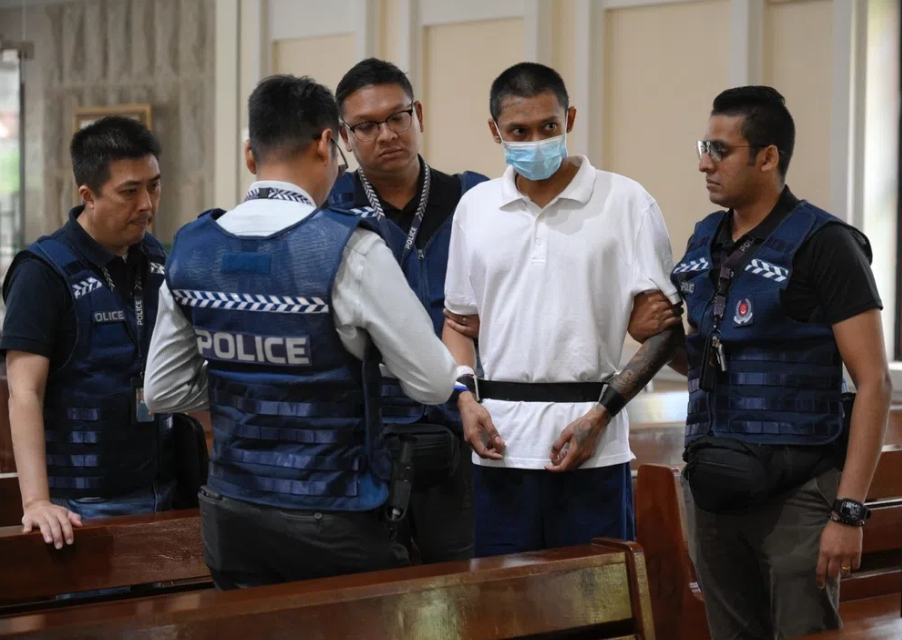
Basnayake Keith Spencer, 38, received a sentence of four years and three months' jail plus nine strokes of the cane on Friday, August 21, after pleading guilty to deliberately causing grievous hurt with a dangerous weapon and illegal weapon possession. The sentencing brings closure to a case that shocked Singapore's religious community when Spencer attacked Reverend Christopher Lee during a children's mass at St Joseph's Church on the evening of November 9, 2024, just nine months before his court appearance.
The attack occurred in front of approximately 900 parishioners gathered for the evening service. According to evidence presented in court, Spencer arrived at the church around 5.30pm and took up a seat in the middle of the church hall. Before the service progressed to communion, he consumed two pills to help maintain focus, and then ingested three additional pills to calm himself as he realised the mass was specifically for children. These actions suggest a degree of premeditation and internal conflict about his presence at the religious gathering, though they ultimately did little to prevent the violence that followed.
The assault itself was sudden and brutal. As Father Lee stood administering communion at approximately 6.15pm, Spencer approached him in the queue. Rather than receiving the sacrament peacefully, Spencer abruptly withdrew a foldable knife measuring 23 centimetres in total length with a 10-centimetre blade and drove it directly into the priest's mouth. The weapon penetrated with severe force, causing Father Lee to step backward while bleeding profusely. The priest's instinctive response—grabbing Spencer's rear pocket to prevent further attacks on other congregants—almost certainly saved others from harm, demonstrating remarkable presence of mind despite his injuries.
Rapid intervention by members of the congregation prevented the situation from deteriorating further. An off-duty police officer among the worshippers, alongside other parishioners, quickly restrained Spencer and summoned law enforcement. Spencer was arrested at the scene without further incident. The injuries inflicted proved significant: Father Lee sustained an 8-centimetre laceration on his tongue, a 3-centimetre cut on his upper left lip, and a 4-centimetre laceration at the corner of his mouth. He was hospitalised with blood pooling in his mouth and remained under medical care until November 15, requiring 40 days of hospitalisation leave and months of subsequent speech therapy to address the damage to his mouth and tongue.
The timing and nature of the attack held particular significance in the court's assessment. District Judge Shaiffudin Saruwan emphasised that Spencer had deliberately targeted the priest at the precise moment when Father Lee was performing the sacred ritual of administering communion. This aspect amplified the gravity of the offence beyond the physical harm alone, as the attack created potential for mass panic among nearly 900 worshippers in a confined space. The judge noted that the assault was entirely unprovoked and had inflicted severe injury upon a defenceless individual performing his religious duties. Such an attack on a faith leader during a sacred ceremony strikes at the heart of religious freedom and community safety.
Spencer's criminal history provided important context for the sentencing deliberation. In 2019, he had been convicted and imprisoned for one year for voluntarily causing hurt with a dangerous weapon in a separate incident. That earlier crime involved stabbing his then-girlfriend in the buttocks with a kitchen knife while under the influence of methamphetamine. The pattern of drug-fuelled violence using knives, spanning multiple years, demonstrated a persistent propensity for serious harm and a troubling relationship with controlled substances and weapons.
At the time of the St Joseph's Church attack, Spencer was found to be intoxicated and in a drug-induced psychotic state, according to prosecution submissions. However, the Deputy Public Prosecutor Xu Sijia argued that despite this altered mental condition, Spencer retained sufficient awareness of his actions to be held fully accountable. His deliberate consumption of pills before the attack, his conscious decision to switch queues to approach Father Lee specifically, and the calculated nature of withdrawing and using the knife all suggested intentionality rather than pure psychotic impulse. Following his arrest, authorities discovered Spencer in possession of multiple other weapons: a 14.5-centimetre penknife, an additional flip knife, and a fishing gaff—a pole with a sharp hook designed for water use but capable of inflicting serious injury.
Spencer was denied bail in December 2024 after prosecutors successfully argued that he posed an exceptionally high risk of reoffending. The prosecution characterised him as a highly dangerous individual whose history, weapon collection, and substance use patterns indicated he represented a genuine threat to public safety if released. Consequently, Spencer has spent more than a year and nine months in remand, awaiting his guilty plea and sentencing.
The prosecution had sought a custodial sentence ranging from four years and three months to four years and eleven months, alongside nine strokes of the cane. The defence, through Ashwin Ganapathy of the Public Defender's Office, sought a somewhat more lenient sentence of less than four years with the same caning punishment, emphasising Spencer's remorse, regret, and shame regarding his actions and requesting proportionality in sentencing. Judge Shaiffudin ultimately selected the lower end of the prosecution's recommended range, indicating that while the crime was serious, Spencer's guilty plea and expressions of remorse held weight in the deliberation.
For Malaysian and broader Southeast Asian observers, this case underscores ongoing concerns about violence in religious spaces and the intersection of substance abuse with serious criminal conduct. Violent attacks against faith leaders represent rare but deeply troubling incidents that test community cohesion and religious freedom protections. The incident at St Joseph's Church, affecting hundreds of worshippers during a children's mass, demonstrates how such violence can impact entire faith communities and create lasting trauma beyond the direct victim. Singapore's legal system responded decisively through both preventive detention and proportionate sentencing, reinforcing that attacks on religious figures and in sacred spaces attract serious criminal penalties under laws permitting sentences up to 15 years' imprisonment, substantial fines, and caning for causing grievous hurt with weapons.
The case also highlights the complex interplay between mental health, substance dependence, and criminal responsibility in modern criminal justice systems. While acknowledging Spencer's drug-induced psychotic state, the court found that his conscious decisions and retained awareness negated any defence based purely on intoxication or diminished capacity. This approach reflects judicial recognition that individuals cannot use substance-induced altered states as blanket excuses for planned violence, particularly when evidence demonstrates deliberate steps taken before the attack. For Southeast Asian societies wrestling with rising substance abuse and its connection to violent crime, the Spencer case offers a cautionary lesson and a template for judicial response that balances accountability with consideration of mental health factors without allowing either to eclipse the other.

