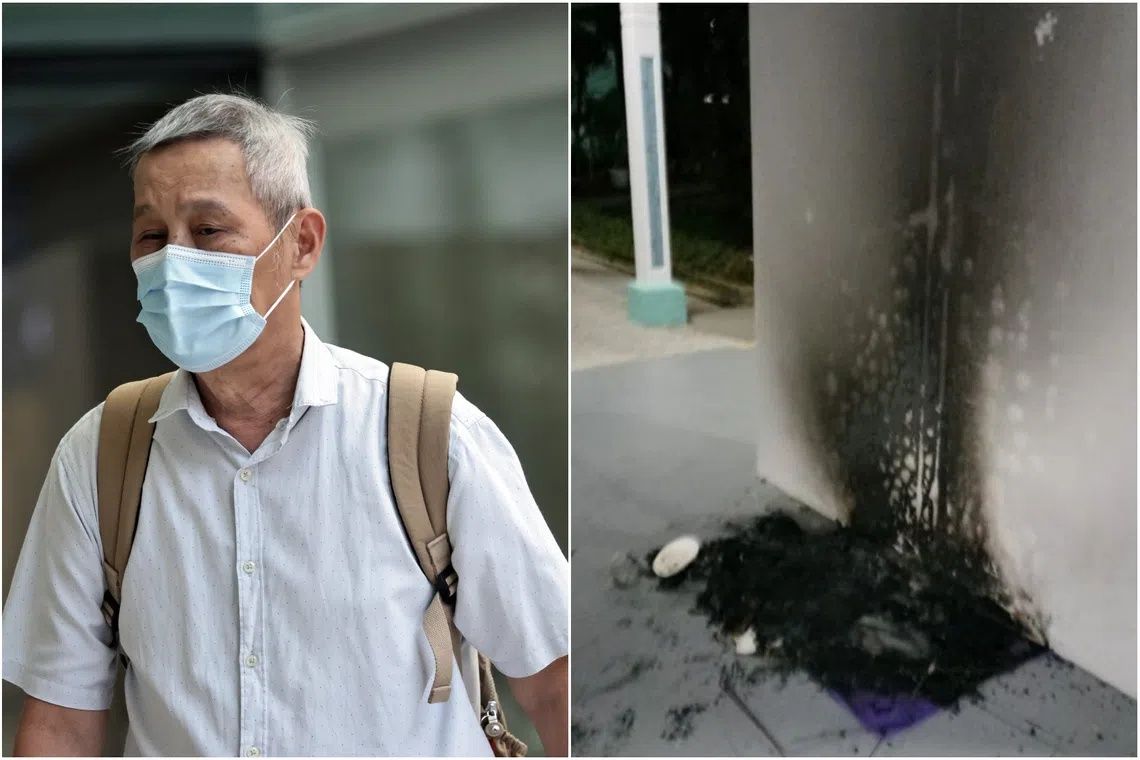
A retiree in Singapore's Bukit Batok has been handed a three-month prison sentence after pleading guilty to deliberately setting fire to cardboard shelters erected for community cats. The case highlights the tensions that can emerge between residents and animal welfare initiatives in densely populated public housing estates, where shared spaces often become flashpoints for conflicting interests and expectations.
Koh Teng Boo, 68, was convicted of committing mischief by fire after a series of incidents spanning several months at a void deck pavilion near his home on Bukit Batok East Avenue 4. The structures in question were simple cardboard constructions designed to provide shelter and sustenance for stray cats in the neighbourhood. According to Deputy Public Prosecutor Stephen Yeo, the cat houses were equipped with food and water supplies to support the animal population around the block.
The defendant's grievances with the cat houses began in September 2025, when he first observed the structures being installed in the vicinity of his residence. Koh's concerns centred on what he perceived as hygiene and pest management issues. He alleged that birds were attracted to the feeding stations, and he worried that the cardboard houses themselves were prone to harbouring vermin. Rather than simply tolerating the arrangement, he decided to escalate the matter through official channels by lodging a complaint with his Member of Parliament.
When his initial representations appeared to yield no visible results, Koh took matters into his own hands. In October 2025, he removed three cat houses from their location and placed them into an incense burner bin, where he set them ablaze. The destruction of these shelters, however, did not deter supporters of the community cat programme. Within two days, additional cat houses had been erected around the block, a development that only deepened Koh's frustration with the situation.
Undeterred by the reappearance of the structures, Koh sought another audience with his MP on November 17, reiterated his concerns about sanitation and the practice of residents discarding litter into the cat houses. Despite his diplomatic efforts to address what he viewed as a genuine neighbourhood problem, the cat housing initiative remained in place. This perceived indifference to his complaints appears to have shifted Koh's mindset from rational negotiation to direct action of an unlawful nature.
On the night of November 19, after consuming alcohol, Koh deliberately ignited a cat house using a lighter and abandoned it without ensuring the fire was properly extinguished. The court records do not specify exactly when or how this particular fire was brought under control. The next morning, emboldened by the lack of immediate consequences, Koh repeated his actions by setting fire to another cat house. This time, two pedestrians who witnessed the incident intervened and extinguished the flames before serious damage could occur. His arrest followed shortly thereafter.
The financial toll of Koh's actions was measured in structural damage rather than catastrophic loss. The Jurong-Clementi-Bukit Batok Town Council incurred repair costs of S$913 to restore flooring and wall surfaces that had been scorched by the fires. Koh subsequently fulfilled his financial obligations by making full restitution to the town council, demonstrating at least a pragmatic acknowledgement of his culpability in damaging communal property.
Under Singapore's criminal statutes, the offence of mischief by fire carries significant maximum penalties, including imprisonment for up to seven years and monetary fines. The sentencing guidelines applied to Koh's case—a three-month custodial term—represent the judiciary's consideration of mitigating factors, though the severity nonetheless underscores the seriousness with which the law treats deliberate fire-setting, even in relatively contained circumstances.
The case reveals broader tensions in managing community spaces within public housing environments across Southeast Asia. While animal welfare and community cat feeding programmes have grown in acceptance in Singapore and neighbouring countries like Malaysia, not all residents embrace these initiatives. The conflict between proponents of animal care and those concerned about hygiene, pest control, and the proper use of shared facilities remains largely unresolved in many estates. Koh's recourse to arson, despite his efforts through conventional complaint mechanisms, suggests that some residents feel their concerns are dismissed or deprioritised by authorities.
For Malaysian readers and officials overseeing housing estates and community programmes, the Singapore incident offers instructive lessons about the importance of engaging dissenting residents constructively and transparently explaining decisions that affect shared spaces. When community members feel unheard, even seemingly minor neighbourhood disputes can escalate into criminal behaviour with serious legal and social consequences. The case also illustrates how animal welfare initiatives, while laudable, require careful implementation that takes neighbourhood sensitivities and practical concerns into account, rather than assuming universal support.
The incident underscores that property damage caused by fire, regardless of the target or stated motivations, constitutes a serious criminal matter in the eyes of Singapore's courts. Koh's three-month sentence serves as a cautionary reminder that vigilante responses to perceived administrative failures or indifference to complaints carry substantial legal jeopardy. Going forward, the challenge for public housing authorities throughout the region will be developing frameworks for community cat management that balance animal welfare with the legitimate concerns of all residents, thereby reducing the likelihood of similar conflicts arising.

