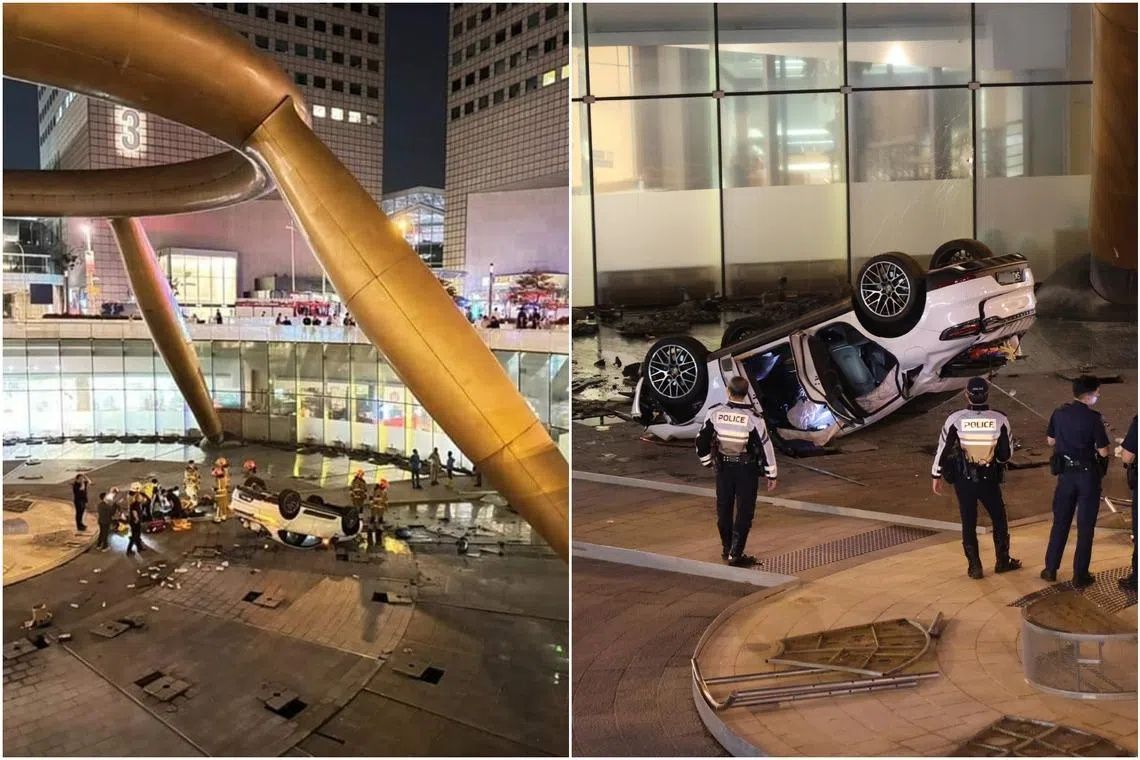
A 58-year-old man from Singapore has been sentenced to five weeks' imprisonment for driving under the influence and causing extensive damage to one of the city's most recognizable landmarks. Then Shing Chong drove his vehicle through the barricade surrounding the Fountain of Wealth at Suntec City on July 13, 2024, in an incident that exposed the dangers of impaired driving and the potential for catastrophic outcomes had circumstances been slightly different. The crash resulted in nearly S$64,600 in damage to the fountain, which has become an iconic symbol of Singapore's prosperity and resilience.
The sequence of events leading to the accident began the previous afternoon when Then left his residence on July 12 and travelled to Suntec City to meet a friend. He arrived at the shopping mall complex at approximately 6pm, parked his vehicle in the basement level, and proceeded to a bar. Over the course of more than five hours—from 6.15pm until midnight—he consumed approximately one litre of beer before deciding to drive away. This extended drinking session set the stage for what would become a serious traffic incident with far-reaching consequences for public safety.
The accident itself unfolded with alarming speed as Then attempted to exit the carpark. After the gantry barrier lifted to allow his vehicle to pass through, the car remained stationary for about ten seconds before he began driving. Once on Temasek Boulevard, his concentration lapsed fatally. Despite directional signage clearly indicating he needed to turn left into a roundabout to proceed safely, Then continued driving straight ahead. His vehicle traversed three lanes of traffic before crashing through the protective barricade surrounding the Fountain of Wealth and plummeting into the basement structure below.
A critical factor in assessing the severity of this incident was the presence of construction workers in the vicinity. At the time of the crash, three workers were actively engaged in basement construction near the fountain. They managed to flee the immediate impact zone without sustaining injuries. The Deputy Public Prosecutor, Gladys Lim, emphasized during sentencing that had these workers been positioned directly beneath the vehicle's trajectory, the consequences would have been vastly more severe. This observation underscores a sobering reality: the offence could easily have resulted in serious injury or death had the timing and positioning been marginally different.
The investigation following the crash revealed several complicating factors regarding Then's state of impairment. He informed the Institute of Mental Health that he had consumed either an antihistamine or a sleeping pill before drinking the beer, which would have significantly amplified alcohol's effects on his cognitive and motor functions. However, no blood or breath alcohol content measurement was conducted at the scene because he was immediately transported to Tan Tock Seng Hospital following the impact. He had sustained injuries including a lacerated scalp that required emergency medical attention, preventing the standard toxicological assessment that would have definitively established his blood alcohol level at the moment of driving.
The legal proceedings following the incident took approximately one year to conclude. Then pleaded guilty to the charge of driving in a dangerous manner, acknowledging the severity of his actions. The court ultimately imposed a sentence of five weeks' imprisonment, handed down on July 14 this year. Beyond the custodial term, the judge disqualified him from holding or obtaining any category of driving licence for two and a half years commencing from his release date. Additionally, Then had already made complete financial restitution for the damages caused, demonstrating acceptance of his responsibility for the material consequences of his behaviour.
His legal representatives from Invictus Law Corporation mounted a defense strategy centred on his mental health circumstances. They presented medical evidence from the Institute of Mental Health indicating that Then suffered from major depressive disorder at the time the accident occurred. The defence argued that a causal connection existed between his psychiatric condition and the commission of the offence. Based on this foundation, they requested the court to call for a comprehensive report assessing their client's suitability for a mandatory treatment order, which would have allowed him to undergo psychiatric rehabilitation in place of imprisonment. This approach reflects broader conversations within criminal justice systems about balancing punishment with therapeutic intervention for offenders with underlying mental health vulnerabilities.
The prosecution, however, strenuously opposed the mandatory treatment order approach. Deputy Public Prosecutor Lim contended that this case necessitated a strong deterrent sentence rather than therapeutic diversion. She emphasized that the offender's behaviour—consuming a litre of beer and then operating a motor vehicle—represented a fundamentally irresponsible decision that endangered public safety. The prosecution's position reflected concerns about sending mixed messages regarding drink-driving, an offence that continues to claim lives and cause injuries across the region.
District Judge Koo Zhi Xuan ultimately sided with the prosecution, declining to order a mandatory treatment order report and proceeding with a conventional criminal sentence instead. The judge stressed that drink-driving constituted highly irresponsible behaviour that warranted deterrent punishment. He highlighted the severity of the offence's potential consequences, noting that Then's actions had already caused significant property damage and created genuine risk of serious harm or death to multiple individuals. The judicial reasoning reflected a hierarchy of concerns: the protection of the public takes precedence over individualized rehabilitation considerations when an offender has engaged in conduct that endangered lives through a course of action that was largely volitional and preventable.
This case carries particular resonance for Malaysian readers and regional observers given the prevalence of traffic incidents involving alcohol across Southeast Asia. Singapore's strict approach to drink-driving enforcement and sentencing serves as a counterpoint to enforcement patterns in neighbouring jurisdictions. The conviction demonstrates how a single evening's decision to consume significant quantities of alcohol before driving can result in substantial legal consequences, financial liability, and prolonged restrictions on personal mobility. The incident also illustrates how luck and circumstance often determine whether impaired driving results in property damage alone or escalates to involving human casualties.

