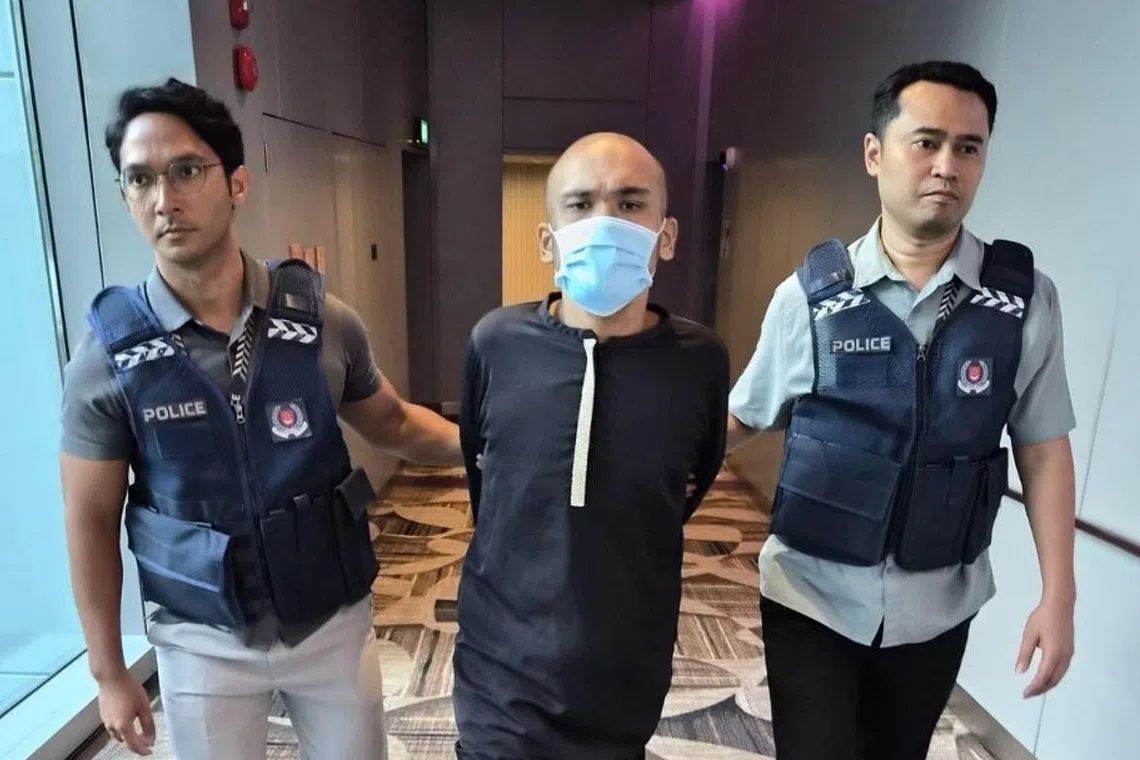
A 27-year-old man is set to face court proceedings in Singapore on Friday, August 7, after posting videos containing derogatory remarks aimed at the Muslim community across social media platforms earlier this year. The case underscores the continued vigilance of Singapore's authorities in protecting religious sensitivities in a multi-faith society, where violations can carry substantial legal consequences.
According to police statements issued on August 6, the initial report concerning the man's offensive content came on March 1, but investigators found he had already departed Singapore before the complaint was officially registered. This timing gap presented investigators with a significant hurdle in apprehending the suspect, requiring cross-border cooperation to locate and arrest him.
The breakthrough in the investigation came through collaborative efforts between Singapore's police force and the Royal Malaysia Police. The suspect had fled to Malaysia, where he remained until authorities coordinated his deportation back to Singapore on August 6. He was immediately arrested upon his arrival and placed in custody ahead of his court appearance later that week.
The severity of the allegations is reflected in the potential sentencing. Should the court find him guilty of insulting the religion of another person, the man faces a maximum jail term of five years, a financial penalty, or a combination of both sentences. This demonstrates the seriousness with which Singapore's legal framework treats offences that threaten communal harmony.
The investigation has expanded beyond the initial complaint to encompass additional matters of concern. Police are currently investigating a separate incident involving a video that circulated on social media depicting an individual stepping on a Quran, Islam's holiest text. Investigators have determined that the person featured in that footage is the same 27-year-old man now facing charges, broadening the scope of potential offences he may answer to.
According to police inquiries, the controversial Quran video was filmed aboard a public bus operating within Singapore. The public nature of the location where the alleged incident occurred adds another dimension to the case, as it involved civilian witnesses and violated the sanctity of religious practice in shared communal spaces. This detail underscores how the offence extended beyond online harassment to encompass real-world conduct affecting diverse segments of Singapore's population.
In their efforts to contain the spread of offensive material, Singapore's police exercised their authority to demand content removal from major technology platforms. On March 7, authorities issued five separate disabling directions to Meta, the parent company of Facebook and Instagram, compelling the platform to restrict user access to the offending videos within Singapore's jurisdiction. Such proactive measures reflect the strategic coordination between law enforcement and technology companies in managing harmful digital content.
Police officials issued a strong public statement on August 6, articulating the government's zero-tolerance approach toward actions threatening racial and religious cohesion. According to the statement, any individual who makes remarks or engages in conduct designed to provoke enmity, hatred, animosity, or hostility between different racial or religious communities will encounter swift and uncompromising legal action. This resolute position reflects Singapore's founding principle of maintaining inter-communal harmony through strict legal safeguards.
The case carries broader implications for Southeast Asia, particularly for Malaysia and other neighbouring countries with diverse religious demographics. The swift deportation of the suspect and the coordinated international police response demonstrate how regional authorities are increasingly aligning enforcement strategies to address religiously motivated offences. For Malaysian observers, the incident illustrates the importance of cross-border cooperation in preventing individuals from evading accountability through geographical relocation.
From a digital governance perspective, this prosecution highlights the persistent challenge facing authorities in managing offensive content on social media platforms. Despite content removal efforts, videos can circulate rapidly across multiple accounts and jurisdictions, complicating enforcement. The case demonstrates that technological solutions alone are insufficient, and legal consequences for perpetrators remain essential deterrents against religiously inflammatory speech and conduct.
For Malaysia's own regulatory framework, which contains similar provisions protecting religious sentiments, the Singapore prosecution serves as a cautionary example of how digital transgressions can trigger international law enforcement cooperation. With both nations sharing concerns about religious harmony and social cohesion, joint operations like this one are likely to become more common as Southeast Asian countries strengthen their coordination on such matters.
The incident also raises questions about online accountability and platform responsibility. Meta's response to police directives demonstrates that technology companies can be compelled to act, though critics argue that user reporting mechanisms and algorithmic detection systems remain insufficiently responsive to religiously offensive content. As this case proceeds through Singapore's courts, it may establish precedent regarding corporate obligations in addressing religiously targeted harassment.

