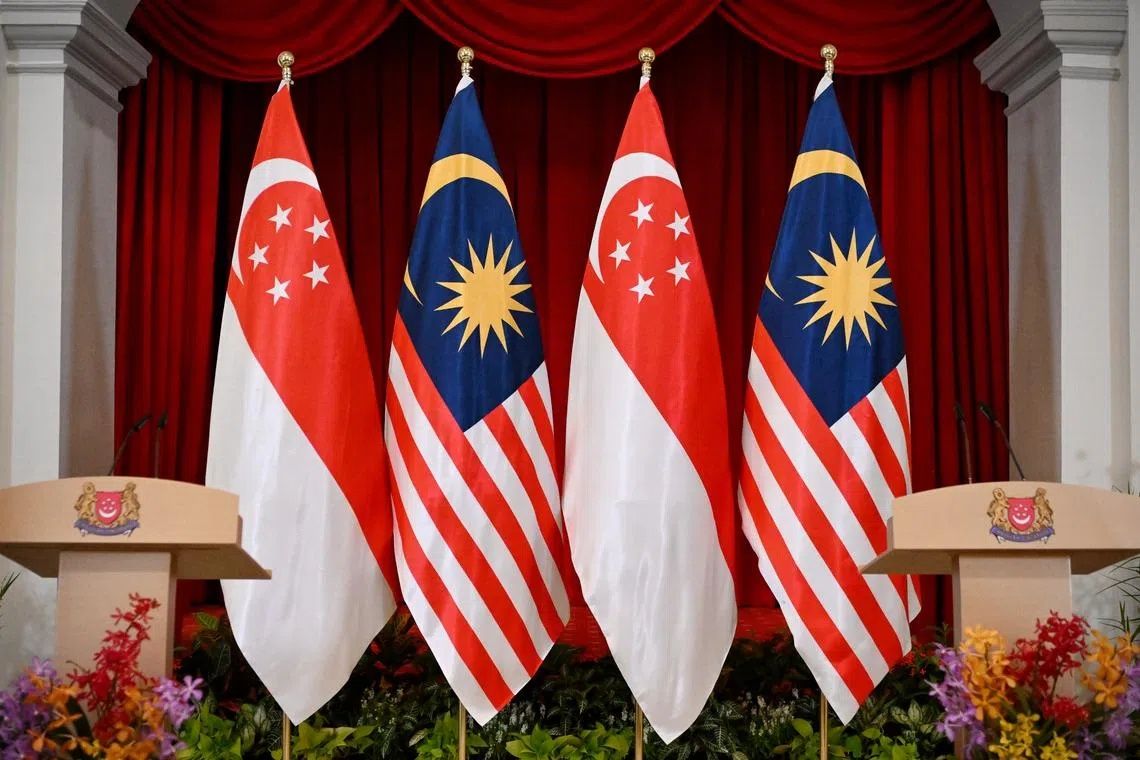
Singapore's President Tharman Shanmugaratnam has framed the relationship between Singapore and Malaysia as fundamentally resilient, capable of weathering occasional friction over specific matters without undermining the broader strategic partnership. Speaking ahead of his four-day state visit to Malaysia at the invitation of King Sultan Ibrahim Sultan Iskandar, the President articulated a vision of bilateral ties grounded in something deeper than immediate commercial advantage or narrow political gain.
The foundation of this partnership, according to President Tharman, rests on a shared commitment to addressing contentious issues directly rather than allowing them to fester beneath a surface of false cordiality. Both nations have adopted a pragmatic approach over successive administrations, treating disagreements as problems to be resolved through dialogue rather than as threats to the relationship itself. This measured response to discord reflects a maturity in statecraft that has allowed the two countries to accumulate trust and goodwill across six decades, even as they have confronted genuinely difficult bilateral matters along the way.
The President declined to enumerate the specific issues that have required management between Singapore and Malaysia, but his remarks acknowledge an inconvenient reality that both governments understand: neighbouring countries with a shared colonial past and deeply intertwined economies inevitably encounter friction points. These may involve territorial sensitivities, resource sharing, or differing strategic priorities in an increasingly complex regional environment. Yet what distinguishes the Singapore-Malaysia relationship from other troubled bilateral partnerships is the deliberate institutional and personal architecture constructed to transform disagreement into opportunity for deeper understanding.
Central to this framework is the accumulation of trust among political leaders, civil servants, and citizens on both sides of the Causeway. President Tharman emphasized that regional stability does not depend on the absence of disputes but rather on the disciplined capacity to manage them through established channels and shared commitment to international law. This observation carries particular weight for Southeast Asia, where rising geopolitical tensions and great power competition create pressure on regional nations to choose sides rather than maintain principled neutrality and balanced partnerships.
The President positioned Singapore and Malaysia's example as instructive for Asean and the broader Indo-Pacific region at a moment when multilateral cooperation faces unprecedented strain. By consistently prioritizing dialogue, exercising restraint, respecting sovereignty, and adhering to a rules-based order, the two nations demonstrate that smaller countries can navigate international complexity without sacrificing their interests. This model becomes increasingly valuable as traditional trading arrangements fracture and competition for influence intensifies among major powers.
Looking forward, President Tharman called for a more intentional and proactive deepening of cross-border engagement that cannot be taken for granted. Earlier generations, he suggested, benefited from organic social and economic interchange that created familiarity and mutual regard. Contemporary circumstances demand that both governments actively cultivate these connections through structured bilateral exchange programmes, youth leadership initiatives, and community projects that build understanding at grassroots levels. Without deliberate effort to maintain and refresh these bonds, the accumulated trust of decades could gradually erode.
The economic dimension of the partnership offers concrete opportunities for expanded cooperation. President Tharman highlighted several promising areas where Singapore and Malaysia can leverage complementary strengths. The Johor-Singapore Special Economic Zone and the ongoing RTS Link project exemplify how coordinated development initiatives can generate benefits for both populations. Beyond these flagship ventures, the President suggested that the two countries could deepen market integration, enhance energy and supply chain resilience through collaborative partnerships, and jointly address climate change through renewable energy investments and carbon credit mechanisms.
The geopolitical context frames these economic proposals as more than routine bilateral trade expansion. Faced with a fracturing multilateral trading system and intensifying competition among great powers, Singapore and Malaysia possess a mutual interest in deepening regional integration and strengthening Asean's capacity to maintain its centrality in managing regional affairs. Malaysia's successful Asean chairmanship in 2025, which culminated in welcoming Timor-Leste as the grouping's 11th member, created momentum that both nations should harness as they prepare for Singapore's assumption of the rotating chair in 2027.
President Tharman articulated a forward-looking agenda in which Singapore and Malaysia work together to preserve Asean's coherence and reliability as a partner on the international stage. This task becomes more challenging in an era when external powers seek to establish competitive spheres of influence and when internal Asean dynamics reflect divergent national interests. The two most developed and institutionally sophisticated members of the grouping bear particular responsibility for modeling the kind of principled partnership and commitment to collective interests that Asean requires to retain its relevance and effectiveness.
The President invoked a Malay proverb—"jiran sepakat membawa berkat" (neighbours in agreement bring blessings)—to encapsulate the philosophical foundation underlying practical cooperation. This cultural touchstone carries weight because it acknowledges that the relationship transcends mere strategic calculation or institutional formality. Respect and affection, genuine regard for the other nation's welfare and development, form the emotional and psychological bedrock without which institutional mechanisms alone cannot sustain partnership through periods of disagreement or external pressure.
President Tharman's articulation of the Singapore-Malaysia relationship as rooted in mutual benefit accumulated over 60 years reflects confidence that the partnership possesses sufficient depth to accommodate contemporary challenges. Yet his simultaneous emphasis on the need for proactive cultivation of cross-border ties suggests awareness that continuity cannot be assumed. Malaysian and Singaporean policymakers, business leaders, and citizens must actively choose the path of cooperation, dialogue, and mutual respect rather than allowing complacency or periodic disagreements to undermine the broader partnership. In a region facing multiple pressures and uncertainties, the health of this crucial bilateral relationship carries implications extending far beyond the two nations involved.

