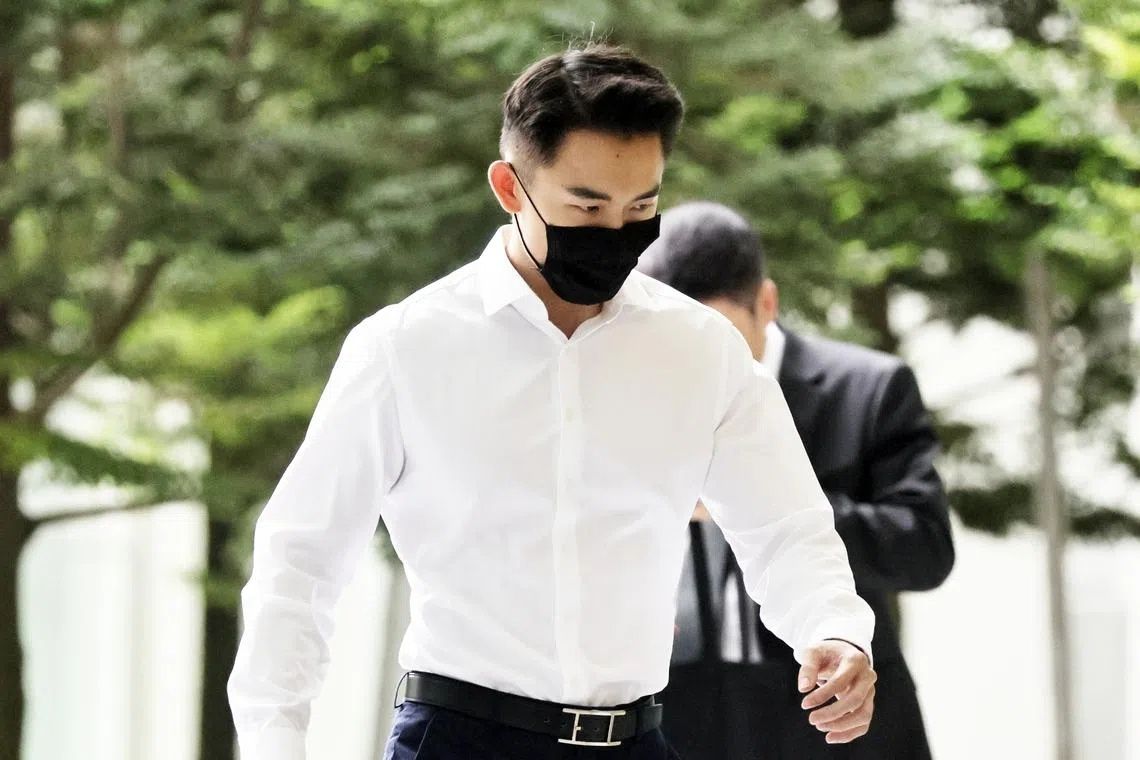
A 36-year-old medical doctor in Singapore has been found guilty of drug consumption following a high-profile police operation at a luxury hotel in Sentosa last year. Rayson Lee Rui Sheng was convicted on Tuesday of consuming MDMA, commonly known as ecstasy, during a gathering at a private villa within the Sofitel Singapore Sentosa hotel on August 9, 2023. The conviction represents a significant development in a case that saw authorities arrest 49 men ranging in age from 21 to 46 during an early-morning raid conducted by the Central Narcotics Bureau (CNB).
The circumstances of Lee's arrest shed light on how the operation unfolded. Police received information about suspicious activity at the hotel and initiated checks shortly after 5:30 am on the morning in question. Upon arrival, officers discovered substances believed to be controlled drugs and paraphernalia associated with drug use. The discovery prompted the immediate involvement of the CNB, which escalated the investigation and conducted a thorough search of the premises. During this operation, authorities seized multiple substances suspected to include ecstasy and ketamine, along with various items used in drug consumption. The scale of the gathering—with nearly 50 individuals present—suggested this was not an isolated incident but rather a coordinated event attracting significant numbers of participants.
Lee's defence centred on a claim that would prove unconvincing to District Judge A Sangeetha. He and his co-accused, 29-year-old Tan Li Ming, both argued that their drinks had been deliberately spiked without their knowledge or consent at the party. This narrative suggested they were unwitting victims who had consumed drugs against their will. However, the judge identified a critical inconsistency in their testimony: despite claiming their beverages had been tampered with, both men continued to consume additional drinks throughout the evening. This behaviour contradicted the logic of their spiked-drink defence and raised questions about their credibility in the witness stand.
Scientific evidence proved decisive in securing convictions. The Health Sciences Authority (HSA) analysed both urine and hair samples provided by Lee and Tan. The urine tests detected MDMA, while the hair analysis revealed the presence of both ecstasy and ketamine—drugs that remain detectable in hair for extended periods, indicating prior use patterns. Crucially, the hair evidence contradicted the defendants' narrative by demonstrating they had consumed these substances on previous occasions. Judge Sangeetha noted that neither man could credibly claim to be a newcomer to drug use, a finding that undermined their portrayal as innocent bystanders caught in an unfortunate circumstance.
The defence strategy employed several tactics that the prosecution ultimately dismissed as lacking substance. Lee's legal team, led by lawyer Tania Chin, did not dispute the HSA's scientific findings but instead focused on alternative explanations for how the drugs entered their systems. The defendants raised the possibility that certain plastic cups used at the party had not been seized by police and might have contained drug residue. They also claimed that unidentified foreign nationals present at the gathering had spiked their drinks. Deputy public prosecutors Jocelyn Teo and Dhiraj G Chainani characterised these arguments as presenting "hypothetical scenarios and unexplored possibilities" rather than concrete evidence.
The prosecution's rebuttal addressed the inherent weaknesses in the defence case. The DPPs argued that even if the cups had been seized and tested positive for drugs, this would only demonstrate that the defendants had consumed drug-laced beverages—not that they had done so unknowingly. More significantly, the prosecutors highlighted that Lee and Tan had failed to provide any credible, specific details about the individuals who allegedly spiked their drinks. If they had genuinely been victims of this scenario, they should have been able to describe their alleged perpetrators with some precision. Instead, their accounts remained vague and unsubstantiated, relying on references to unknown persons without concrete identifying information.
Lee's own testimony revealed inconsistencies that weakened his credibility. He admitted that while at the villa, he had consumed three drinks provided by strangers. He claimed not to have witnessed any pills, drug paraphernalia, or instances of drug consumption during the party. However, this account contrasted sharply with his admission that during a separate trip to Thailand in June 2023, just two months before the Sentosa incident, he had taken a pill given to him by a stranger on two separate occasions. This pattern of accepting substances from unknown individuals at social gatherings suggested either a troubling lack of caution or a willingness to engage with drugs that belied his claim of innocence.
Tan's account of the alleged spiking proved equally unconvincing to the court. He claimed to have observed four or five unknown men at the villa's pantry area using a syringe to extract liquid from a bottle and inject the mixture into plastic cups. Tan stated that after drinking from one such cup, he noticed white residue at the bottom. He then reportedly approached an unidentified person and enquired about the substance being injected into the drinks. According to Tan, this person told him it was "G-water" that would produce a "drunk feeling." Tan claimed ignorance about what "G-water" meant, a statement the judge found remarkable given that his conversation with this individual appeared to acknowledge something potentially dangerous was being administered to the drinks.
The implications of this conviction extend beyond the individual defendants to broader concerns about drug use in Singapore's social venues. The August 2023 raid demonstrated that despite Singapore's stringent drug laws and enforcement mechanisms, organised or semi-organised drug use continues to occur at establishments that cater to affluent clientele. The involvement of a medical doctor, a professional whose career and reputation depend on upholding ethical standards, underscores that drug consumption crosses social and professional boundaries. For Malaysian readers, the case serves as a reminder of the vigilant enforcement stance maintained by Singapore's authorities and the serious consequences individuals face when caught engaging in drug-related activities.
The court's rejection of the defendants' testimony also reflects broader judicial scepticism toward drink-spiking defences in drug consumption cases. While such spiking does occur in real contexts, courts require substantive evidence—specific identifications, corroborating witnesses, or credible details about perpetrators—rather than generic claims about unknown individuals. The judge's finding that Lee and Tan were not strangers to drug use, combined with their continued consumption of drinks despite alleged knowledge of tampering, created an overwhelming case that contradicted their victimhood narrative. The prosecutors' argument that the defendants' strategy amounted to presenting distraction rather than defence ultimately proved persuasive.
Both Lee and Tan received convictions on a single count of drug consumption each on Tuesday, June 30. The case raises questions about sentencing that will likely emerge in subsequent court proceedings. Singapore's drug laws impose severe penalties for consumption offences, reflecting the nation's zero-tolerance approach to narcotics. The conviction of a medical professional adds an additional dimension, as professional regulatory bodies may pursue further disciplinary action independent of criminal penalties. For the broader Southeast Asian region, the case exemplifies how wealthy urban societies continue to grapple with illicit drug use despite legal frameworks and enforcement mechanisms designed to prevent it.
The raid on the Sofitel Singapore Sentosa villa party ultimately yielded convictions in a case where the defence rested on claims that courts found structurally implausible. The combination of scientific evidence, behavioural inconsistencies, and lack of credible detail about alleged perpetrators created an insurmountable evidentiary burden for the defendants. For individuals in Malaysia and across Southeast Asia, the case underscores the reality that claiming unknowing consumption faces profound scepticism in courtrooms, particularly when scientific testing reveals repeated exposure and when personal conduct contradicts assertions of victimhood. The conviction serves as a cautionary tale about the risks of drug-related socialising and the severity with which Singapore's legal system treats such violations.

