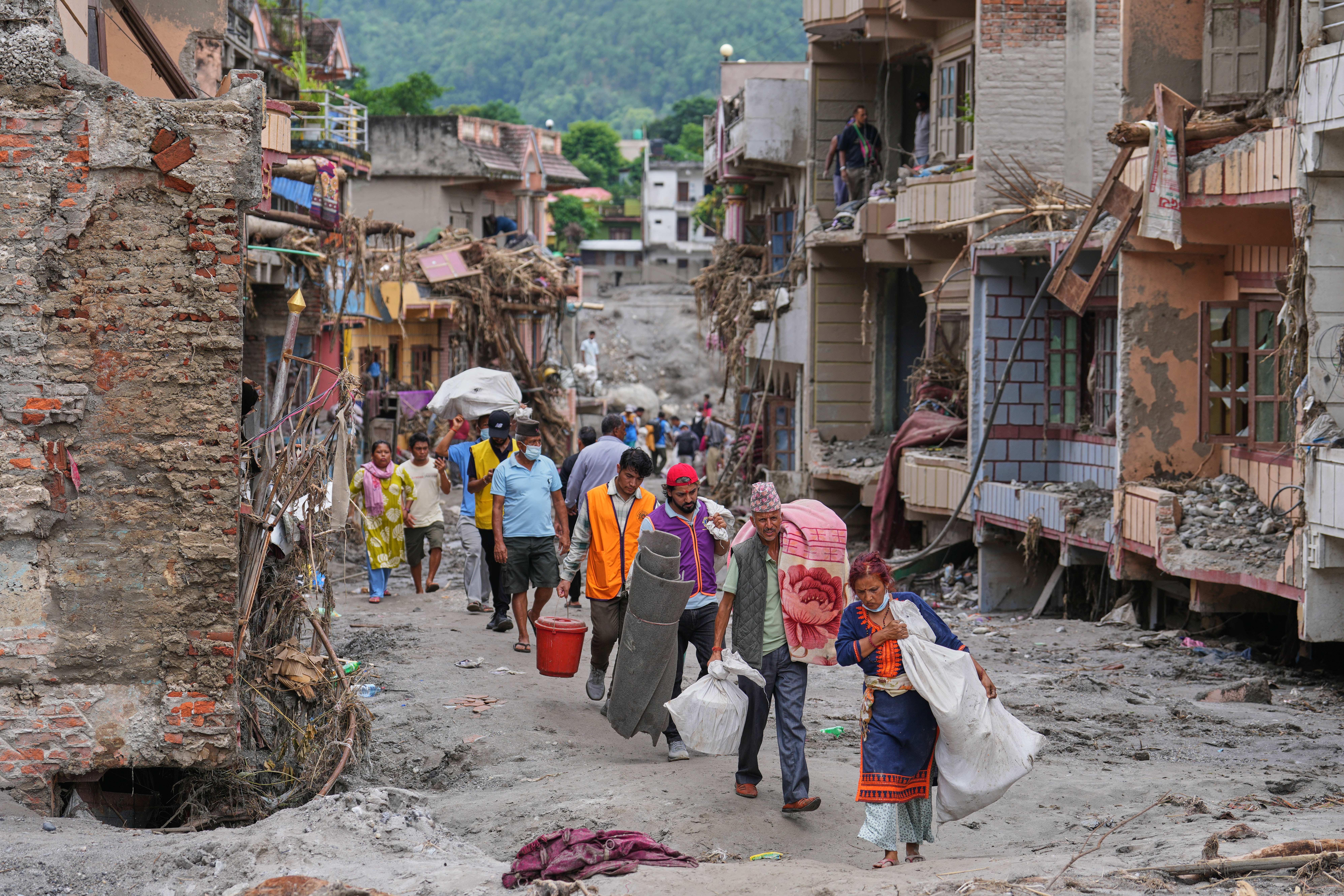
Singapore has committed to substantial humanitarian assistance for Nepal following catastrophic flash flooding that struck the nation's border regions with China, the Foreign Ministry announced on Monday. The city-state's response encompasses both specialized personnel and material aid, marking a coordinated regional effort to address one of South Asia's most significant natural disasters this year. The deployment represents Singapore's multilayered approach to crisis response, involving civilian agencies, military resources, and specialized technical expertise in disaster management.
Specialized Singapore Police Force officers trained in Disaster Victim Identification will be deployed to Nepal at the request of Nepalese authorities. This DVI capability addresses one of the most urgent needs following mass casualty events, where rapid and accurate identification of deceased victims becomes critical for families and for coordinating broader relief operations. Singapore's expertise in forensic victim identification has been developed through previous regional disaster responses and reflects the country's investment in humanitarian disaster management capacity. The deployment of these specialists underscores how Southeast Asian nations increasingly share technical capabilities during regional emergencies, creating networks of expertise that transcend bilateral aid frameworks.
Beyond personnel, Singapore is supplying humanitarian assistance from both civilian government sources and the Singapore Armed Forces. The nature and scale of these supplies remain unspecified in official statements, though SAF contributions typically encompass logistics support, medical equipment, and emergency shelter materials suited to rapid deployment. This dual-source approach—combining civilian ministries with military logistics capacity—enables rapid mobilization of resources that might otherwise require weeks to assemble through conventional procurement channels. For Malaysia and other Southeast Asian nations observing Singapore's response, the model demonstrates how small, well-organized city-states can leverage both civilian and defense infrastructure for humanitarian purposes.
Foreign Minister Dr Vivian Balakrishnan personally conveyed Singapore's assistance commitment during a telephone conversation with Nepalese Foreign Minister Shisir Khanal. High-level diplomatic engagement accompanying material aid serves multiple functions: it signals political solidarity with Nepal, ensures coordination with Nepalese authorities on logistics and access, and creates channels for ongoing communication as needs evolve during the recovery phase. For regional observers, such direct ministerial engagement demonstrates how ASEAN-adjacent nations maintain diplomatic relationships that facilitate crisis response, a model that strengthens broader regional resilience.
Singapore had previously contributed US$100,000 (RM403,000) on Friday to the Singapore Red Cross' public fundraising campaign for Nepal relief. This earlier monetary donation reflected immediate recognition of the crisis severity and complemented subsequent announcements of personnel and in-kind supplies. By August 31, the Singapore Red Cross had accumulated approximately S$1 million (RM3.16 million) through public fundraising efforts, indicating substantial domestic support for Nepal assistance among Singapore's population and businesses. The combination of government contributions and public fundraising illustrates how Singapore mobilizes multiple funding channels to maximize relief impact.
The underlying disaster that triggered this response represents a humanitarian catastrophe of significant magnitude. Flash floods and mudslides cascading through the Nepal-China border region have claimed at least 919 lives, with nearly 4,800 individuals reported missing six days after the initial disaster. Among the missing are 853 foreigners, suggesting that the flooding affected tourists and migrant workers alongside local populations. The persistence of such high missing-person figures indicates that search and recovery operations remain incomplete, underscoring why Singapore's DVI specialist deployment carries particular urgency.
Singapore's Crisis Response Team has operated in Nepal since August 27, providing consular assistance to affected Singaporean nationals. This on-the-ground presence enables immediate identification of Singapore citizens requiring evacuation, medical assistance, or family support services. Establishing such teams within 24 hours of major disasters reflects Singapore's institutional capability for rapid crisis response and demonstrates institutional preparedness that smaller Southeast Asian nations continue developing. The consular team's presence also facilitates coordination between Singapore's humanitarian dispatches and Nepalese reception authorities, ensuring aid reaches appropriate distribution points.
For Malaysia and the broader Southeast Asian region, Singapore's response patterns offer insights into how developed regional economies approach major natural disasters affecting neighbors. The deployment of technical expertise alongside financial contributions and material aid creates comprehensive assistance frameworks that address both immediate survival needs and longer-term recovery requirements. Nepal's geographic position at Asia's highest elevations creates unique disaster risks, from flooding during monsoon seasons to earthquake-triggered landslides, positioning it as a recurring humanitarian concern for regional actors. Singapore's established mechanisms for rapid response—specialized police units, SAF logistics capacity, funded NGO partnerships, and diplomatic coordination channels—represent institutional investments that other Southeast Asian nations continue developing.
The Nepalese government's specific request for Singapore's DVI specialists indicates recognition of Singapore's technical capabilities and trustworthiness as a partner in sensitive disaster operations. Such requests reflect how nations build specialized humanitarian relationships beyond general foreign aid frameworks. Nepal's acceptance of Singaporean personnel demonstrates regional comfort with cross-border deployments of technical experts during crises, a practice that strengthens transnational cooperation mechanisms essential for addressing disasters that disregard national boundaries.
Singapore's commitment to continue close coordination with Nepal's government suggests that the initial announcements represent the opening phase of extended assistance. Recovery from major flooding typically requires sustained support spanning months, encompassing reconstruction of infrastructure, restoration of agricultural productivity, and provision of ongoing medical services. By anchoring its response within explicit frameworks of ongoing cooperation, Singapore signals that assistance will extend beyond immediate emergency response into recovery and reconstruction phases. This extended commitment perspective increasingly characterizes how developed regional economies approach neighboring nations' disasters, recognizing that humanitarian leadership requires long-term investment rather than short-term crisis response.

