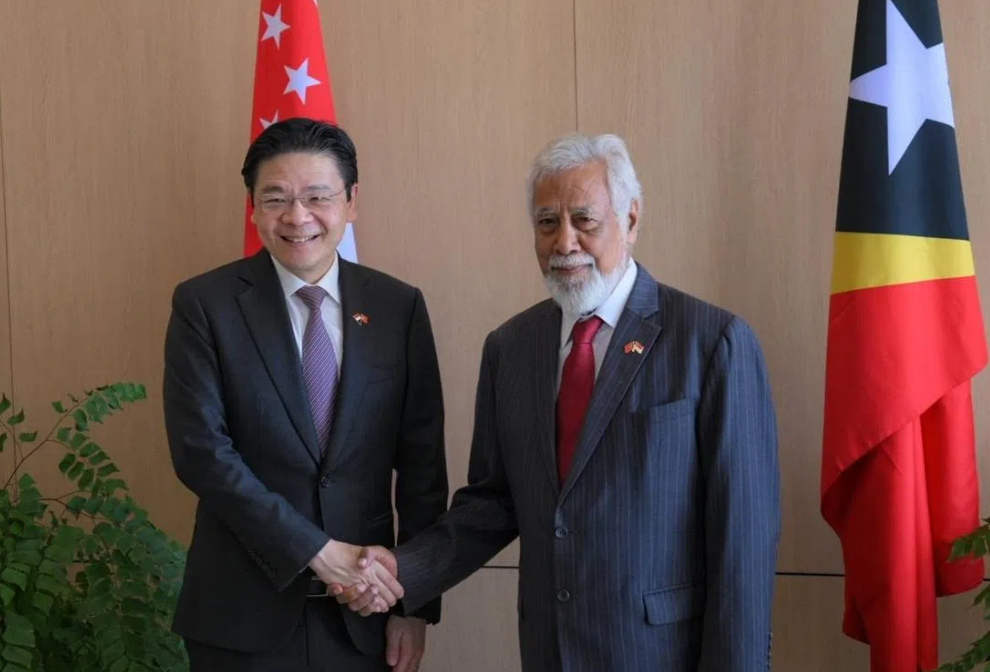
Prime Minister Lawrence Wong's historic visit to Timor-Leste has culminated in a comprehensive partnership agreement aimed at deepening economic and institutional ties between the two nations. The accord, signed on July 3 at the Government Palace in Dili, represents the first formal framework for bilateral cooperation and marks a significant shift in how the two countries will coordinate on issues ranging from trade and investment to regional security and strategic planning. This inaugural visit by a Singapore prime minister underscores the growing importance of Timor-Leste within Singapore's regional engagement strategy, particularly given the island nation's strategic location and its recent integration into the Association of Southeast Asian Nations (ASEAN).
At the heart of the new framework lies a commitment to establish regular consultation mechanisms between the foreign ministries of both countries. These structured dialogues will enable officials to move beyond routine bilateral matters and engage substantively on regional and international developments that affect Southeast Asia. According to PM Wong, this mechanism will facilitate closer government-to-government coordination and create pathways for identifying shared interests and opportunities. The agreement reflects a recognition that despite their small size, both nations can influence their destinies through strategic partnerships, a philosophy that resonates particularly with Timor-Leste as it navigates its early years as a fully fledged ASEAN member following its accession in October 2025.
The economic dimension of this partnership carries immediate and tangible implications for businesses in both countries. Singapore is already one of Timor-Leste's largest sources of foreign investment, with Singaporean enterprises actively exploring opportunities across diverse sectors including wholesale and retail trade, renewable energy, and general commerce. PM Wong's announcement that these investments reflect confidence in Timor-Leste's future trajectory signals that Singapore's private sector views the country as an emerging market with genuine potential for profitable expansion. This investor confidence is particularly noteworthy given that Timor-Leste remains one of Southeast Asia's least developed economies, heavily dependent on oil and gas revenues and still building its institutional capacity and infrastructure.
A landmark labour mobility initiative unveiled during the visit will significantly reshape workforce dynamics in Singapore's construction and marine shipyard sectors. Beginning in the second half of 2027, Singapore will designate Timor-Leste as an approved source for non-traditional migrant workers in these industries, allowing companies to employ Timorese nationals on work permits. This move addresses persistent labour shortages that have constrained growth in these sectors and reflects pragmatic recognition that Singapore's ageing population and tight domestic labour market necessitate expanded recruitment from partner nations. For Timorese citizens, the opportunity represents a pathway to employment in a developed economy offering superior wages and working conditions compared to alternatives in the region, while also strengthening people-to-people connections between the two societies.
Singapore's Ministry of Manpower has already documented early interest from local firms in hiring Timorese workers, particularly in construction projects where skill shortages have become increasingly acute. By formally opening these pathways, the ministry expects to provide employers with access to a broader and more diverse labour pool capable of meeting their operational demands. The timing—set for 2027—allows for advance preparation and training, ensuring that Timorese workers entering Singapore's labour market possess relevant qualifications and language competencies. This managed approach reflects lessons learned from Singapore's experience with previous labour mobility arrangements and demonstrates a commitment to orderly, sustainable worker recruitment rather than ad-hoc temporary employment.
The healthcare cooperation agreement, expected to be finalised in July through a pact between Singapore's National University Hospital (NUH) and Timor-Leste's Ministry of Health, establishes a five-year framework for systematic capacity building in the island nation's health sector. The collaboration will focus on workforce development, healthcare training infrastructure, public health capability, and broader health systems strengthening—areas where Timor-Leste faces significant challenges stemming from its limited medical infrastructure and brain drain of health professionals. NUH's involvement brings Singapore's world-class expertise in specialised fields including emergency medicine, paediatrics, obstetrics, gynaecology, and ophthalmology—precisely the areas identified by Timor-Leste's health authorities as priorities for institutional development. This structured knowledge transfer directly addresses critical gaps in Timor-Leste's ability to provide comprehensive healthcare services to its population.
Education emerges as another pillar of expanding cooperation, with Singapore committing to support Timor-Leste's national teacher training and education leadership development institutes. The rationale reflects recognition that sustainable national development depends fundamentally on human capital formation and institutional capacity. By helping Timor-Leste cultivate a cadre of skilled educators and school leaders, Singapore invests indirectly in the nation's long-term stability and economic potential. This focus on educational advancement also aligns with broader ASEAN development priorities and demonstrates how bilateral partnerships can contribute to regional progress beyond immediate commercial interests.
Singapore's broader support for Timor-Leste's ASEAN integration trajectory demonstrates strategic foresight regarding the region's future architecture. The Singapore-Timor-Leste ASEAN Readiness Support (STARS) package, initially launched in December 2022 and enhanced in July 2025, has equipped Timorese officials with the technical knowledge and procedural understanding necessary to participate effectively in ASEAN meetings and mechanisms. Now that Timor-Leste has formally joined ASEAN, Singapore's expansion of this support to include dedicated chairmanship preparation reflects anticipation of Timor-Leste's scheduled presidency of ASEAN in 2029. This forward-looking assistance provides practical apprenticeship opportunities, including attachments to Singapore's own chairmanship teams when Singapore assumes the role in 2027, enabling Timorese officials to observe and learn from actual ASEAN administrative and diplomatic practice.
The expanded chairmanship preparation programme will include tailored workshops designed to equip Timorese officials with understanding of the complex responsibilities and procedural requirements inherent in leading ASEAN. This institutional mentoring represents investment in ASEAN's overall effectiveness and legitimacy, as a well-prepared rotating presidency ensures that the organisation's operations proceed smoothly and that member states' interests receive equitable consideration. From Timor-Leste's perspective, successful management of the 2029 ASEAN chairmanship would significantly enhance the nation's international standing and demonstrate its capacity to contribute meaningfully to regional leadership.
During the visit, President Jose Ramos-Horta conferred upon PM Wong the Order of Timor-Leste (Grand Collar), acknowledging Singapore's multifaceted contributions to Timor-Leste's development and particularly recognising the capacity-building assistance that has supported Timorese integration into ASEAN. In accepting the honour, PM Wong characterised the recognition as belonging to Singapore's institutional personnel who have worked on the ground in Dili—trainers, technical experts, and development professionals who have transferred professional knowledge and worked alongside Timorese counterparts in nation-building endeavours. This framing emphasises that bilateral cooperation succeeds through sustained personal engagement and knowledge exchange rather than merely through government pronouncements or financial transfers.
The comprehensive nature of this bilateral framework reflects both nations' recognition that their partnership serves broader regional interests. For Malaysia and other ASEAN members, the Singapore-Timor-Leste relationship offers both a model for mentoring newer members and a reminder that ASEAN's strength depends on including and integrating developing economies into regional institutions and processes. Timor-Leste's successful integration into ASEAN, actively supported through initiatives like Singapore's STARS package and now formalised through this partnership framework, strengthens ASEAN's collective capacity and regional cohesion. The expansion of labour mobility, healthcare cooperation, and educational exchange also demonstrates how bilateral relationships can generate benefits extending beyond the two nations involved, as improved healthcare systems and educated workforces in Timor-Leste contribute to regional stability and development.

