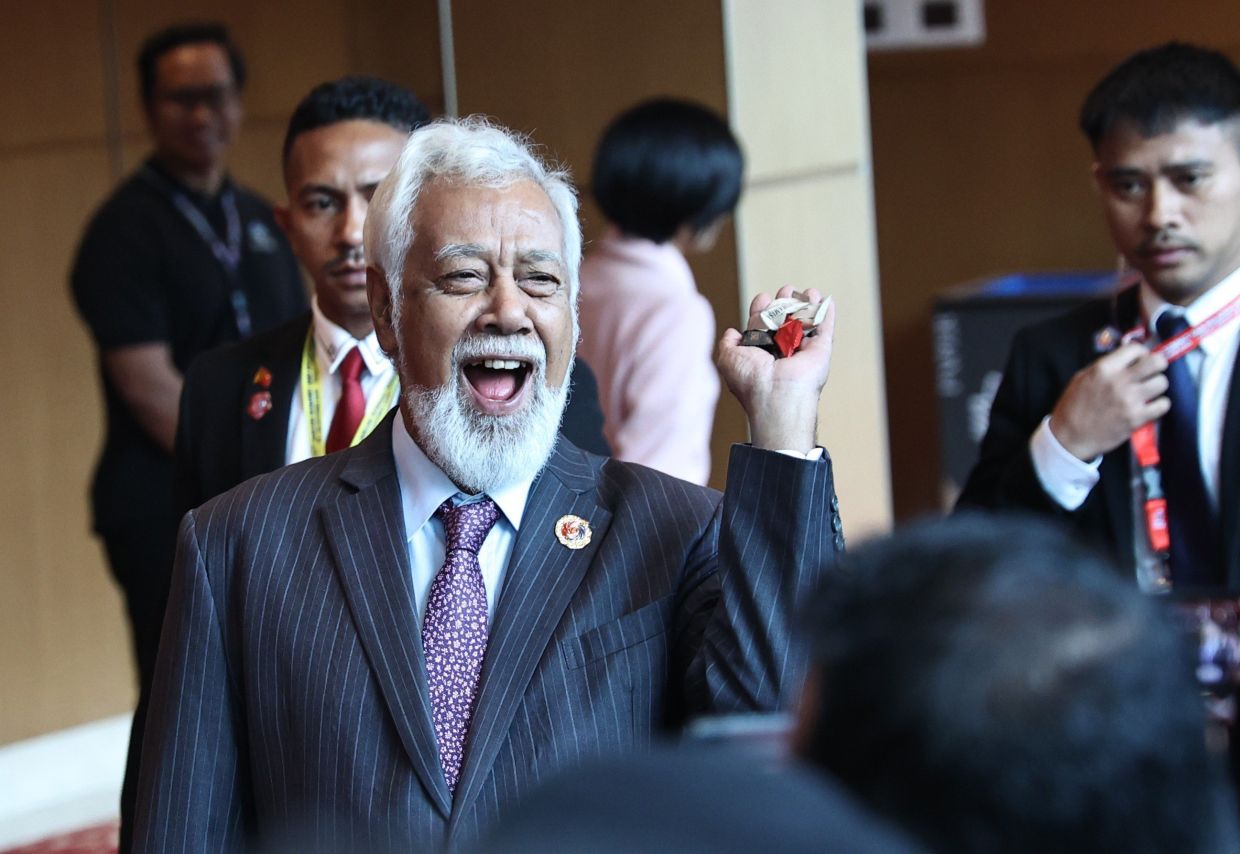
Singapore is shifting its approach to Timor-Leste from ensuring the country's successful entry into Asean to helping it become a capable contributor within the regional organisation. Prime Minister Lawrence Wong articulated this strategic pivot during a historic two-day visit to Dili in early July, the first by a Singapore prime minister, emphasising that membership carries responsibilities alongside privileges. The upgraded support package announced jointly with Timor-Leste Prime Minister Xanana Gusmao reflects a mature partnership framework that acknowledges the island nation's growing ambitions within Southeast Asian affairs.
Timor-Leste's journey to full Asean membership represents a significant milestone in the nation's post-independence trajectory. Having applied for membership in 2011, the country received observer status a decade later in 2022 before finally achieving full membership on October 26, 2025. This progression underscores the demanding nature of the accession process and the considerable groundwork required to meet the organisation's political and economic standards. Singapore, having supported Timor-Leste's bid from an early stage, now recognises that the real challenge lies not in crossing the membership threshold but in enabling the newest member to function effectively within Asean's complex institutional structures and diplomatic frameworks.
The expanded support package addresses a fundamental transition in Timor-Leste's Asean engagement. Rather than focusing on basic integration mechanisms, Singapore is now organising specialised workshops designed specifically for officials in Dili who will manage the technical and diplomatic dimensions of Asean chairmanship. These tailored sessions will equip Timorese administrators with practical knowledge about coordinating regional meetings, managing consensus-building among diverse member states, and handling the administrative machinery that makes Asean function. Additionally, Singapore has committed to hosting attachments for Timorese officials within its own chairmanship teams when Singapore assumes the rotating role in 2027, providing hands-on experience of how a developed economy with extensive regional diplomatic infrastructure manages the demands of regional leadership.
Timor-Leste's intention to chair Asean in 2029 represents both an opportunity and a considerable undertaking for a nation still consolidating its institutional capacity. Wong acknowledged the gravity of this responsibility, noting that all prime ministers who have navigated an Asean chairmanship recognise it as a demanding and consequential endeavour. The announcement of Singapore's preparatory support signals the broader Asean community's investment in ensuring that Timor-Leste's leadership of the organisation strengthens rather than strains regional cohesion. This represents a substantive commitment that extends beyond ceremonial gestures, recognising that effective regional leadership requires deep familiarity with procedural intricacies and diplomatic precedents accumulated over decades.
The timing of Wong's visit carries particular significance within the context of Singapore's broader engagement with Timor-Leste. The relationship between the two countries has historical depth, with Singapore positioning itself among the early contributors to the United Nations peacekeeping operations that stabilised Timor-Leste following the 1999 independence referendum. The nation's formal independence in 2002 established bilateral diplomatic relations, yet the pace of substantive partnership accelerated following Timor-Leste's successful transition to full Asean membership. Wong framed his visit as arriving at a natural inflection point where Timor-Leste's regional status transformation warranted elevated bilateral engagement and expanded cooperative mechanisms.
The formalisation of a bilateral consultation mechanism between Singapore and Timor-Leste's foreign ministries marks a significant institutional development in their relationship. This framework, already established between Singapore and other Asean members, provides structured channels for diplomatic dialogue and policy coordination. The mechanism facilitates regular high-level exchanges and enables officials from both countries to address bilateral issues, coordinate on regional matters, and explore new areas of mutual interest in a systematic manner. This institutionalisation signals Singapore's intention to develop Timor-Leste as a substantive partner rather than treating it as a junior member requiring perpetual guidance.
Cooperation in human resource development, education, and healthcare constitute the primary pillars of the expanded bilateral partnership. These sectors align with Timor-Leste's long-term development priorities while leveraging Singapore's established expertise and institutional capacity. Educational exchanges will expose Timorese professionals to advanced training methodologies and knowledge systems, facilitating technology transfer and institutional learning. Healthcare cooperation addresses immediate developmental needs while building institutional partnerships that create enduring connections between the two societies. Such sector-specific cooperation generates tangible benefits for ordinary Timorese citizens while simultaneously building people-to-people networks that transcend governmental channels.
Economic diversification emerges as a crucial context for expanding Singapore-Timor-Leste commercial engagement. Historically reliant on oil and gas revenues, Timor-Leste recognises the necessity of developing alternative economic engines to ensure long-term prosperity and economic resilience. The government is actively nurturing sectors including hospitality, infrastructure development, and blue economy activities that leverage the nation's maritime resources and geographical position. Wong's acknowledgment that opportunities exist for Singaporean businesses reflects a pragmatic assessment that Singapore's entrepreneurial expertise and capital could meaningfully contribute to these diversification objectives. Several Singaporean enterprises have already established footholds in Timor-Leste's emerging market, providing proof of concept for broader business engagement.
Yet Wong's remarks on business engagement carried measured realism about the challenges inherent in investing within emerging markets. He cautioned that success requires patience, cultural sensitivity, and willingness to develop genuine local partnerships rather than imposing external business models. The experiences of Singapore's business community in Timor-Leste, though mixed, demonstrate that vibrant opportunities coexist with genuine operational complexities. Some ventures have flourished, while others have encountered obstacles related to infrastructure limitations, regulatory uncertainties, and cultural differences. This acknowledgment distinguishes Wong's message from uncritical optimism, instead encouraging Singapore's business sector to engage with Timor-Leste as a serious long-term investment destination requiring genuine commitment and local integration.
Timor-Leste's demographic profile represents a significant asset for long-term economic development and regional influence. As a young nation with a predominantly youthful population and abundant natural resources, the country possesses the human capital and material foundations necessary for sustained growth. Wong emphasised this demographic advantage while cautioning against complacency about the nation's current development stage. The country's potential extends considerably beyond its present economic output, but realising this potential demands sustained investment in institutional capacity, infrastructure, and human capital development. Singapore's willingness to invest in this developmental process reflects confidence in Timor-Leste's trajectory while acknowledging the considerable distance the nation must traverse to achieve advanced economy status.
Wong's encouragement for Singaporeans to visit Timor-Leste and engage authentically with local cultures reflects a sophisticated understanding of sustainable bilateral relationships. Tourism and cultural exchange create durable connections that transcend governmental formality and commercial calculation. By promoting genuine cross-cultural understanding rather than assuming Singapore's superiority in all domains, Wong signalled respect for Timorese society and culture. This approach recognises that sustainable partnerships between unequal economies and political systems require mutual recognition of each society's distinctive strengths and values. The implicit message—that Singaporeans have much to learn from Timorese society—inverts typical development narratives and positions engagement as genuinely reciprocal rather than patronising.
Singapore's elevated engagement with Timor-Leste carries broader implications for Asean's institutional maturation. By investing significantly in a newest member's capacity and assisting its preparation for regional leadership, Singapore reinforces the principle that Asean membership confers not merely privileges but genuine responsibilities. This approach strengthens the organisation's collective institutional capacity while demonstrating that advanced members view newer entrants as future peers rather than perpetual junior partners. As Timor-Leste prepares for its potential 2029 chairmanship, the support framework being constructed will significantly influence whether the country emerges as an effective regional leader or struggles to manage the transition. Singapore's investment thus serves broader organisational interests alongside bilateral relationship objectives, contributing to the long-term stability and effectiveness of Asean as an institution.

