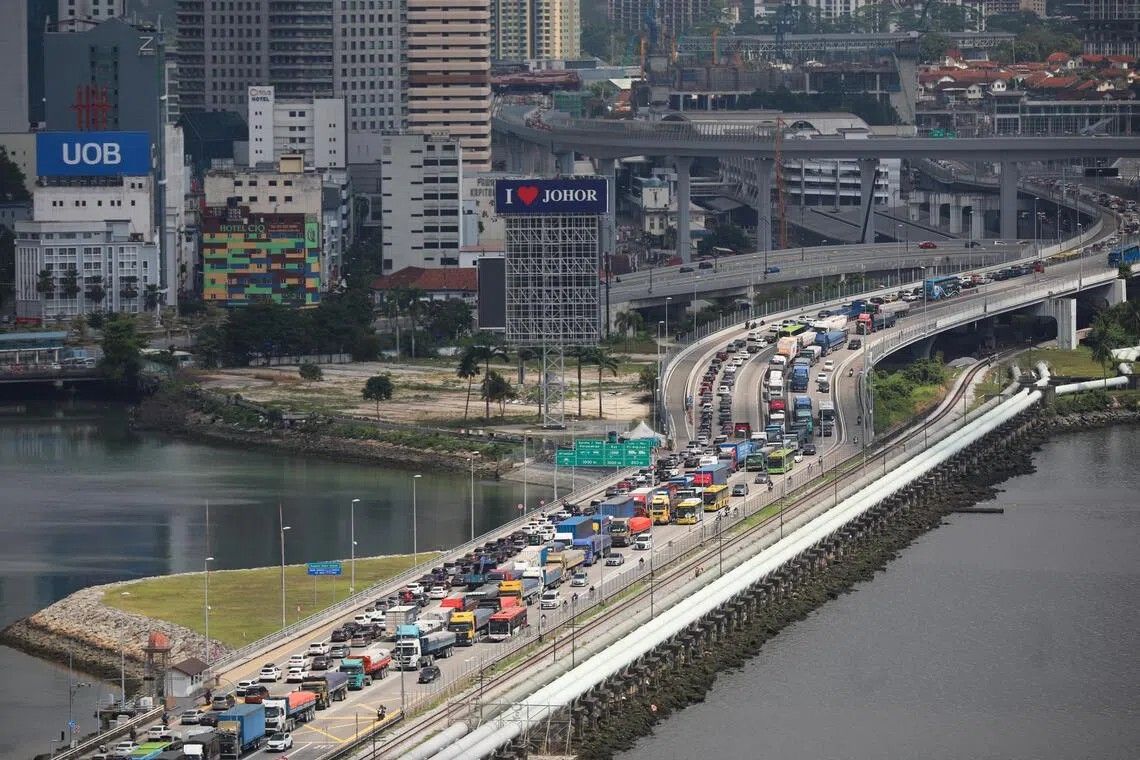
Singapore's immigration authorities are preparing for a surge in cross-border traffic during the National Day long weekend, with the Immigration and Checkpoints Authority cautioning drivers to anticipate "very heavy traffic" at both the Woodlands and Tuas checkpoints between August 7 and 10. The warning underscores the perennial challenge facing the city-state as one of the world's busiest land borders, connecting Singapore to Johor Bahru and serving as a crucial commercial and leisure corridor for the region.
The ICA's advisory, issued on August 3, represents a standard precautionary measure during major holiday periods when cross-border movements typically spike dramatically. The authority has recommended that travellers engage in careful journey planning rather than embarking on spontaneous trips, and specifically encouraged those with flexibility to avoid peak hours by travelling either in the early morning hours before dawn or during late evening periods when traffic volumes diminish. This guidance reflects data-driven insights accumulated from managing millions of border crossings annually across Singapore's land gates.
Realising the unpredictability inherent in border crossings, the ICA advised all departing travellers to monitor real-time traffic conditions at both checkpoints before commencing their journeys. This pre-departure intelligence gathering has become increasingly sophisticated, with multiple channels now available for checking congestion levels, enabling commuters to make informed decisions about departure timing. The emphasis on advance information reflects a broader shift towards empowering travellers with actionable data rather than simply enforcing compliance.
Recent traffic patterns provide sobering context for the current warnings. During the combined period spanning Hari Raya Haji, Vesak Day, and the June school holidays from May 26 to June 28, the two checkpoints processed more than 18 million travellers, a staggering figure that illustrates the volume pressures routinely confronting border infrastructure. The data captures the concentration of movement during holiday windows, when leisure travel, family visits, and commercial activity converge simultaneously at the same physical chokepoints.
More critically, on June 19 alone, the checkpoints handled more than 598,000 travellers, establishing a new daily record and surpassing the previous benchmark of 589,000 recorded on December 19, 2025. This incremental progress suggests that even established high-volume days can be exceeded when external factors align. These figures underscore why planners and policymakers across Southeast Asia watch Singapore's border management closely, as efficient cross-border movement directly impacts regional competitiveness and integration.
Wait times during congested periods have reached alarming levels, with drivers facing delays of up to three hours simply for immigration processing during peak hours, compounded by traffic backups extending into Malaysian territory. These extended delays impose substantial costs on individuals and businesses alike, creating ripple effects across supply chains and leisure itineraries. The congestion often reflects not purely local bottlenecks but constraints originating from Malaysian roads feeding into the checkpoints, highlighting the cross-border nature of the challenge.
Security remains a paramount concern alongside traffic management. Since February 28, the ICA has intensified security screening procedures at all checkpoints, responding to elevated global security conditions and particularly developments in the Middle East. This hardening of security protocols necessarily adds processing time, creating an inherent tension between border security objectives and traffic fluency that officials must constantly balance. Enhanced vigilance at entry and exit points serves protective functions but inevitably affects throughput capacity.
To mitigate delays, the ICA actively promotes the MyICA mobile application, through which travellers can generate QR codes enabling expedited immigration clearance. Digital facilitation represents a key efficiency lever, shifting routine verification processes from labour-intensive manual checks to automated systems. Adoption of such technology remains uneven, however, with awareness and digital literacy variations among the diverse travelling population affecting uptake rates across different demographics and nationalities.
The New Clearance Concept technology, particularly facial recognition systems available to motorcycle riders and pillion passengers, has demonstrated measurable success, improving clearance rates by more than 35 per cent compared with pre-pandemic 2019 baselines. This translates to an additional 7,600 travellers per hour during peak departure periods, a substantial improvement that nonetheless remains insufficient to eliminate queuing during peak holiday windows. The selective application of biometric technology to motorcycle traffic reflects both technological constraints and the tiered approach authorities adopt across different vehicle categories.
Behavioural compliance forms the final pillar of the ICA's traffic management strategy. Officials emphasise that queue-cutting actively undermines overall traffic flow and compounds delays for compliant travellers, creating negative externalities that ripple through the entire system. Enforcement mechanisms include mandatory U-turn directives requiring queue-jumpers to rejoin queues at the back, and in egregious cases, temporary bans from Singapore entry. These deterrence measures attempt to cultivate a culture of orderly conduct at the borders.
Recent enforcement data illustrates the scope of disciplinary challenges. During the May-June holiday period, officers apprehended 52 motorists for traffic-related offences and dangerous road behaviour, resulting in referrals to Traffic Police for investigation, re-queuing requirements, and entry bans for repeat offenders. While these figures represent a small fraction of the millions crossing during the same window, they indicate that despite years of public messaging, a persistent minority engages in behaviour that destabilises the entire system.
For Malaysian and regional readers, Singapore's border congestion carries direct implications. The Woodlands and Tuas checkpoints serve not merely leisure traffic but significant commercial flows, with delays affecting supply chains, employment commuters, and cross-border workers. Efficient cross-border movement forms a cornerstone of the Singapore-Malaysia economic relationship, and sustained congestion ultimately affects bilateral commerce and regional integration. The August National Day weekend patterns likely foreshadow similar volumes during subsequent holiday periods throughout the year, making advance planning and adoption of digital tools increasingly essential for regular cross-border commuters.

