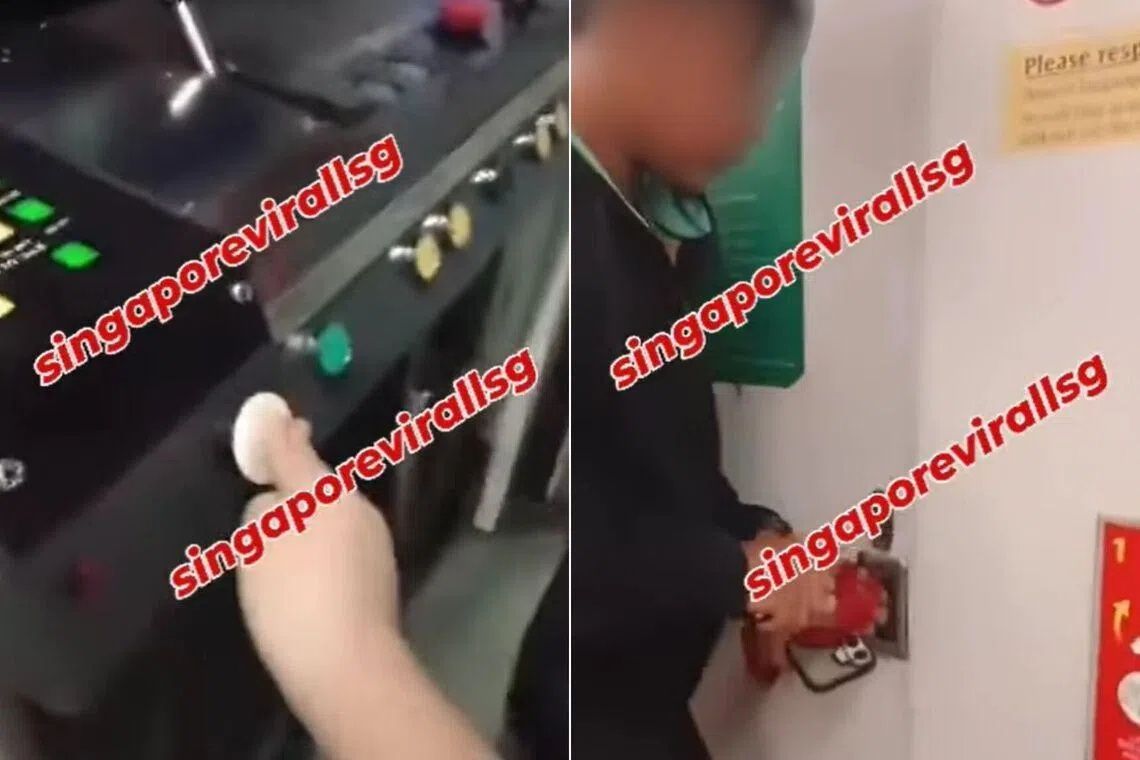
Two young boys in Singapore have escaped prosecution after breaking into a restricted area of a moving MRT train, instead receiving conditional warnings from police following an incident that has since drawn widespread public attention through social media circulation. The pair, aged 11 and 12, forced their way into the driver's cabin of a North-South Line train on 21 February, an action that authorities have characterised as a serious breach of rail safety protocols despite their relatively young age.
The unauthorised intrusion came to light only recently when video footage of the incident began circulating across social media platforms, including the singaporevirallsg Instagram account where the clip accumulated more than 281,000 views and generated close to 140 comments within days. The viral spread of the footage highlights growing concerns about how quickly incidents on public transport can capture public attention and spread misinformation or alarm among commuters. The video material clearly shows the two boys using what appears to be a tool to prise open the partition door separating the passenger cabin from the restricted driver's area, after which they enter the cockpit-like space and repeatedly activate what looks to be a white button while a horn blares in the background.
The incident triggered immediate safety responses from SMRT Trains personnel. According to SMRT Trains president Lam Sheau Kai, the boys' actions activated an on-board alarm that alerted the train captain in the front cabin. The Operations Control Centre, which manages real-time rail operations across Singapore's entire MRT network, was notified immediately of the breach. Staff stationed at the subsequent station were dispatched to investigate the incident when the train arrived, and the boys disembarked at that point. CCTV security footage documented their actions throughout, providing a complete record of the incident for investigators and authorities to review.
Singapore's Police Force confirmed that an official report was filed on the same day as the incident. Following an investigation period and consultation with the Attorney-General's Chambers, which holds authority over prosecution decisions in Singapore, officers decided against formal charges. Instead, the two boys were issued conditional warnings under the Rapid Transit System Regulations, a legal framework governing conduct on rapid transit infrastructure. This decision reflects careful consideration of the boys' ages, the circumstances of the incident, and other relevant factors, though it also demonstrates how juvenile offenders in Singapore may receive graduated responses rather than criminal proceedings.
The choice to issue warnings rather than pursue prosecution underscores questions about how to balance accountability with proportionality when young people commit acts that breach safety protocols. The Attorney-General's Chambers and police would have assessed whether formal criminal proceedings against children would serve public safety interests or whether alternative measures might prove more effective. Conditional warnings carry implicit consequences for future conduct; any subsequent breaches could result in more serious legal action. This approach aligns with some modern juvenile justice philosophies that emphasise rehabilitation and deterrence over punitive measures for first-time offences by children.
SMRT authorities have stressed their serious concern about unauthorised access to restricted train areas, framing such incidents as substantial risks to passenger safety and operational integrity. Lam's statement emphasised that the driver's cabin and related restricted zones contain equipment and systems essential to safe train operation, and that intrusions by untrained individuals—regardless of age—could trigger alarms, disrupt services, or create genuine hazards. The horn activation visible in the video could potentially confuse other train crew members or passengers, while interference with operational systems might trigger unintended consequences across the rail network.
The viral nature of the incident raises broader questions about youth behaviour, digital peer pressure, and the role of social media in amplifying and potentially encouraging such conduct. The reposting of the video more than 200 times suggests the content resonated with many social media users, possibly positioning the boys' actions as daring or entertaining rather than dangerous. For transit authorities across Southeast Asia grappling with similar challenges, the Singapore case illustrates how quickly incidents can escape containment and become public spectacles, potentially influencing other young people to attempt comparable breaches.
From a Malaysian perspective, Singapore's rail system operates under different regulatory frameworks, but MRT and LRT operators in Kuala Lumpur and other Malaysian cities face comparable challenges regarding unauthorised access to restricted areas. Transit-dependent cities across the region increasingly contend with social media-driven incidents involving passengers testing security boundaries or seeking viral content opportunities. Singapore's measured response—neither purely punitive nor entirely permissive—offers one model for balancing safety enforcement with juvenile justice considerations.
The incident also reflects evolving security challenges for rapid transit systems in densely populated urban environments. Modern MRT networks must balance accessibility and user-friendly design with adequate protection of critical operational areas. The relative ease with which the boys reportedly accessed the driver's cabin has prompted questions about whether partition security and access controls require enhancement, though SMRT has not indicated plans for physical upgrades.
Looking forward, this case may influence how Singapore's transit authority and others across the region approach youth engagement and safety education. Public campaigns emphasising the genuine dangers and legal consequences of unauthorised cabin access might prove more effective than enforcement alone, particularly given that social media has become the primary information channel for many young Singaporeans. Schools and community organisations might also play roles in reinforcing messages about rail safety and responsible public transport use.

