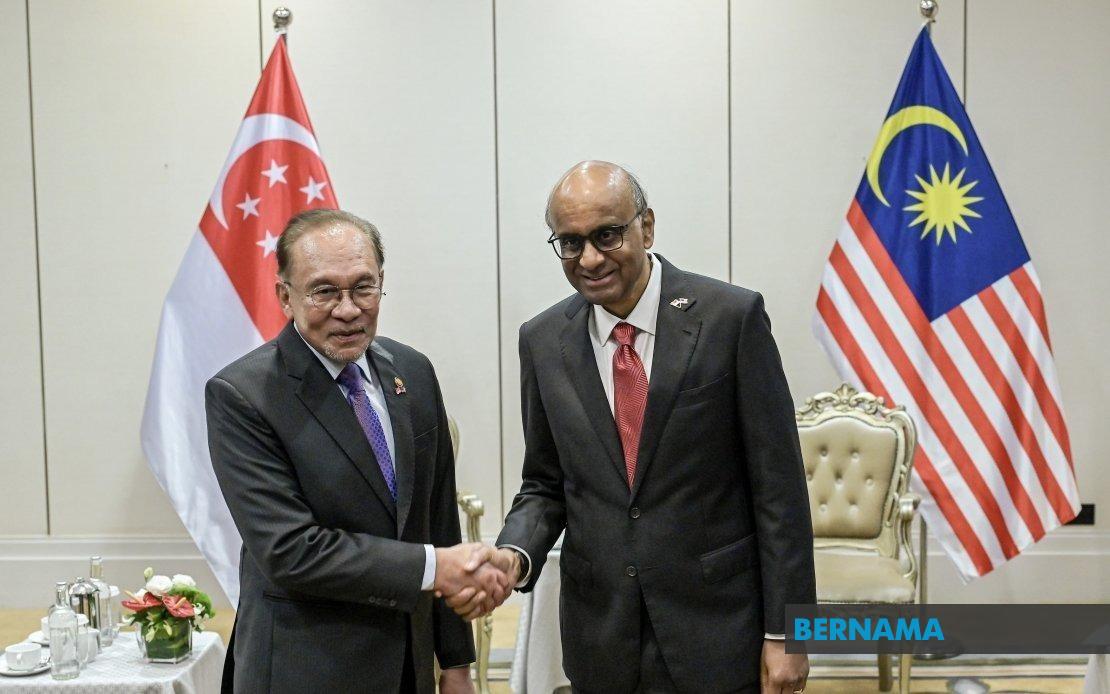
Singapore and Malaysia have committed to substantially expanding their strategic partnership across multiple sectors, with both nations emphasising the critical importance of regional stability and shared prosperity. The pledge emerged during President Tharman Shanmugaratnam's first state visit to Malaysia, which began July 12 and runs through July 15, marking a significant diplomatic milestone for the two neighbouring economies. During a courtesy call at Istana Negara on Monday, July 14, President Tharman and Prime Minister Datuk Seri Anwar Ibrahim identified food security and energy as priority domains requiring intensified collaborative efforts—issues of paramount concern to both Southeast Asian nations given their geographic constraints and growing regional demand.
The two leaders accorded particular weight to maritime security and international law in their discussions, reaffirming commitment to the United Nations Convention on the Law of the Sea (UNCLOS) and the principle of freedom of navigation. This emphasis reflects broader regional anxieties surrounding geopolitical tensions, particularly unfolding developments in West Asia that carry potential ramifications for global trade routes and the security architecture upon which Southeast Asia depends. By publicly anchoring their bilateral relationship to established international legal frameworks, Singapore and Malaysia are signalling to the international community their dedication to rules-based order—a position increasingly important as great power competition intensifies across Asia.
President Tharman's visit commenced with formal state ceremonies befitting his status as Singapore's head of state. He and his wife Jane Ittogi Shanmugaratnam were received with full ceremonial honours at Istana Negara, where they met with His Majesty Sultan Ibrahim, King of Malaysia, and Her Majesty Raja Zarith Sofiah, Queen of Malaysia. These ceremonial elements, while traditional in diplomatic protocol, underscore the elevation of bilateral relations and the respect both governments place on their partnership. The inaugural nature of the visit—being Tharman's first state visit to Malaysia since assuming the presidency—carries symbolic weight, suggesting both nations view this moment as an opportunity to reset and reinvigorate ties that have historically been complex and occasionally fraught.
Beyond the national level, the visit has extended to subnational engagement, reflecting an emerging pattern of deepened cross-border cooperation. On Tuesday, President Tharman held an audience with the Sultan of Selangor, Sultan Sharafuddin Idris Shah, and subsequently met with Selangor Menteri Besar Datuk Seri Amirudin Shari. These interactions facilitate direct dialogue between Singapore's leadership and Selangor's administration—significant given Selangor's status as Malaysia's most economically dynamic state and its geographical proximity to Singapore. During these engagements, both sides explored collaboration in technical and vocational education, climate adaptation and flood mitigation, and fostering the growth of technology start-ups.
The inclusion of technical and vocational education in the bilateral agenda addresses a skills gap affecting both economies. Singapore, facing labour shortages in middle-skill occupations despite its reputation for high-tech industries, could benefit from coordinated training frameworks with Malaysia. Malaysian workers, conversely, stand to gain from exposure to Singapore's education standards and pedagogical approaches. Joint initiatives in this sphere could enhance regional labour mobility while ensuring skill development aligns with actual economic demand—a challenge both nations face as they navigate post-pandemic labour market shifts.
Climate adaptation and flood mitigation feature prominently in the cooperation framework, reflecting the escalating vulnerability of both nations to climate change impacts. Malaysia's experience with devastating monsoon floods, particularly in Selangor and other northern states, offers valuable lessons for Singapore, which despite its limited land area faces significant urban flooding risks. Collaborative research, early warning systems, and infrastructure innovation could yield dividends for both populations. The inclusion of this issue signals recognition that environmental challenges transcend national borders and that bilateral cooperation offers cost-effective solutions unavailable through unilateral action.
The agreement to foster technology start-up growth represents perhaps the most forward-looking dimension of the partnership. Singapore's mature venture capital ecosystem and technological expertise, combined with Malaysia's large domestic market and lower operating costs, create natural complementarities. Joint incubators, cross-border funding mechanisms, and intellectual property frameworks could catalyse innovation while distributing economic benefits across both nations. For Malaysia, particularly, such cooperation offers pathways toward higher-value-added economic activities and reduced dependence on manufacturing and commodities. President Tharman's explicit welcome of expanded exchanges between Singapore and Selangor specifically suggests recognition of the state's pivotal role in Malaysia's economic future.
Food security cooperation carries particular resonance in the Southeast Asian context, where supply chain vulnerabilities became acutely apparent during the COVID-19 pandemic and subsequent geopolitical disruptions. Both Singapore and Malaysia rely substantially on food imports, making them vulnerable to price shocks and supply interruptions originating elsewhere. Bilateral cooperation could encompass agricultural research and development, logistics optimisation, and strategic food reserves coordination. Singapore's advanced agricultural technology—including vertical farming and precision agriculture—could be adapted for Malaysian conditions, while Malaysia's agricultural hinterland could serve as a more secure supply source for Singapore's food system.
Energy cooperation likewise addresses fundamental economic needs. Malaysia possesses significant hydrocarbon resources and renewable energy potential, while Singapore requires reliable energy supplies to power its refining industry and broader economy. Gas pipeline connections already link the two nations, but deepened cooperation could encompass renewable energy development, grid interconnection projects, and joint research into emerging technologies such as hydrogen. Regional energy security becomes increasingly critical as Southeast Asia transitions toward decarbonisation while maintaining economic growth and energy affordability.
The geopolitical dimensions of this partnership merit careful examination. As the United States and China compete for regional influence, smaller Southeast Asian nations benefit from maintaining balanced relationships with multiple powers while strengthening intra-regional ties. Singapore and Malaysia's commitment to UNCLOS and freedom of navigation implicitly addresses concerns regarding unilateral actions in contested maritime zones. While neither nation directly borders the South China Sea's most contentious features, both have compelling interests in maintaining open sea lanes and predictable international rules. Their joint reaffirmation of these principles carries weight beyond bilateral relations, contributing to broader regional stability narratives.
Looking forward, the outcomes of Tharman's visit represent not endpoints but foundation stones for more ambitious collaboration. The identification of priority sectors and the engagement of subnational actors suggest implementation will move beyond diplomatic rhetoric into concrete projects with measurable outcomes. For Malaysian readers and policymakers, the visit signals that Singapore—long viewed with ambivalence due to historical tensions and ongoing irritants like water pricing and land reclamation disputes—remains genuinely committed to collaborative problem-solving on matters of mutual concern. Conversely, Singapore gains reassurance that Malaysia, despite its larger size and regional weight, values the island-state as a neighbour and partner rather than a competitor. In an era of rising tensions and narrowing policy space, such reaffirmations of bilateral goodwill carry outsized significance.

