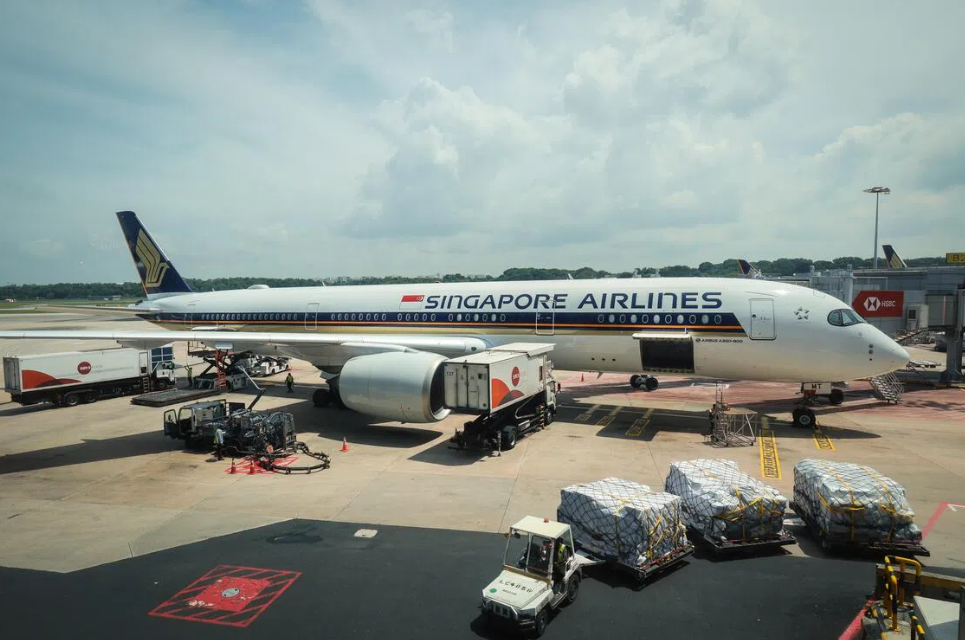
Singapore Airlines' ultra-long-range service to New York experienced an unexpected disruption on August 12 when Flight SQ22 was forced to return to Changi Airport in the early hours of the following morning due to an unspecified technical malfunction. The incident highlights both the inherent operational challenges of maintaining one of the world's longest direct commercial routes and the precision required in managing aviation contingencies involving hundreds of passengers across multiple time zones.
The Airbus A350-900 aircraft, which had lifted off at approximately 11.35pm from Changi, touched down again at 3.06am on August 13 after encountering the problem during its initial climb. The return decision, made within hours of departure on a service scheduled for over 18 hours of continuous flight across approximately 16,700 kilometres, underscores how modern airlines must balance operational efficiency against immediate safety and technical considerations. SQ22 represents one of the aviation industry's most demanding commercial routes, ranking among the longest direct flights globally, making any mid-flight disruption operationally complex.
While Singapore Airlines declined to disclose specifics about the technical issue, the airline's decision to divert the aircraft to a remote parking bay rather than its assigned gate suggests the maintenance team required isolation to conduct thorough inspections without disrupting terminal operations. This precautionary approach reflects industry standard practice when dealing with undiagnosed technical concerns on premium long-haul services. The remote positioning also meant that ground personnel could focus exclusively on diagnosing and resolving the problem while minimizing passenger congestion at the terminal.
All 133 passengers and 17 crew members disembarked safely and were transported via shuttle buses to the terminal, where they awaited reassignment to a replacement aircraft. The airline distributed food vouchers to mitigate passenger inconvenience during what became an extended layover. This passenger care protocol, though routine for major carriers, assumes particular importance on long-haul routes where traveller fatigue and frustration levels tend to escalate more rapidly than on shorter services. The provision of immediate sustenance and updates represents a baseline expectation among premium international carriers serving affluent business and leisure markets.
A critical operational constraint emerged in the form of crew flight time regulations, which prevented the original flight crew from continuing on the replacement aircraft. International aviation authorities impose strict limits on consecutive flying hours to prevent fatigue-related errors and maintain safety standards. The original crew had already expended a significant portion of their permissible flight time during the initial departure and subsequent return to Singapore, necessitating a fresh crew for the replacement service. This regulatory requirement, while essential for safety, complicated the airline's ability to minimize passenger delays and required coordination with crew scheduling systems.
The replacement aircraft departed Changi at 5.41am on August 13, arriving in Newark at 12.15pm local time the same day. Passengers effectively experienced a delay of approximately six hours from their original scheduled arrival time, a disruption that could cascade through connecting itineraries. Singapore Airlines moved proactively to rebook affected customers onto alternative connecting flights, recognizing that many international passengers rely on tight connections to reach their final destinations. This rebooking flexibility, while beneficial for passengers, represents substantial revenue management complexity for the airline.
Feedback from at least one passenger posted on Reddit suggested that Singapore Airlines' handling of the incident earned passenger appreciation, with the traveller commending the airline's operational response to the disruption. However, even satisfied customers expressed frustration at the lack of transparency regarding the underlying technical issue. The passenger noted particular confusion about why baggage could not be retrieved before reaccommodation and why the aircraft required towing to a remote location. These gaps in communication highlight a persistent tension between operational necessity and passenger expectations for transparency during disruptions.
The incident demonstrates that even modern, well-maintained aircraft operating on premium routes can experience unexpected technical difficulties. Singapore Airlines' A350-900 fleet represents among the most advanced commercial aircraft in service globally, yet technical issues remain an inherent aspect of complex engineering systems. The airline's ability to deploy a replacement aircraft relatively quickly—within approximately two hours—reflects robust operational redundancy and spare aircraft availability on high-value routes. Not all carriers maintain sufficient reserve capacity to respond so promptly to disruptions on major long-haul services.
From a Southeast Asian aviation perspective, this incident is particularly relevant given Singapore's role as a major international aviation hub and the centrality of ultra-long-range services to premium carrier positioning. Routes such as SQ22 represent flagship services that attract premium-paying passengers and generate substantial revenue per available seat kilometre. Technical disruptions on these routes, even when managed professionally, can influence passenger perception and competitive positioning against rival carriers offering similar long-haul services from other regional hubs. Airlines operating extended routes face heightened pressure to maintain both technical reliability and passenger service excellence.
Singapore Airlines' public statement emphasized that customer and crew safety remained the organization's paramount concern, a standard formulation in airline communications but one grounded in genuine operational imperative. The decision to return the aircraft rather than continue flying with an undiagnosed technical issue reflects appropriate risk management, even though the disruption imposed significant inconvenience on passengers. As long-haul aviation continues expanding globally and aircraft remain aloft for increasingly extended periods, the technical reliability and maintenance systems supporting these operations grow correspondingly more sophisticated and critical to industry stability.

