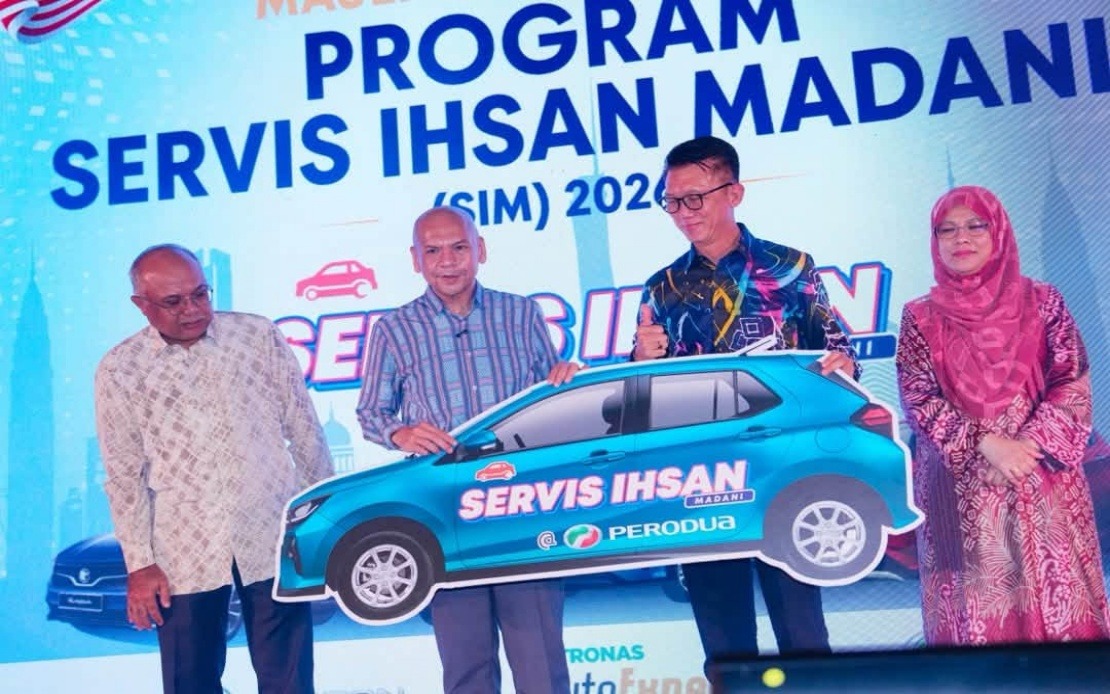
Malaysia's vehicle maintenance assistance programme is set for significant expansion, with the Ministry of Domestic Trade and Cost of Living bringing Perodua and Proton service networks into the fold. Minister Datuk Armizan Mohd Ali announced the widened scope during celebrations marking National Month 2026, signalling the government's commitment to extending cost-of-living relief measures across the automotive sector. The expansion, undertaken as part of the broader Payung RAHMAH MADANI initiative, represents a strategic effort to reach more vehicle owners across the country with tangible financial support.
Under the revised scheme, customers utilising participating service facilities will receive an RM70 subsidy on maintenance services, subject to applicable terms and conditions. This financial relief applies uniformly across the network, making it accessible to a broader segment of the population who maintain their vehicles at these authorised centres. The RM70 rebate, while modest on individual transactions, accumulates meaningfully over time for regular users who perform routine servicing—addressing one of the persistent pain points for Malaysian motorists navigating higher operating costs.
The programme's infrastructure spans an impressive 531 service locations nationwide, creating a comprehensive network that balances geographic coverage with operational efficiency. Breaking down this footprint reveals strategic distribution: 221 Perodua service centres deliver access points particularly in areas where the national car brand maintains strong presence, 186 Proton facilities extend the reach through Malaysia's indigenous automotive manufacturer, and 124 PETRONAS AutoExpert workshops complement the offering through the country's energy company's service arm. This three-pronged approach ensures that whether motorists drive locally-made vehicles or prefer PETRONAS-backed maintenance services, the subsidy remains within easy reach.
Registration and booking mechanisms have been streamlined through digital platforms operated by individual service providers, recognising the shift towards mobile and app-based transactions among Malaysian consumers. Eligible users can access the subsidy by booking through Perodua's, Proton's, and PETRONAS AutoExpert's respective applications, eliminating physical queuing and paperwork barriers that might otherwise impede uptake. This technological integration reflects contemporary government service delivery approaches, though it does presume smartphone access and digital literacy—factors that may marginalise older or rural demographics less comfortable with mobile applications.
Armizan framed the expansion as integral to translating the Malaysia MADANI governance philosophy into concrete benefits for ordinary citizens. The government's positioning centres on the principle that affordability measures should directly touch household budgets through schemes that citizens actively utilise. By targeting vehicle maintenance—an essential, recurring expense that most vehicle-owning households encounter—the initiative addresses genuine financial pressures rather than abstract policy goals. This alignment with lived experience contrasts with subsidies that may benefit narrower constituencies or require special application procedures.
Beyond immediate cost reduction, the ministry articulated a secondary objective centring on encouraging preventative vehicle maintenance practices. By making regular servicing more affordable, the subsidy theoretically incentivises owners to maintain recommended service intervals, potentially extending vehicle lifespan and reducing catastrophic failure costs. This preventative logic benefits both individual motorists through improved vehicle reliability and the broader economy through reduced emergency repair expenditures and enhanced road safety. Well-maintained vehicles contribute measurably to accident reduction, a consideration of public health significance for Malaysia's busy road networks.
The maintenance subsidy represents one component of the broader Payung RAHMAH MADANI umbrella, under which the government has layered multiple cost-of-living interventions. The National Month 2026 celebration provided occasion for announcing complementary initiatives alongside this automotive focus, including online sales events and retail promotions channelled through private-sector partners. The PJRM online sale programme demonstrates government willingness to collaborate with commercial platforms—particularly TikTok Shop Malaysia—to disseminate benefits, extending reach through commercial channels that increasingly mediate Malaysian consumer behaviour.
The Jualan Ihsan RAHMAH 9.9 online sale, scheduled for September 9 in conjunction with Malaysia Day celebrations, exemplifies this private-public collaboration. Offering discounts ranging from ten to thirty percent on essential goods across the e-commerce platform, this initiative targets necessity items that form the budget's foundation. Prime Minister Datuk Seri Anwar Ibrahim's prior endorsement lent political weight to the announcement, signalling that cost-of-living relief constitutes a government priority rather than peripheral policy experimentation. The staggered calendar of initiatives—vehicle maintenance subsidies alongside separate online sales events—suggests a coordinated calendar designed to deliver relief across multiple household expense categories throughout the year.
For Malaysian motorists, these expanded programmes acknowledge that transportation represents a significant recurring expense beyond fuel and insurance. Maintenance costs often emerge unexpectedly, particularly for older vehicles or those prone to tropical climate-related deterioration. By reducing the per-service cost through the RM70 subsidy, the programme particularly benefits middle-income earners who cannot absorb major repair bills but operate above means-tested assistance thresholds. The inclusion of Perodua and Proton specifically targets users of locally-assembled vehicles, which comprise a substantial proportion of Malaysia's vehicle population and serve cost-conscious buyers.
Implementation success will depend critically on awareness and accessibility factors beyond the ministry's direct control. Rural motorists face geographic barriers accessing service centres, particularly in less-populated states where network density remains limited. Older demographic groups, while comprising the most vehicle-owning population, may struggle with app-based booking systems lacking telephone or walk-in alternatives. Uptake monitoring will indicate whether the subsidy successfully reaches intended beneficiaries or concentrates among more digitally-enabled, urban populations.
The expansion also signals government recognition that cost-of-living pressures extend beyond direct subsidies on essential goods to encompassing service-related expenses that maintenance represents. As Malaysia navigates post-pandemic economic adjustment and global commodity price volatility, targeted interventions addressing specific household budget categories attempt to provide relief without broad-based price controls that can distort markets. Whether this targeted approach proves more sustainable than comprehensive subsidies remains an ongoing policy debate, but it reflects the government's stated intent to provide strategic, direct assistance.

