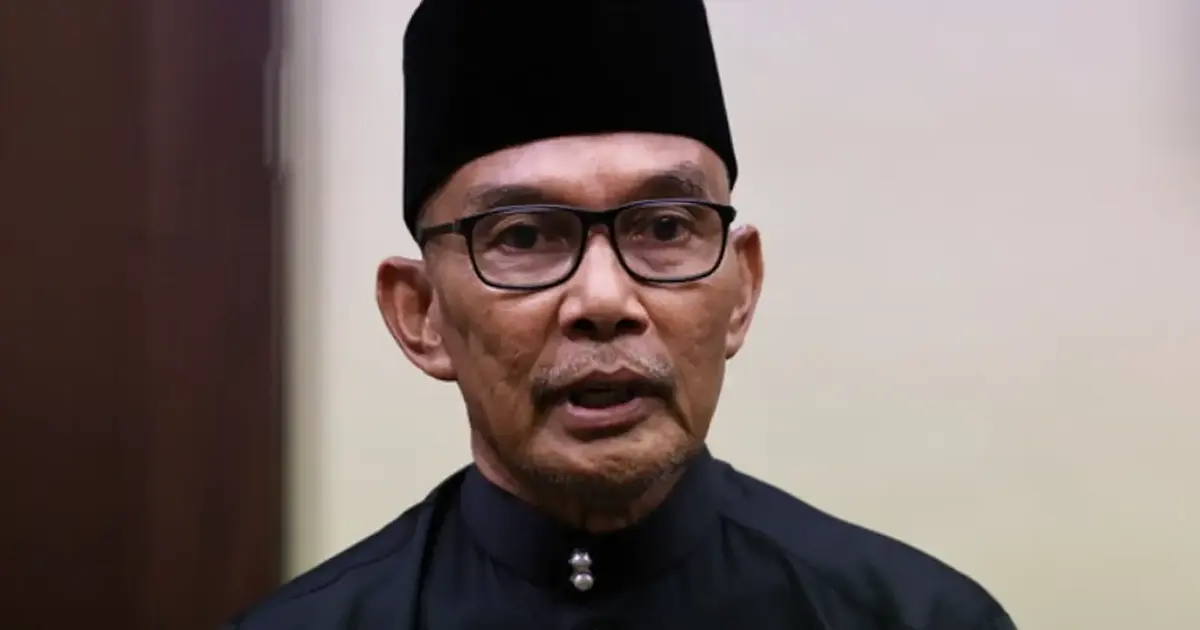
Former Perlis menteri besar Shukri Salleh has sought to draw a line under accusations that he encouraged PAS members to boycott party activities following his removal from the state's top administrative position. While acknowledging the emotional toll of his departure, the veteran politician insisted he has not incited internal dissent or attempted to undermine the machinery that once served under his leadership.
Shukri's clarification arrives amid simmering tensions within PAS's Perlis chapter, where his sudden ouster from the menteri besar post last year sent shockwaves through the grassroots. The transition marked a significant rupture in the state's political landscape, and observers have closely watched for signs of factional fracturing that could complicate PAS's positioning ahead of future electoral contests. His categorical denial signals an attempt to quell speculation that personal grievance might translate into organisational sabotage at a moment when party unity is increasingly prized.
The circumstances surrounding his exit remain contentious within PAS circles. While state-level leadership cited administrative and strategic reasons for the change, many rank-and-file members reportedly felt blindsided by the swiftness of the transition. Shukri's extended tenure in the role had cultivated significant patronage networks and personal loyalty among segments of the party apparatus, lending credibility to suggestions that disgruntled supporters might look to him for signals of resistance.
By explicitly disavowing any encouragement of boycotts, Shukri appears to be navigating a delicate political tightrope. On one hand, he must acknowledge the legitimate grievances of supporters who feel abandoned by his removal. On the other, he cannot afford to be painted as a divisive figure undermining party cohesion at a time when PAS seeks to project strength ahead of municipal and by-election contests across the peninsula. His emotional candour—admitting he remains "hurt"—serves partly to validate follower frustrations without crossing into overt disloyalty.
The broader context involves PAS's internal transformation under renewed central leadership. The Islamic party has embarked on a consolidation programme aimed at strengthening internal discipline and ideological coherence, particularly as it navigates complex coalitions in states where it shares power with UMNO and other partners. Senior party figures have grown increasingly sensitive to perceptions of instability or factional rivalry, viewing such fragmentations as potential vulnerabilities that opposition parties might exploit.
Perlis, while a smaller state in Malaysia's federal architecture, holds symbolic significance for PAS as one of its traditional strongholds. The party's governance record there influences how voters in other states perceive its administrative capacity. Any hint of internal discord therefore carries amplified consequences, affecting not merely local electoral prospects but the party's broader credibility as a stable coalition partner in arrangements where UMNO depends on PAS support.
Shukri's emphasis on his continued commitment to PAS, despite personal disappointment, underscores a calculation common to Malaysian politics: personal ambition must eventually yield to party interest when the alternative is marginalisation or irrelevance. By distancing himself from boycott allegations, he preserves the possibility of future rehabilitation within party structures, should winds shift or factional balances recalibrate. His restraint also avoids handing ammunition to PAS rivals who might otherwise characterise the party as fractious or poorly managed.
The timing of his statement likely reflects growing pressure from PAS leadership to restore stability narratives. When internal disputes become public, they create openings for political opponents to question competence and unity. For PAS specifically, which relies on an image of disciplined Islamic governance and organisational effectiveness, perceived chaos is particularly damaging to electoral narratives. Senior figures thus have incentive to elicit reassurances from potentially disruptive members that party machinery and programmes will not suffer from personal disputes.
Looking forward, Shukri's posture hints at possible pathways for his continued engagement within PAS structures, albeit likely in reduced capacity relative to his menteri besar tenure. Malaysian politics frequently accommodates figures who accept diminished roles while maintaining party affiliation, preserving their influence in narrower spheres while avoiding full marginalisation. His denial of boycott involvement positions him as a responsible party member willing to subsume personal hurt to institutional welfare—a narrative that could facilitate such accommodation.
For Malaysian observers watching PAS's internal dynamics, this episode illuminates the tension between formal party discipline and genuine personal grievance that characterises factional politics within large coalitions. While Shukri's words may soothe official anxieties about destabilisation, the underlying sense of betrayal among his supporters remains real. Whether his reassurances ultimately suffice to prevent quieter forms of non-cooperation among loyal members—distinguished from organised boycotts but potentially damaging nonetheless—remains an open question that will likely determine PAS's operational effectiveness in Perlis during coming months.

