Ben Shelton arrives at the US Open with a renewed sense of purpose, determined to transform what he has described as a tumultuous campaign into a statement performance at one of tennis's most prestigious stages. The 23-year-old American enters the fortnight as one of the tournament's most compelling storylines, carrying both personal ambitions and the expectations of a tennis nation that has not seen one of its men claim the US Open crown since Andy Roddick's 2003 triumph over Juan Carlos Ferrero.
The path to New York has been decidedly uneven for Shelton, ranked ninth in the world, despite an impressive haul of four titles during what he characterises as a season of extremes. While reaching the Australian Open quarter-finals provided early momentum, subsequent performances at the sport's most significant events proved deeply frustrating. A second-round exit at the French Open and a shocking first-round loss at Wimbledon threatened to define his year, creating a narrative of unfulfilled potential around a player many regard as a future major champion.
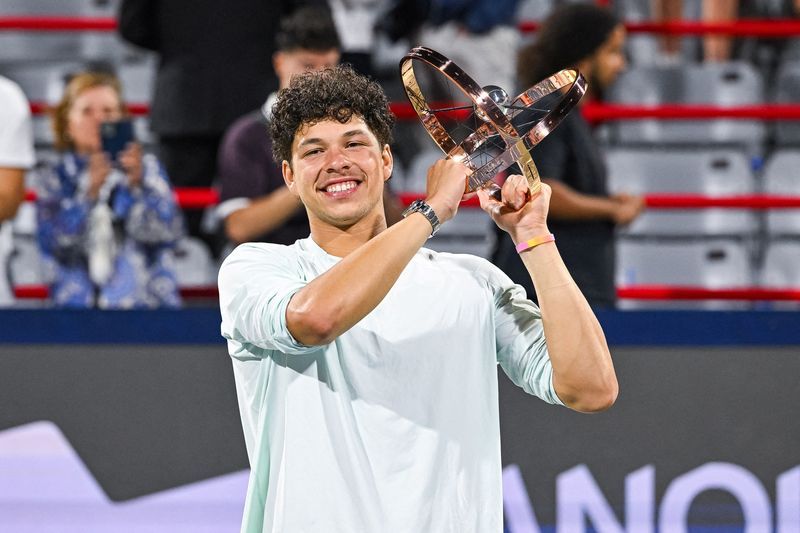
Yet Shelton's defence of the Canadian Open title in Montreal has injected genuine optimism into his preparations for the American Grand Slam. His flawless run through the tournament without dropping a set demonstrated a level of consistency and mental fortitude that had been intermittently absent during earlier stumbles. The victory over Brandon Nakashima in the final provided more than tournament silverware; it offered concrete evidence that the lapses at the majors represented tactical misadventures rather than fundamental limitations in his game.
In conversations following his Montreal triumph, Shelton articulated a clear understanding of what separated his recent success from earlier disappointments. He emphasised improvements in his serve returns, a dimension of his play that can prove decisive on the fast courts where he traditionally performs best. His analysis extended to broader aspects of his tactical approach, highlighting a newfound clinical efficiency in breaking serve and an enhanced ability to oscillate between defensive scrambling and aggressive shot-making. These are the hallmarks of mature, championship-calibre tennis rather than the streaky brilliance that had occasionally characterised his performances throughout 2024.
The hard court trajectory that Shelton references carries particular significance for American readers and those across Southeast Asia who follow the global tennis calendar. His incremental improvements across the hard court season suggest a player arriving at the US Open in ascending form, a contrast to the downward spirals that defined his Grand Slam campaign. With the tournament fortnight ahead, Shelton will attempt to harness this momentum against a field that has experienced significant reconfiguration following recent withdrawals from top contenders.
AndY Roddick, himself the last American man to claim the US Open crown two decades ago, provided an intriguing assessment of Shelton's prospects in a recent podcast episode. Roddick's candid acknowledgment that Shelton represents a credible title threat if the sport's contemporary titans—a ranking that previously included Jannik Sinner—underperform speaks to the genuine quality that observers believe Shelton possesses. While Roddick stopped short of declaring Shelton a favourite, his willingness to position the young American among the tournament's genuine contenders carries weight in tennis circles and offers important perspective on Shelton's standing among the elite.
Shelton's previous appearance at the US Open in 2023, when he reached the semi-finals, established that he possesses both the tactical tools and mental resilience to navigate deep tournament runs at Flushing Meadows. That run demonstrated his ability to handle the unique pressures of competing in his home country, a burden that has historically weighed heavily on American players seeking to end their respective championship droughts. His experience navigating those expectations without wilting suggests psychological maturation that may prove decisive across the fortnight.
The contrast between Shelton's measured optimism and the frustrations of earlier months offers insight into the singular nature of professional tennis. He explicitly acknowledges that the sport's calendar, while exhausting, provides perpetual opportunities for redemption and reinvention. This philosophical perspective—that one transformative performance can fundamentally alter a player's trajectory and perception—underscores the psychological resilience required to compete at tennis's highest level. For Shelton, the US Open represents precisely such an inflection point, a moment where a successful campaign could reshape his entire 2024 narrative.
The implications for American tennis extend beyond Shelton's individual aspirations. A US Open triumph would signal that American men's tennis possesses the depth and quality to reclaim major championship territory after two decades of futility. For regional audiences across Southeast Asia, Shelton's success would underscore the ongoing dominance of North American players in the men's professional game and contribute to the broader storyline of global tennis competition. The stakes, therefore, transcend individual glory and touch upon national sporting identity at a moment when several nations are intensely invested in claiming major championship honours.
As Shelton prepares for his opening-round match, the Canadian Open defence provides essential psychological scaffolding for the challenges ahead. His recent demonstration that he can sustain elite performance over an entire tournament duration, combined with the visible improvements in his tactical execution, suggests that the US Open may finally be the stage where his considerable talent achieves its major championship breakthrough. The conjunction of personal redemption, national expectations, and a demonstrably improved game creates a compelling narrative as one of tennis's young titans seeks to end American drought at its most iconic domestic tournament.

