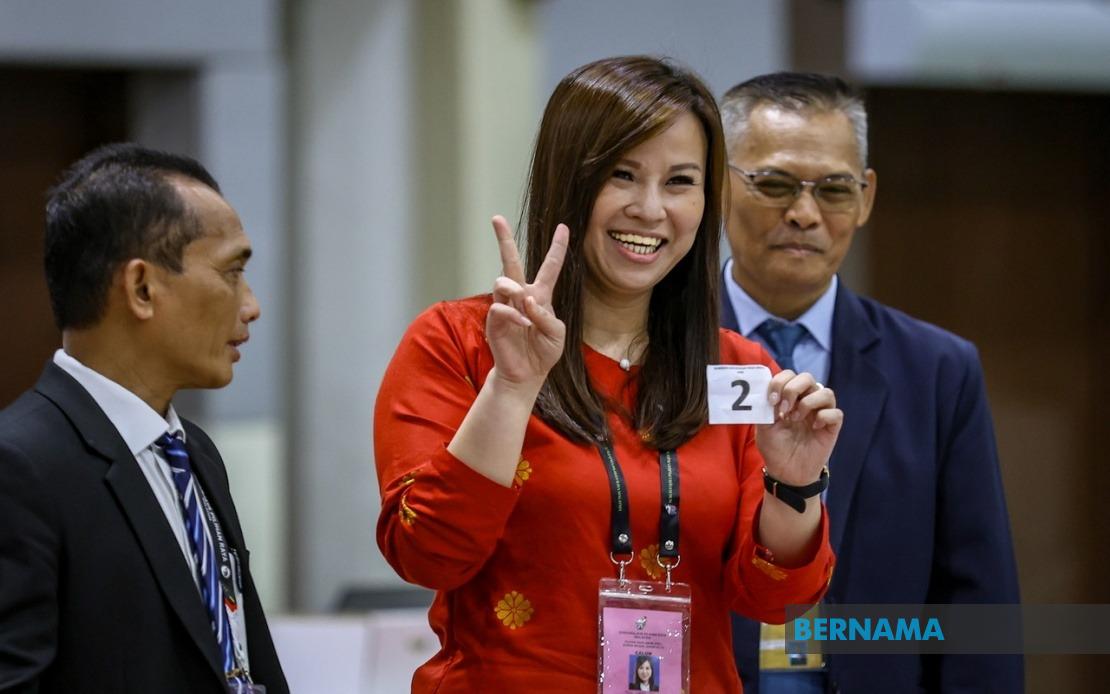
Sharon Teo, the Pakatan Harapan candidate vying for the Permas state seat, has centred her campaign on two pillars that she says repeatedly surface in conversations with constituents: improving infrastructure and strengthening welfare support. Speaking after nomination proceedings at Dewan Muafakat in Taman Mawar, the Johor Amanah Women's Youth chief articulated her commitment to tackling what locals identify as pressing concerns affecting their daily lives.
The prominence of road maintenance in her platform reflects growing frustration among Permas residents about the condition of local thoroughfares and the safety risks they pose. Teo has indicated that enhancing road quality will rank among her top priorities should voters elect her to represent the constituency in the 16th Johor state election. Her emphasis on this bread-and-butter issue signals her strategy to connect with working families who navigate deteriorating infrastructure daily while juggling employment and household responsibilities.
Teo brings relevant political experience to her candidacy, having previously served as an aide within the Pulai parliamentary constituency under the late Amanah deputy president Salahuddin Ayub. This background in constituency-level politics positions her as someone familiar with the mechanics of delivering services and advocating for residents. However, as a challenger to an incumbent administration, she will need to translate her experience into tangible promises that resonate beyond her party base in a seat that has historically been contested.
Already, Teo's team is preparing to roll out a detailed manifesto that will flesh out her vision and mission for Permas voters. This document will presumably elaborate on her specific proposals for road rehabilitation, welfare programmes, and other development initiatives. The timing of such manifestos in Malaysian elections proves crucial, as they often become reference points for voters evaluating competing claims and provide a benchmark against which performance can later be measured.
Meanwhile, the incumbent Baharudin Mohamed Taib from Barisan Nasional, who secured the seat in the 2022 Johor election, is preparing for a competitive defence. Baharudin has acknowledged that retaining his mandate will demand sustained effort, particularly given the quality of opposition he faces. His candid assessment that each opponent possesses distinct strengths underscores the intensity of the contest and suggests he recognises the competitive landscape has shifted since his previous victory.
Barahudin's decision to eschew a personal manifesto in favour of relying on the broader coalition platform represents a strategic choice that ties his candidacy directly to Barisan Nasional's statewide agenda. This approach, while economical in terms of campaign resources, may limit his ability to differentiate himself or respond to constituency-specific grievances with tailored solutions. It also places greater emphasis on the national coalition's popularity and messaging rather than individual attributes or local accomplishments.
Permas has evolved into a four-cornered contest, with candidates representing the major political blocs competing for influence. Beyond Teo and Baharudin, Perikatan Nasional has fielded T. Vela, while Parti Bersama Malaysia, a newer entrant to Malaysian politics, is represented by Dr Zamil Najwah. This fragmentation of the vote could prove decisive, potentially allowing a candidate with 30 percent support to secure victory depending on how opposition votes split among competitors.
The constituency, which sits within the Pasir Gudang parliamentary boundary, encompasses 113,963 eligible voters. This size positions Permas as a medium-scale state seat where ground campaigns and grassroots engagement carry genuine weight. In constituencies of this magnitude, targeted door-to-door canvassing, community events, and direct engagement with neighbourhood leaders can meaningfully influence voter sentiment, particularly among undecided voters who may not have strong partisan attachments.
The 16th Johor state election has drawn significant national attention as an important test of political sentiment in Malaysia's second-largest state by population. Johor's economic importance and its role as a political bellwether means results here often foreshadow broader national trends. The Permas contest exemplifies the shifting dynamics of Malaysian politics, where traditional two-party competition has given way to multi-sided contests that require candidates to build coalitions of support across different demographic and interest groups.
Voting is scheduled for July 11, with early voting occurring on July 7. This compressed timeline gives all campaigns merely days to convert voter interest into actual support. For candidates like Teo, the rush to mobilise supporters while launching her manifesto and conducting ground-level outreach presents a logistical challenge. Baharudin must simultaneously defend his track record while energising a base that may be complacent following previous victory.
The road safety and welfare focus articulated by Teo taps into concerns that transcend partisan divisions. Residents across Malaysia's urban constituencies frequently complain about potholed roads and inadequate social support systems. By anchoring her campaign in these universal grievances, Teo has positioned her candidacy around issues that affect voters' material welfare rather than abstract ideological contests. Whether this approach proves sufficient to overcome Baharudin's incumbent advantage and the fragmentation caused by competing challengers will become clear when Permas voters go to the polls.

