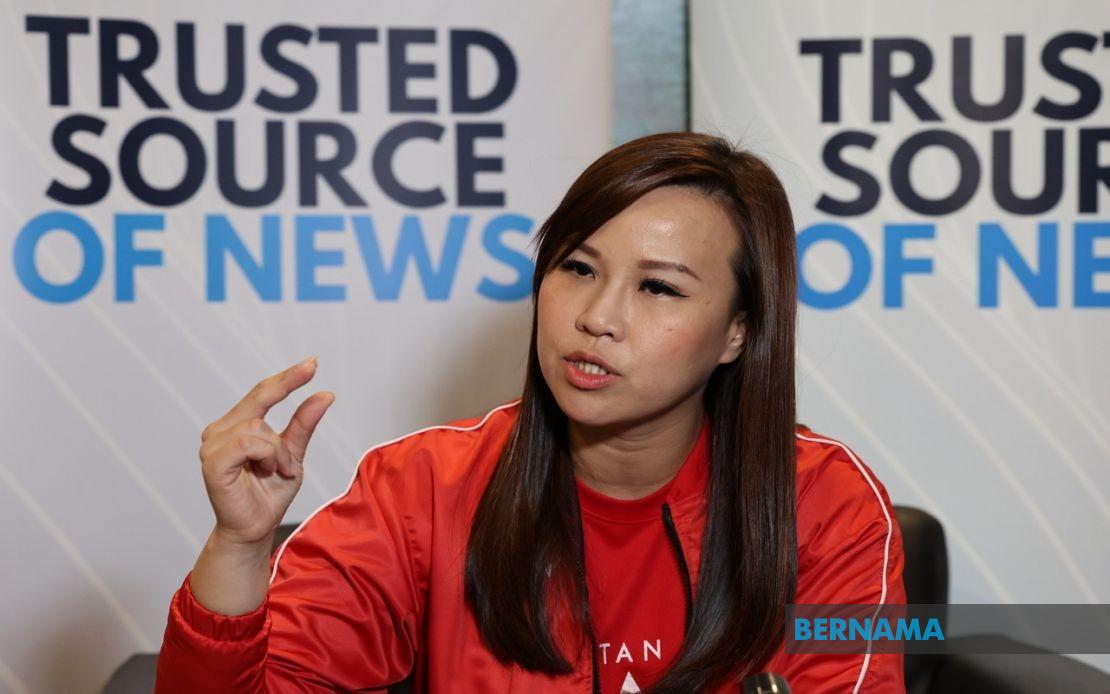
Sharon Teo Siew Hui, the 36-year-old Pakatan Harapan candidate contesting the Permas seat in the Johor State Election, has grounded her campaign platform in the political principles instilled by the late Datuk Seri Salahuddin Ayub, the former Minister of Domestic Trade and Cost of Living who became a beloved figure in Malaysian politics. Having spent years as a special officer to Salahuddin, Teo has adopted what she describes as a people-first approach centred on accountability, accessibility and resolute follow-through on community grievances — qualities she aims to transplant into her representation of Permas should voters grant her the mandate.
Teo's political awakening was not sudden. She initially supported Salahuddin as a volunteer before formalising her commitment to Parti Amanah Negara in 2018, inspired by his character and the manner in which he engaged across demographic boundaries. She attributes her entry into electoral politics directly to that relationship, viewing it not as opportunism but as a calling shaped by observing how a senior minister operated with humility and genuine concern for constituent welfare. The late leader's nickname "Bapa Rahmah Malaysia" (Father of Malaysian Assistance) encapsulated the welfare-focused governance model she now seeks to replicate in her own electoral journey.
The formative experience of shadowing Salahuddin across multiple electoral cycles — accompanying him during campaigns and community interactions — revealed to Teo the distinction between symbolically receiving grievances and actually resolving them. She recalls instances where her mentor would monitor public complaints late into the evening, dispatching WhatsApp messages past midnight to verify whether residents' problems had been addressed. This attentiveness, rather than mere responsiveness, has become her template for constituent service. She recognises that elected representation demands persistent tracking of issues through resolution, not merely acknowledgement of their existence.
Faced with the "parachute candidate" label — a frequent criticism in Malaysian politics when outside figures contest unfamiliar constituencies — Teo has methodically built a counter-narrative documenting her grassroots integration with Amanah. Beginning as an ordinary party member, she progressed to Assistant Secretary of Amanah Johor before heading the party's women and young adult wing, Amanah Johor Wanita Muda. Her presence in Permas is not entirely novel; she accompanied Salahuddin on numerous campaign sorties and community engagement activities throughout prior elections, lending her some institutional familiarity with the constituency's geography and concerns.
During the opening five days of campaigning, Teo has concentrated on direct voter interaction, drawing validation from the diversity of residents willing to engage her candidacy. The issues recurring most frequently in these conversations reveal a constituency preoccupied with tangible infrastructure deficits: potholes scarring residential roads, deteriorating back lanes servicing commercial zones, traffic gridlock during peak hours and public facilities requiring upgrading. These are not novel complaints within Johor constituencies, but their persistence suggests either inadequate prior attention or insufficient resource allocation — a gap Teo proposes to fill through systematic constituency auditing and phased remediation.
Recognising that electoral politics increasingly hinges on youth mobilisation, Teo has signalled a particular focus on first-time voters and school leavers, proposing to bridge the generational divide through social media engagement and e-sports initiatives. This outreach strategy acknowledges that younger voters — particularly those without historical attachment to particular parties — require contemporary communication channels and participation frameworks distinct from door-knocking and ceramah traditions. Her willingness to inhabit digital spaces suggests an attempt to expand the constituency's political conversation beyond demographic clusters already accustomed to conventional campaigning.
The candidate has framed her initial hundred days in office around diagnostic rather than prescriptive action. Rather than arriving with predetermined solutions, she proposes to conduct comprehensive auditing of Permas's most pressing challenges, compile rigorous data on constituent priorities and develop incremental solutions reflecting actual community needs rather than administrative assumptions. This methodology ostensibly reflects a learning orientation — accepting that external expertise alone cannot substitute for systematic ground-truthing and community co-design of remedial initiatives.
Teo's flagship commitment involves establishing "PermasKu" as a centralised complaint-management mechanism where public grievances would be documented, tracked and monitored until satisfactory resolution, directly mirroring the personal vigilance she observed in her former mentor. This institutionalisation of follow-through attempts to embed accountability into the constituency's governance machinery, ensuring that issues do not languish in bureaucratic limbo or become forgotten once media attention dissipates. Coupled with her proposed infrastructure audit, this dual commitment positions her candidacy as fundamentally administrative and resolute rather than ideologically expansive.
The Permas contest has evolved into a four-cornered battle, complicating Teo's path to victory. Baharudin Mohamed Taib, the incumbent representing Barisan Nasional and UMNO, secured the seat in 2022 with a majority of 7,926 votes — a substantial but not insurmountable lead given Johor's volatile electoral terrain in recent cycles. Competing alongside Teo are Dr Zamil Najwah representing Parti Bersama Malaysia and T. Vela standing for Perikatan Nasional, fragmenting the anti-establishment vote and potentially benefiting the incumbent if opposition support remains split.
Teo's invocation of Salahuddin's legacy carries both strategic and genuine dimensions. Strategically, it positions her within Amanah's broader narrative of ethical governance and welfare-focused politics, potentially attracting voters fatigued by conventional partisan combat. Genuinely, her mentorship under Salahuddin appears to have instilled specific operational practices — meticulous complaint tracking, constituent accessibility and humility in public engagement — that she intends to institutionalise if elected. Whether these individual virtues can scale effectively across an entire constituency, or whether they require the particular force of personality that made Salahuddin distinctive, remains an open question as voting nears.
The Permas election therefore presents a microcosm of broader Johor political dynamics: incumbent dominance from Barisan Nasional facing fragmented opposition comprising both traditional Pakatan components and newer entrants, all operating within an electorate increasingly conscious of infrastructure deficits and constituent responsiveness. For Teo, the campaign represents an opportunity to translate personal principles into constituency-wide impact, while voters must assess whether her administrative commitment and ideological grounding offer a compelling alternative to either entrenched incumbency or the competing visions offered by her rivals.
Malaysian electoral politics has increasingly focused on constituency-level performance metrics and constituent satisfaction, moving somewhat beyond purely national ideological frameworks. In this context, Teo's emphasis on systematic complaint management, infrastructure auditing and direct community engagement speaks to voter expectations that have shifted toward tangible local governance outcomes. Her success or failure in Permas will offer insights into whether the service-oriented politics exemplified by her late mentor retains sufficient electoral appeal in contemporary Johor, or whether voter preferences have pivoted toward alternative governance models presented by competing candidates.

