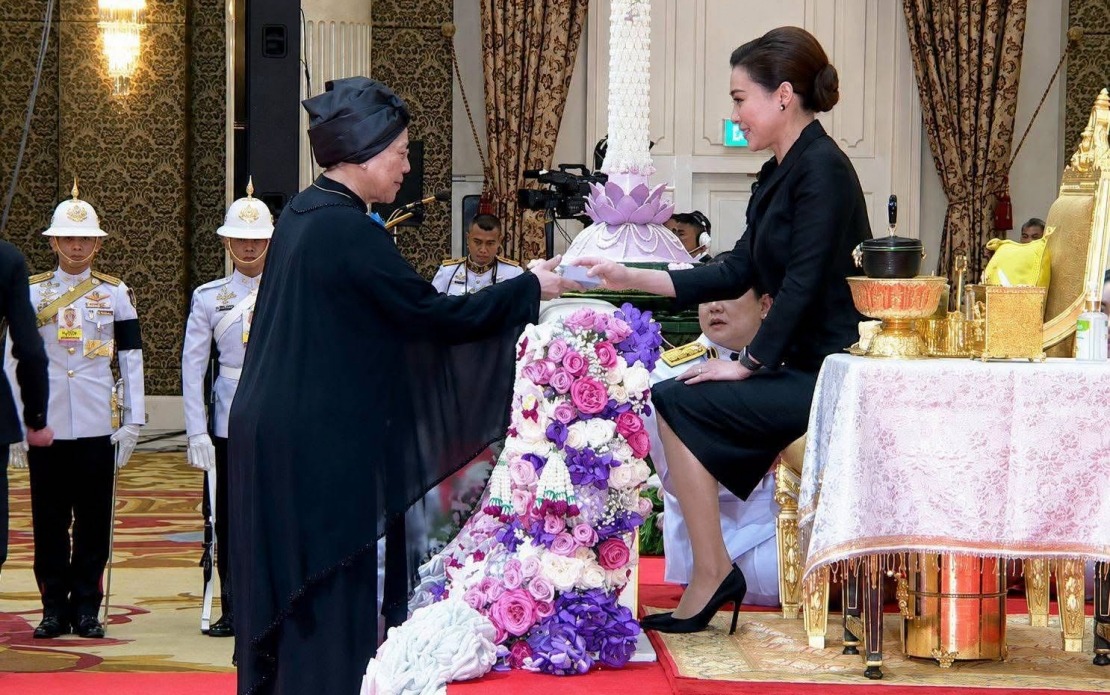
Prime Minister Datuk Seri Anwar Ibrahim and his wife, Datuk Seri Dr Wan Azizah Wan Ismail, have extended their congratulations to Prof Emerita Tan Sri Datuk Seri Dr Sharifah Hapsah Syed Hasan Shahabudin following her conferment of the Outstanding Woman Award for Social Development, which was presented by Thailand's Queen Suthida Bajrasudhabimalalakshana. The recognition, announced on August 4, marks another milestone for Malaysian women professionals advancing into leadership roles across Southeast Asia's development agenda.
Anwar seized the occasion to underscore a broader narrative about Malaysia's feminine talent pool and their expanding footprint beyond national borders. Rather than viewing Sharifah Hapsah's accolade as an isolated honour, the Prime Minister framed it as evidence of a consistent pattern: Malaysian women continue to earn respect and acknowledgement in international forums where substantive social development work is assessed and rewarded. This positioning aligns with Putrajaya's efforts to highlight the diversity and capability within the country's professional ecosystem, particularly as Malaysia competes regionally for investment, talent and soft power influence.
The award carries symbolic weight in the context of ASEAN relations and cross-border recognition of expertise. Thai recognition of Malaysian achievement in women's advancement and social development suggests that regional peers acknowledge the quality of work being conducted in Malaysia. Such cross-border validation can strengthen Malaysia's diplomatic standing and demonstrate to other nations that the country cultivates world-class professionals across multiple disciplines. For Malaysian women working in academia, governance, healthcare, and civil society, the message is that excellence need not remain domestically confined—regional and global platforms actively seek their participation.
Anwar's public statement via X (formerly Twitter) employed language emphasizing inspiration and collective momentum. He explicitly called for the award to motivate additional Malaysian women to channel their efforts toward knowledge creation, leadership development, and compassionate engagement in community building. This rhetorical move transforms an individual honour into a catalyst for systemic participation, suggesting that one woman's success should catalyze others' ambitions. The invocation of inspiration rather than obligation or expectation reflects a shift in how Malaysian leadership discusses women's engagement—as a positive outcome to be celebrated rather than a quota to be reluctantly met.
The explicit mention of the Malaysia MADANI agenda within the congratulatory statement reveals how the government integrates women's advancement into its broader developmental framework. MADANI, anchored on the principles of prosperity, dignity, and harmony, positions gender inclusion not as a parallel initiative but as central to the nation's trajectory. By linking Sharifah Hapsah's international recognition to MADANI objectives, Anwar communicates that women's professional success and societal contributions form part of the administration's core delivery mechanism rather than supplementary programming.
The Prime Minister's commitment statement regarding future government action deserves examination. He pledged that the MADANI administration would sustain efforts to champion women's roles, expand pathways for their participation across economic and social sectors, and ensure that their competencies and leadership qualities remain foundational to national progress. This formulation suggests an understanding that women's participation is not merely equitable or just—it is strategically essential. Nations that underutilize half their population's talent face competitive disadvantages in knowledge economies, innovation sectors, and diplomatic soft power, reasoning that has gained traction among serious policymakers across Asia.
For Malaysian women professionals, the practical implications extend beyond symbolic recognition. Anwar's articulated commitment to expand opportunities across sectors implies potential policy action: whether through ensuring equal access to advancement in civil service hierarchies, supporting women entrepreneurs' access to capital and mentorship, facilitating childcare infrastructure that enables dual-career households, or strengthening legal protections against discrimination. The statement becomes an implicit benchmark against which future budgetary allocations and legislative initiatives can be assessed.
The timing of this recognition also reflects shifting regional dynamics. As ASEAN economies compete for foreign direct investment and position themselves as knowledge hubs, demographic and human capital considerations have become strategic concerns. Thailand's recognition of a Malaysian woman's contribution to social development signals that the region's institutions and leadership increasingly evaluate capability through a lens that transcends traditional gender hierarchies. Malaysia's receptiveness to highlighting such achievements positions the country within a modernizing framework, potentially enhancing its attractiveness to multinational corporations and development agencies prioritizing gender-inclusive governance.
Sharifah Hapsah's career and this award also illustrate the pathway through which Malaysian women enter international recognition networks. Typically, such visibility emerges from sustained professional contribution within one's discipline—whether academia, business, healthcare, or public administration—combined with engagement in cross-border professional associations and regional forums. The award validates not merely individual accomplishment but the institutional structures and professional environments within Malaysia that enable such development. It suggests that Malaysia possesses educational systems, research institutions, and workplaces capable of nurturing world-competitive talent.
Beyond the immediate congratulations, the moment invites reflection on remaining barriers. Despite such success stories, Malaysian women remain underrepresented in senior positions across many sectors, including politics, business, and academia. Celebrating individual achievement, while important, should accompany concrete examination of structural obstacles—occupational segregation, wage gaps, caregiving responsibilities that disproportionately burden women, and cultural assumptions about female ambition and domestic priority. Anwar's comments suggest government awareness of women's potential; translating that awareness into systemic change requires sustained policy focus beyond celebratory statements.
Looking forward, Sharifah Hapsah's recognition may serve as a reference point for other Malaysian women seeking international platforms and validation. When peer nations' leadership acknowledges Malaysian women's contributions, it creates visibility that encourages others to pursue similar trajectories. The cumulative effect of such recognitions shapes narratives about national capability and attractiveness, influencing perceptions held by international investors, academic collaborators, and development partners considering Malaysia as a destination for partnership and investment.

