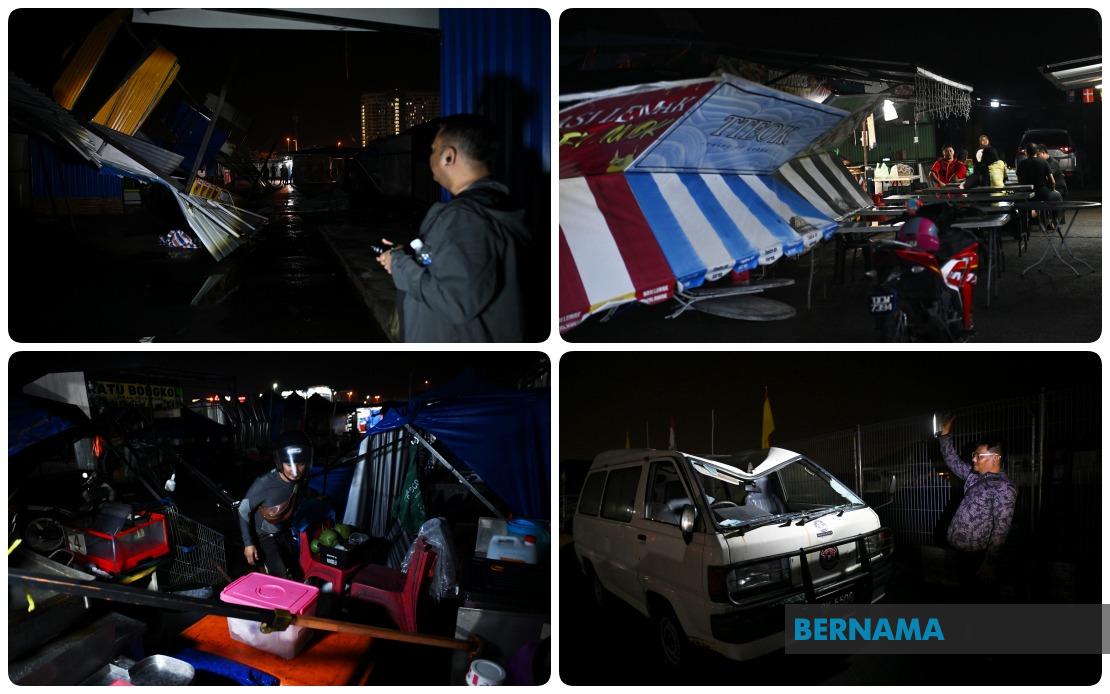
A fierce weather system that swept across Kuching over the weekend has left the N6 Metrocity 2 Youth Night Market severely damaged and temporarily closed, marking what organisers describe as the worst natural disaster to strike the popular trading venue. The sudden onset of heavy rain and violent winds caught traders and shoppers off guard during peak business hours, forcing an emergency evacuation as canopy structures were ripped from their moorings and sent flying through the crowded marketplace.
The incident unfolded with alarming speed, leaving little time for vendors to secure their goods or equipment. Mohamad Faisal, a 42-year-old trader who has operated at the night market for the past decade, described the scene as genuinely frightening. He recalled arriving at his stall only to realise the danger was escalating rapidly, with metal canopy frameworks becoming airborne projectiles. The rapid deterioration of conditions forced him and dozens of other vendors to abandon their positions and seek shelter, prioritising personal safety over protecting merchandise or business infrastructure.
The scale of physical damage to the night market has proven substantial. More than 40 trader lots out of approximately 300 operating stalls suffered severe damage, with losses concentrated on the canopy structures themselves and associated equipment such as cooking apparatus and storage vessels. Individual vendors estimate personal losses ranging from RM2,000 to RM5,000 depending on the size and construction of their canopy installations, figures that exclude additional damage to business equipment and inventory. For small-scale traders operating on tight margins, such sudden financial shocks can threaten business viability.
Beyond individual trader losses, the night market's communal infrastructure absorbed considerable damage. Hamzah Hassan, deputy chairman of the N6 Metrocity 2 Youth Night Market management committee, confirmed that the association's main stage, management office building, and electrical supply infrastructure all suffered structural damage or complete failure. These shared facilities represent critical components of the night market's operational capacity, and their restoration will require coordinated effort and significant funding. The cumulative damage assessment suggests that recovery will extend well beyond simply replacing individual vendor canopies.
Hamzah emphasised that this incident stands apart from previous weather-related disruptions that have affected the venue over its operating history. The intensity and destructive capacity of the Saturday storm exceeded earlier instances of severe weather, both in terms of immediate physical destruction and the ripple effects across the trading community. The fact that the marketplace has weathered multiple natural disasters previously underscores the challenging environmental conditions that coastal Sarawak periodically experiences, yet this event has proven uniquely damaging.
The Malaysian Meteorological Department had issued a thunderstorm warning for the Kuching region and surrounding areas including Serian, Siburan, Samarahan, Simunjan, Kapit and Song, with the alert remaining active from 5 pm to 9 pm on the day in question. However, the precise timing and intensity of the storm's impact on Kuching appears to have caught the night market during its busiest operational window, when maximum numbers of vendors and customers would typically be present. The convergence of peak business hours with severe weather conditions amplified the chaos and hazard exposure.
For Kuching's informal trading sector, night markets represent crucial economic infrastructure where small-scale entrepreneurs operate with minimal capital investment and relatively low barriers to entry. The N6 Metrocity 2 venue, which has functioned for an extended period, has developed a loyal customer base and established vendor community. The temporary closure following this storm disrupts income flows for hundreds of traders, many of whom depend on regular nightly revenue to support household expenses. The economic ripple effects extend beyond the vendors themselves to encompass their supply chains, family dependents, and the broader consumer ecosystem that relies on affordable street food and goods.
The market management has signalled openness to receiving assistance from government ministries, elected political representatives, and cooperative organisations to alleviate the financial burden borne by affected traders. This approach recognises that recovery from such large-scale infrastructure damage typically requires multi-stakeholder involvement and coordination. In the Malaysian context, such appeals often trigger responses from state and federal authorities, particularly when organised trading communities can document clear evidence of disaster-related losses. The involvement of established management structures like the night market's committee strengthens the case for formal disaster relief consideration.
The incident raises broader questions about infrastructure resilience and weather preparedness for outdoor trading venues throughout Southeast Asia. As climate patterns become increasingly variable and extreme weather events occur with greater frequency, informal sector operators remain disproportionately vulnerable due to limited capital reserves and exposure to the elements. Night markets operate at the margins of formal economy, often lacking the investment in robust infrastructure that established commercial centres possess. Yet these venues play irreplaceable roles in urban economies across Malaysia and the region, providing affordable trading platforms and consumer access to diverse goods and services.
Longer-term recovery will likely involve not only replacing damaged canopies and equipment but also potentially redesigning site infrastructure to withstand stronger winds and improved drainage systems to manage heavy rainfall. Such upgrades require investment that individual vendors cannot typically afford independently, creating a case for collective action or government support. The Kuching incident illustrates how natural disasters affecting informal sector venues demand coordinated response spanning multiple government agencies, local authorities, and community organisations.
The market's temporary closure represents an opportunity for management to conduct comprehensive damage assessment and begin planning restoration priorities. Vendors affected by the most severe damage face decisions about whether to undertake immediate repairs, await external assistance, or pursue insurance claims if coverage exists. Meanwhile, the broader Kuching trading community will monitor how quickly the venue reopens and what lessons emerge regarding future weather resilience. Effective response to this disaster could either strengthen the market's infrastructure and vendors' confidence or create momentum for traders to relocate to alternative venues perceived as safer or better protected against extreme weather.

