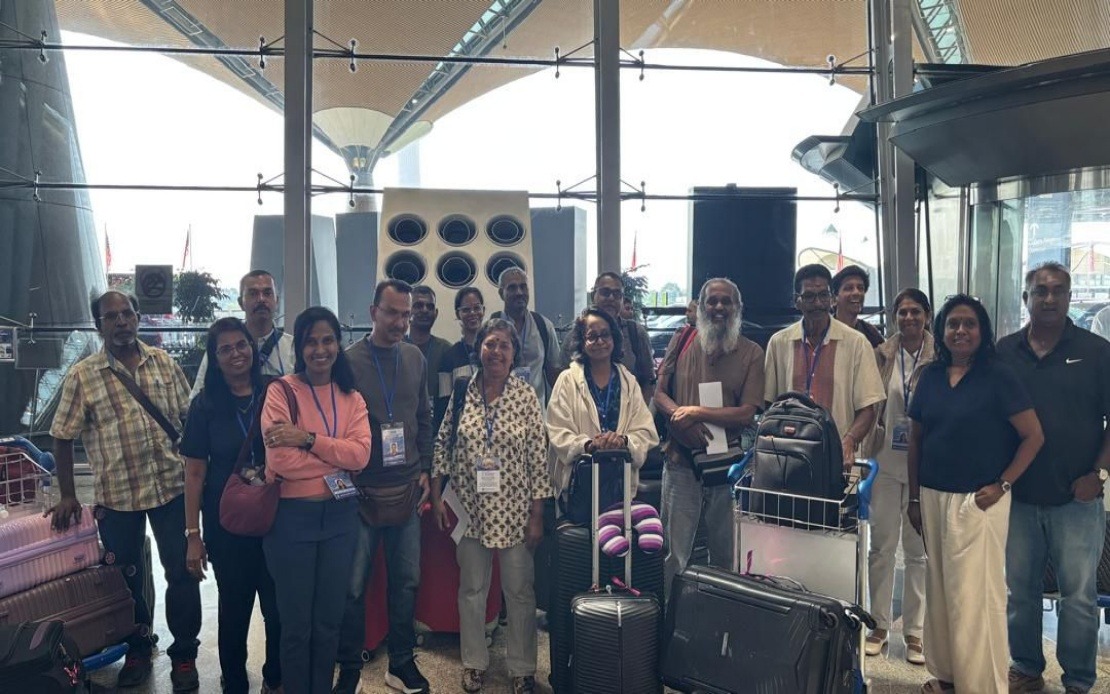
Seventeen Malaysians participating in a religious pilgrimage to Mount Kailash in Tibet have become unreachable following devastating flash floods that swept through the Nepal-Tibet border region, sparking growing alarm among relatives who fear for their safety. The group, organised through Nepal-based travel operator Fishtail Tours & Travels, lost all communication with the outside world on the morning of August 27 after spending several days journeying through Nepal's rugged mountain terrain. The last confirmed contact came at approximately 8.18 am Nepal time when members of the expedition were positioned roughly two kilometres from the Nepal-Tibet Immigration Checkpoint, leaving a window of uncertainty about their current status and whereabouts.
R. Logadashini, a family member of four pilgrims in the stranded group, detailed the growing anxiety surrounding the incident. Among those who cannot be reached are her father S. Raman, aged 59, her mother M. Neelavany, aged 54, her uncle S. Murukan, aged 60, and her aunt G. Padmahwathi, aged 58. The family received their final message from the group at approximately 8.40 am Malaysian time via WhatsApp before the line went dead. Despite repeated attempts to contact Fishtail Tours & Travels and reaching out to the Malaysian Embassy in Kathmandu, Logadashini's family has received no updates on the group's status or safety, leaving them in an agonising state of uncertainty.
The overall scope of the crisis extends beyond the initial group of seventeen, with Wisma Putra confirming that approximately 55 Malaysians reported to the Malaysian Embassy in Kathmandu have become unreachable in the aftermath of the flooding event. However, the Foreign Ministry has cautioned that no official confirmation of Malaysian casualties has been received thus far, though search and rescue operations remain ongoing. The Malaysian Embassy in Kathmandu has been tasked with coordinating with Nepalese government authorities, mountain rescue teams, local travel agencies, and other stakeholders to determine the safety status and current location of all affected Malaysian nationals.
Prime Minister Datuk Seri Anwar Ibrahim has taken personal action to address the crisis, issuing explicit directives to relevant government agencies to urgently locate and establish contact with all Malaysians affected by the flooding disaster. Malaysia's diplomatic missions in both Kathmandu and New Delhi have been placed on heightened alert and mobilised to provide whatever assistance may be required. This coordinated response reflects the seriousness with which Malaysian authorities are treating the situation, recognising both the humanitarian imperative and the diplomatic importance of safeguarding citizens abroad.
The natural disaster itself occurred when areas across Nepal's Rasuwa and Nuwakot districts experienced catastrophic flash flooding triggered by intense rainfall coupled with a glacial collapse in the high-altitude region. The resulting inundation severed communication infrastructure and rendered several key roads connecting the affected mountain areas to Nepal's capital, Kathmandu, impassable. These transportation and communication disruptions have severely hampered coordinated rescue and relief efforts, making it extremely difficult for authorities to locate affected individuals and provide assistance. The affected zone lies along a critical transit corridor that thousands of pilgrims traverse annually while journeying toward Mount Kailash, as well as trekkers and mountaineers heading toward Mount Everest base camps and other Himalayan destinations.
The geographic and logistical challenges presented by the disaster cannot be understated. The Nepal-Tibet border region sits at extraordinarily high altitude where weather can shift rapidly and dangerously, where communication systems remain underdeveloped and vulnerable to disruption, and where rescue operations require considerable specialised expertise and equipment. The flash floods have created additional complications by destroying or making inaccessible the very routes that rescue teams would normally use to reach stranded individuals. For families in Malaysia, the combination of geographic distance, communication blackout, and the inherent dangers of high-altitude mountain regions creates profound anxiety about whether their loved ones can be reached and assisted in time.
Not all Malaysian pilgrims travelling to Mount Kailash have been caught in the disaster, however. A separate expedition led by renowned Malaysian mountaineer Datuk N. Mohanadas, comprising 56 individuals including 39 Malaysians, four Singaporeans, and three Canadians, has been confirmed safe and is continuing its pilgrimage without impediment. Mohanadas reported that although his party was aware of the sudden torrential rains, flash flooding, and reported casualties occurring at the Nepal-Tibet border, their particular group and their chosen route remained unaffected by the disaster. The group has proceeded with the initial phase of their three-day pilgrimage around Mount Kailash, indicating that not all travel in the broader region has been compromised, though conditions and accessibility clearly remain precarious.
The incident highlights the inherent risks associated with high-altitude religious and adventure tourism in the Himalayan region, a pursuit that has gained considerable popularity among Malaysian pilgrims and trekkers in recent years. Mount Kailash, regarded as sacred in multiple religious traditions, attracts devotees from across Asia who undertake arduous journeys to circumambulate the mountain as an act of spiritual devotion. The pilgrimage typically requires traversing some of the world's most challenging terrain, where weather systems can transition from benign to life-threatening within hours, and where remoteness means that emergency assistance can take considerable time to arrive.
For Malaysia and other Southeast Asian nations with citizens operating in high mountain environments across the Himalayan and trans-Himalayan regions, this incident underscores the importance of robust pre-travel safety protocols, comprehensive travel insurance, and contingency planning for communication breakdowns. Travel agencies organising expeditions to these remote areas bear significant responsibility for ensuring participants understand the risks, maintain regular communication schedules with base operations, and carry adequate emergency equipment and supplies. The incident will likely prompt Malaysian tour operators and tourism authorities to reassess safety procedures and establish more resilient backup communication systems for groups traversing high-risk border regions.
The situation also raises questions about diplomatic coordination during cross-border emergencies in the Himalayan region, where multiple national jurisdictions intersect and where local capacity for large-scale rescue operations may be limited. Nepal's government, already stretched by the immediate humanitarian demands of the flooding, must coordinate with Chinese authorities on the Tibetan side of the border and with various national governments whose citizens require assistance. Malaysia's diplomatic engagement through multiple channels reflects recognition that formal government-to-government channels, combined with private agency contacts and informal networks, may all be necessary to locate missing citizens and secure their safe passage once located.
As hours continue to pass without communication, the focus remains on rapidly establishing contact with the seventeen Malaysians last known to be near the Nepal-Tibet Immigration Checkpoint. Weather conditions in the region during this season can deteriorate rapidly, potentially impeding rescue efforts further, underscoring the time-sensitive nature of the response. Malaysian families await updates with mounting concern, while government agencies work through the night to navigate the complex logistics of mountain rescue operations across an international border in one of the world's most remote and challenging environments.

