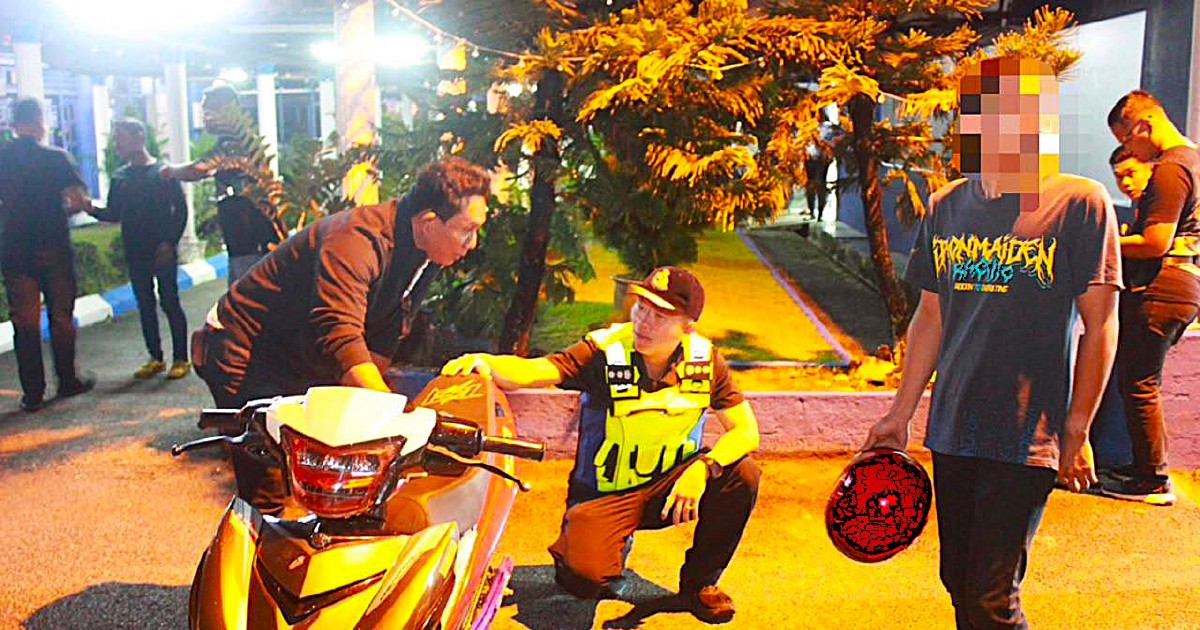
Early this morning, Klang police launched a dedicated enforcement operation focused on eliminating illegal street racing, a persistent public safety hazard that has plagued residential neighbourhoods and main thoroughfares across the Klang Valley. The operation resulted in the seizure of seven motorcycles and the opening of an investigation file against one motorcyclist who faces charges relating to reckless and dangerous driving. The action reflects a renewed commitment by local law enforcement to curtail the high-speed riding activities that frequently disturb communities and pose serious risks to pedestrians and other road users.
Street racing has emerged as a significant problem in urban Malaysia, particularly in densely populated areas such as Klang where wide roads and late-night quietness create ideal conditions for illegal two-wheeled activities. The riders involved typically congregate during off-peak hours when traffic is light and police presence may be limited, conducting impromptu races that generate noise complaints and endanger public safety. These gatherings often involve modification of motorcycles to enhance speed and produce distinctive exhaust sounds that serve as calling cards for the underground racing community.
The special operation deployed by Klang police represents a tactical shift toward proactive, targeted enforcement rather than reactive responses to complaints. Such coordinated actions are designed to disrupt the social networks and meeting points that enable street racing communities to organise their activities. By concentrating resources during specific time windows when illegal activities are most likely to occur, authorities increase the likelihood of catching offenders in the act and dismantling operational hubs.
The seizure of seven motorcycles is a substantial enforcement achievement that removes vehicles from circulation and creates a financial penalty for offenders beyond legal consequences. Motorcycle seizures carry particular weight as they are often personalised possessions that riders have invested significant resources into modifying and maintaining. The prospect of losing a seized vehicle acts as a deterrent that extends beyond fines and demerit points, affecting the cost-benefit calculation that riders weigh when deciding whether to participate in illegal street racing activities.
The investigation against the identified rider for reckless and dangerous driving carries potential legal consequences that underscore the seriousness with which authorities are treating street racing. Under Malaysian traffic law, charges of dangerous driving can result in substantial fines, imprisonment terms, and suspension of driving privileges. A conviction creates a permanent record that may affect the rider's insurance rates, employment prospects in certain sectors, and future licence applications, creating multi-layered consequences that extend well beyond the immediate enforcement action.
The Klang corridor has historically been a hotspot for street racing due to its geographic and infrastructural characteristics. The area encompasses a mix of industrial zones, residential suburbs, and major transportation arteries that provide multiple venues where riders can congregate and conduct racing activities. The proximity to Kuala Lumpur, combined with Klang's own size and complexity, means that riders from across the Klang Valley can converge on the area relatively quickly, creating sufficient critical mass to sustain an active street racing culture.
Community complaints have been a driving force behind intensified police action against street racing networks. Residents experiencing regular noise disturbances, dangerous road conditions, and the visible presence of organised riding groups have increasingly demanded that authorities take concrete action. The early morning timing of today's operation suggests that police intelligence gathering has identified specific periods and locations where illegal activities concentrate, allowing for strategic deployment of resources to maximum effect.
The broader context of road safety in Malaysia makes street racing enforcement particularly crucial. The nation's road fatality rates remain comparatively high, with a significant portion of accidents involving young motorcyclists. Illegal street racing exacerbates this problem by normalising risky riding practices and attracting inexperienced riders who underestimate the hazards involved in high-speed manoeuvres conducted in urban environments with unpredictable pedestrian and vehicle traffic.
Police operations targeting street racing must balance enforcement effectiveness with community relations, particularly where riding communities span socioeconomic strata and include both hardened offenders and peripheral participants drawn to the activity primarily for social reasons. Visible, sustained enforcement operations communicate resolve to eliminate illegal activities while also serving an educational function by raising awareness of consequences. However, authorities must also implement complementary strategies addressing root causes such as limited recreational outlets for young motorcyclists and the cultural appeal of customised bikes.
This morning's operation signals that Klang police are prioritising street racing as a public order and safety issue warranting dedicated resources. Future enforcement intensity will likely depend on whether operations yield additional intelligence about organised networks, key meeting locations, and the extent of involvement by particular individuals. Sustained pressure may gradually disperse street racing activities to other locations, necessitating coordination with police in neighbouring districts to prevent displacement rather than elimination of the problem.
The seven seized motorcycles will enter police custody where they remain pending legal proceedings and potential forfeiture determinations. The motorcycles' eventual fate depends on whether owners pay outstanding fines and fees or whether vehicles are formally forfeited to the government. Some jurisdictions in Malaysia have explored auctioning seized vehicles with proceeds directed toward road safety initiatives, creating a mechanism whereby street racing enforcement directly funds community safety programs.

