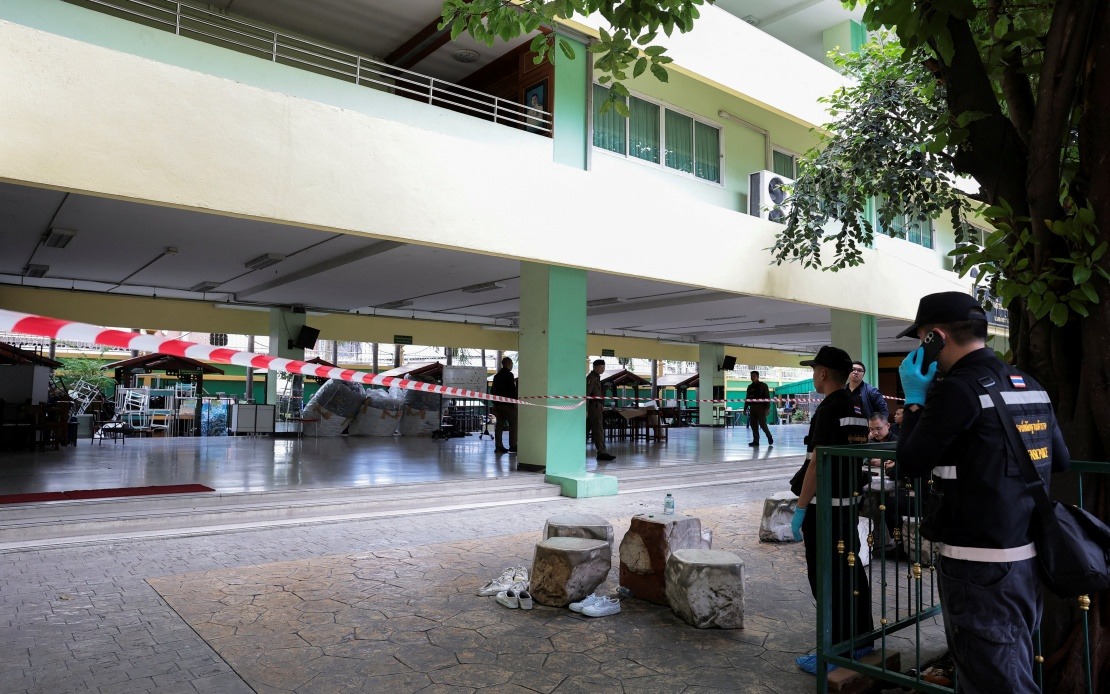
A devastating shooting at a Bangkok-area school has left seven people dead and at least 15 injured, marking another tragedy in a disturbing pattern of firearm violence affecting Thailand's educational institutions. The incident occurred at Debsirin Nonthaburi School in Bang Kruai district, northwest of the capital, when a student opened fire during morning hours around 10 am on Friday. Royal Thai Police deputy inspector-general Lieutenant General Trairong Piwpan confirmed that the casualties included three teachers, three students, and the gunman himself, who died at the scene. The additional 15 injured individuals were transported to nearby medical facilities, with authorities noting that two of these victims faced critical conditions requiring urgent treatment.
Investigations into the incident quickly revealed that the weapon used in the attack was a 9mm handgun that had belonged to the suspect's grandfather, along with 34 rounds of additional ammunition discovered outside the magazine. This detail underscores a persistent concern among Thai authorities regarding the regulation and secure storage of firearms within households, particularly when family members—especially young people—have access to these weapons. The discovery has renewed scrutiny on how firearm ownership requirements are enforced and whether grandfather-to-grandchild access to weapons represents a loophole in the current licensing framework.
School authorities moved swiftly to contain the situation by evacuating teachers and students to the nearby Chanrat Wittaya School once the shooting was brought under control. Parents and guardians received immediate notifications requesting them to collect their children from the evacuation site, creating scenes of considerable distress as families scrambled to reunite with their offspring. The evacuation process, while necessary for immediate safety, nevertheless highlighted the vulnerability of schools to such incidents and raised questions about existing emergency protocols and the feasibility of preventing such attacks entirely.
Recognizing the profound psychological impact of the tragedy on survivors, the national police chief directed Police General Hospital to deploy trained psychologists to provide immediate counselling and emotional support to those affected by the violence. Such mental health interventions are critical in helping traumatised students, staff, and families process their experiences and begin the recovery process. However, the need for such interventions underscores the severe toll that school shootings exact on communities beyond the immediate physical casualties.
Prime Minister Anutin Charnvirakul, who concurrently serves as interior minister, expressed deep sorrow over the incident and pledged government mobilisation of resources to assist the wounded and provide support at the scene. His public response characterised the shooting as unacceptable, with statements conveying official condolences to bereaved families. Notably, Anutin seized the moment to reinforce the government's hardline stance on firearm regulations, explicitly linking the tragedy to Bangkok's refusal to renew permits for civilian gun ownership and possession.
The government's position on firearm restrictions reflects broader policy aimed at reducing access to weapons among the civilian population, a measure that officials argue represents a critical public safety intervention. By connecting the shooting directly to its non-renewal of gun permits, the administration sought to justify this stringent regulatory approach and demonstrate that such measures serve a vital protective function. This framing positions the government's firearms policy as a preventative measure against recurring tragedies, though debate continues regarding the efficacy of such restrictions when existing weapons remain in circulation and secure storage cannot be guaranteed.
The Nonthaburi shooting represents the second major school shooting incident in Thailand within a six-month timeframe, highlighting an alarming trend of firearm violence targeting educational institutions. In February of the same year, an 18-year-old assailant opened fire at a school in Hat Yai, located in Songkhla province in Thailand's southern region, resulting in the death of the school director and injuries to multiple other individuals before law enforcement apprehended the perpetrator. This precedent demonstrates that school shootings are not isolated aberrations but part of a worrying pattern requiring systematic policy responses.
The recurrence of such incidents within such a compressed timeframe has raised urgent concerns among Thai officials, educators, and the public regarding the underlying causes of school-based gun violence and whether current preventative measures adequately address root factors. Mental health services, screening of potentially troubled individuals, enhanced school security infrastructure, and stricter firearm regulations have all been proposed or debated as potential solutions, though implementing comprehensive measures remains challenging.
For regional observers, including those in Malaysia and wider Southeast Asia, these incidents carry significant implications regarding school safety protocols and firearm regulation frameworks. Malaysia itself has maintained comparatively stringent gun control measures, yet instances of school violence—whether gun-related or otherwise—continue to prompt policy discussions. The Thai situation serves as a cautionary example of how even countries with attempted regulatory frameworks can experience repeated tragedies when enforcement gaps exist or when weapons proliferate beyond official channels.
The psychological and social consequences of such shootings extend far beyond casualty statistics, affecting entire school communities, families, and society's sense of security. Educational institutions, traditionally regarded as safe spaces for learning and development, become associated with vulnerability and fear when they experience violent incidents. This dynamic can have lasting effects on school attendance, educational outcomes, and the broader social fabric of communities affected by such tragedies.

