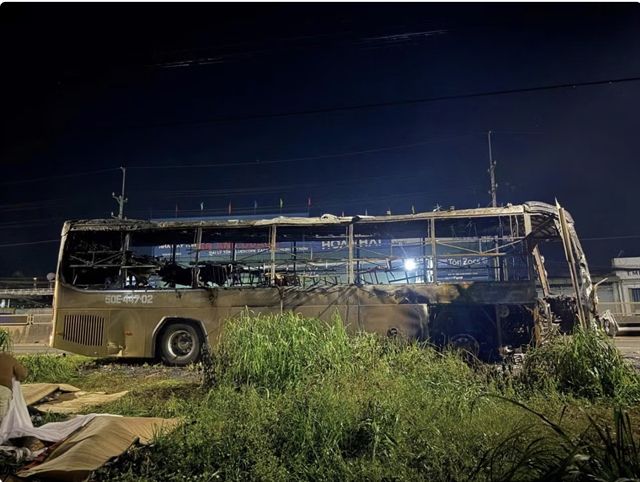
A tragic bus fire in southern Vietnam's Dong Nai Province has claimed seven lives, highlighting the recurring safety risks associated with long-distance sleeper bus travel across Southeast Asia. The incident occurred in the early morning hours along National Highway 1 when the vehicle, operated by 41-year-old driver Tran Thanh Hai from Khanh Hoa Province, struck a roadside embankment near Hung Thinh Commune at approximately 2.30am. The bus was en route from Dong Nai to Ho Chi Minh City, carrying 33 passengers and crew when the first collision occurred.
Following the initial impact, the driver attempted to stabilise the vehicle but it struck another embankment before coming to rest. Within moments of the second collision, flames erupted at the front of the bus and spread with alarming speed through the passenger compartment, trapping numerous occupants inside the confined space. The rapid propagation of the fire suggests either a fuel-system rupture or ignition of highly flammable materials aboard the vehicle, though authorities have yet to determine the precise cause. The crowded conditions typical of sleeper buses—where passengers rest in tightly stacked berths—made escape particularly difficult for those caught by the advancing flames.
Immediate intervention by nearby residents who responded with fire extinguishers and improvised firefighting equipment proved insufficient to contain the blaze. While some passengers managed to evacuate before the fire consumed the entire vehicle, others remained trapped as the inferno intensified beyond the capability of civilian responders. The desperation of the scene underscores the vulnerability of bus travellers in remote areas before professional emergency services can mobilise. Emergency authorities, upon receiving distress calls, dispatched firefighters, rescue personnel, and specialist equipment to the location, where crews eventually extinguished the fire and conducted search and rescue operations.
The damage wrought by the flames was catastrophic: the bus was almost entirely destroyed by the time the fire came under control. Among the 33 people aboard, seven did not survive the incident. The injured survivors were transported to Thong Nhat General Hospital in Ho Chi Minh City for emergency treatment, with one victim who sustained only minor injuries subsequently discharged. The Hung Thinh Commune People's Committee confirmed the death toll through preliminary investigations, though the full identification of victims and determination of underlying causes remains ongoing. Authorities have cordoned off the scene for forensic examination and are conducting comprehensive investigations into the fire's origin and the circumstances leading to the collision.
This disaster represents a troubling escalation in a pattern of serious sleeper bus accidents sweeping Vietnam. Just seven days earlier, on July 17, another sleeper bus returning from Thien Cam beach in Ha Tinh Province to Thai Nguyen in the northern region veered off an expressway in Ha Noi, overturned, and killed five people with dozens more injured. The proximity of these two major incidents within a single week raises urgent questions about vehicle maintenance standards, driver fatigue protocols, and road safety enforcement across Vietnam's long-distance bus industry.
Sleeper buses, while economical and efficient for covering extended distances, present inherent design and operational challenges that amplify disaster risks when mechanical failures or accidents occur. The sleeping compartments, positioned in narrow multi-level configurations, create obstacles to rapid evacuation during emergencies. Insufficient emergency exits, combined with darkness and disorientation that passengers experience upon waking to a crisis, contribute to high casualty rates when fires or rollovers happen. Furthermore, many sleeper bus operators prioritise speed and schedules over maintenance and driver welfare, creating conditions where mechanical failures become more probable and driver fatigue impairs accident prevention.
For Malaysian travellers and the broader Southeast Asian travelling public, these consecutive Vietnamese incidents serve as a cautionary reminder of the risks inherent in budget long-distance coach travel across the region. While cost-effective, sleeper buses operating in Vietnam and other neighbouring countries may not meet the rigorous safety standards increasingly enforced in Malaysia and more developed markets. Passengers embarking on cross-border journeys should prioritise operators with verifiable safety records, modern fleets, and demonstrated compliance with transport regulations. The incidents also suggest that regional governments should harmonise safety standards and enforcement mechanisms to prevent operators from exploiting variations in regulatory oversight between jurisdictions.
The immediate aftermath of the fire revealed both community resilience and systemic vulnerabilities. Local residents' swift response, though ultimately inadequate, demonstrated civic responsibility and compassion. Conversely, the delayed arrival of professional firefighting resources in a remote area underscores infrastructure gaps that limit rapid emergency response in regional locations. Vietnam, despite significant economic development in urban centres, continues to face challenges in equipping provincial areas with adequate emergency services and modern safety infrastructure.
Investigations into this incident will likely focus on several critical areas: whether the collision resulted from driver error, vehicle mechanical failure, or road conditions; the state of the bus's fuel system and whether structural damage triggered the fire; compliance of the vehicle with safety standards regarding fire suppression systems and emergency exits; and whether the driver underwent mandatory rest-hour compliance checks before operating the bus. Authorities must also examine whether the bus operator maintained proper vehicle inspection protocols and whether drivers received adequate fatigue management training—factors that contributed to the previous week's fatal crash.
The broader implications for Vietnam's transport sector are significant. The government faces mounting pressure to implement stricter enforcement of existing regulations and to establish new minimum safety standards for sleeper bus operations. This may include mandatory installation of advanced fire suppression systems, GPS-based driver monitoring to prevent excessive hours, regular technical inspections by certified mechanics, and restrictions on the age and condition of vehicles permitted to operate on highways. Regional cooperation among Southeast Asian nations on transport safety standards could similarly enhance passenger protection across borders.
For families of victims and survivors of these tragedies, the emotional and financial consequences will be severe. Beyond compensation claims, communities in Dong Nai and across Vietnam will grapple with renewed anxiety about transport safety. These incidents catalyse broader societal discussions about the true cost of ultra-cheap travel options and whether regulatory frameworks adequately protect vulnerable users of public transport systems. Whether this tragic sequence prompts meaningful reform or fades from political attention remains an open question that will define the safety trajectory of Southeast Asian travel for years ahead.

