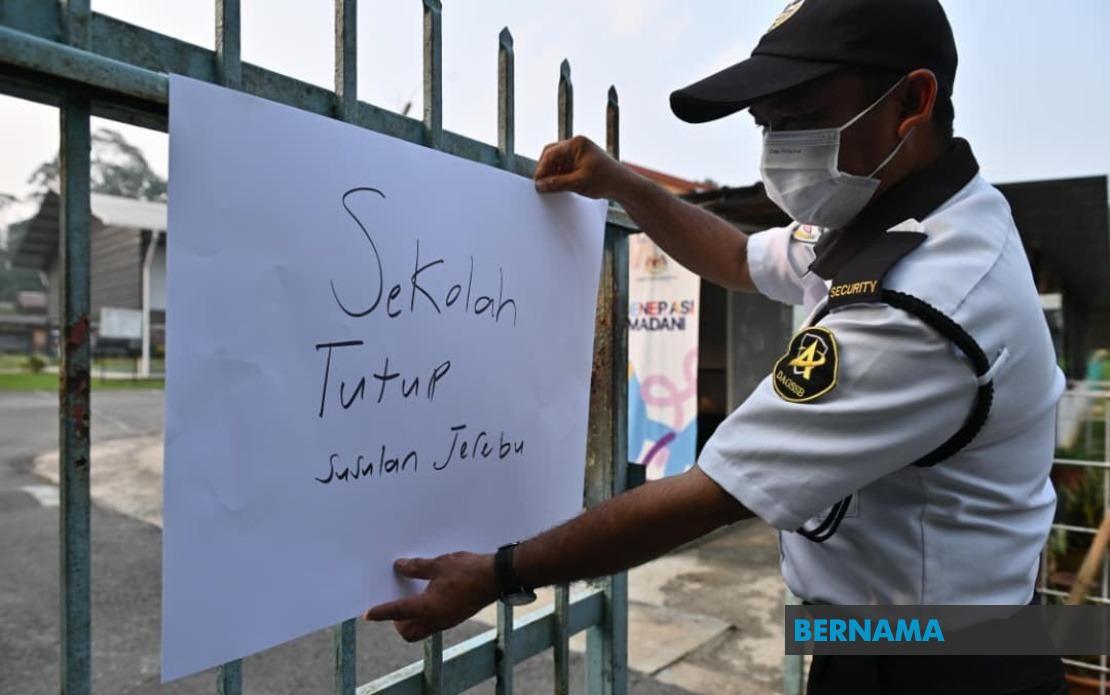
Schools across the Serian district in Sarawak will remain shuttered through Friday as smoke from regional fires continues to blanket the East Malaysian state, forcing education officials to prioritise student and staff safety over classroom schedules. The Sarawak State Education Department announced the extended shutdown following consultations with school leaders, signalling that air quality conditions remain too hazardous for normal operations in the affected area.
The decision reflects the growing challenge that transboundary haze poses to everyday life in Malaysian Borneo. Serian, a district situated in the southwestern part of Sarawak, has been particularly vulnerable to smoke drift originating from Indonesia, a recurring seasonal phenomenon that intensifies during dry months. The latest closure represents an escalating response to air pollution levels that have crossed into the unhealthy category, prompting authorities to take preventive action rather than wait for conditions to worsen further.
At 4 pm on the announcement day, the Air Pollution Index Management System recorded an API reading of 178 in Serian, placing the district firmly in the unhealthy classification. This figure carries significant health implications, particularly for vulnerable populations including young children, elderly residents, and individuals with respiratory or cardiovascular conditions. Schools serve as congregating points for thousands of students, teachers, and support staff, making them focal points for exposure risk during pollution episodes. The decision to extend closure rather than dismiss it as temporary reflects official recognition that forecasts indicate no immediate improvement.
The Serian District Education Office coordinated the consultation process that led to the extended closure decision, bringing together principals and headmasters from both primary and secondary institutions. This deliberative approach demonstrates a shift toward collaborative decision-making in crisis situations, acknowledging that school administrators possess frontline knowledge about their communities' specific vulnerabilities. By involving educational leaders in the decision-making process, authorities gain practical insights into implementation challenges that pure administrative directives might overlook, such as complications faced by boarding school students who depend on institutional facilities for accommodation.
Boarding school residents present particular complications during environmental emergencies. Students at residential institutions cannot simply be sent home when conditions deteriorate, and many boarding facilities in rural Sarawak lack the infrastructure to provide entirely indoor programming during extended air quality crises. The education department specifically cited concern for boarding school students as a factor in the closure decision, acknowledging that confining large numbers of adolescents indoors for extended periods while maintaining educational standards creates its own set of challenges. This consideration illustrates how environmental disruptions ripple through social systems in ways that straightforward health metrics alone do not capture.
The Sarawak State Education Department instructed all schools to monitor developments through the Air Pollution Index Management System, shifting responsibility for real-time decision-making to institutional level. This approach empowers school administrators to respond dynamically to changing conditions rather than awaiting bureaucratic directives from state headquarters. Educational institutions throughout the affected region have been directed to track API readings specific to their geographic location or district, recognising that pollution levels can vary significantly across relatively short distances. The system provides data at intervals sufficient for schools to adjust operations, cancel outdoor activities, or activate air filtration systems as circumstances warrant.
Haze episodes in Sarawak typically intensify during the dry season when agricultural burning and forest clearance in Indonesia generate massive smoke plumes that drift northwestward across maritime Southeast Asia. The phenomenon has become increasingly severe over the past two decades as land-use pressures in Indonesian Borneo have accelerated. Malaysia's eastern states, particularly Sarawak and Sabah, experience direct exposure to this transboundary pollution, creating recurring public health emergencies that affect schools, workplaces, hospitals, and transportation networks. The Malaysian government has repeatedly raised haze concerns with Indonesian counterparts through bilateral and multilateral forums, yet long-term solutions remain elusive.
The economic and social costs of haze-related school closures accumulate rapidly when episodes persist beyond a few days. Parents working in formal employment face disruption to childcare arrangements, while students in examination years lose instructional time that cannot easily be recovered. Boarding schools face heightened operating costs when remaining open without normal activities, and rural communities often experience greater proportional disruption than urban centres with more alternative services. Agricultural communities in Serian district, where many families depend on outdoor work, also suffer direct income losses when air quality deteriorates beyond safe working levels.
Looking toward the medium term, educators and policymakers across Malaysian Borneo are grappling with the reality that haze episodes may become more frequent or intense as climate patterns shift. Some schools have begun investing in air filtration systems and indoor recreational facilities to maintain operations during pollution events, recognising that closures impose significant costs. However, many rural institutions lack resources for such upgrades. The extended Serian school closure underscores the vulnerability of East Malaysian communities to environmental pressures originating beyond national borders, a dynamic likely to intensify without coordinated regional efforts to address the underlying causes of land-use driven pollution.

