The town of Serian in Sarawak is pressing forward with ordinary commercial and social activity even as air quality deteriorated to unhealthy levels, presenting a complex picture of resilience mixed with visible economic strain. As of 4 pm on August 13, the Air Pollutant Index Management System (APIMS) recorded an API reading of 178 in Serian, firmly positioning the region within the unhealthy category. The measurement reflects the severity of haze affecting the wider area, yet residents and business operators have largely maintained their usual patterns, adapting where necessary rather than withdrawing entirely from public life.
The economic impact of the degraded air quality has been immediate and quantifiable for many small traders operating at Serian Tamu Market. Vegetable vendor Asmail Kipli, aged 62 and based in Gedong, reported a notable deterioration in his customer base over recent days. He disclosed that foot traffic and corresponding income had dropped by approximately 30 per cent compared to normal conditions. Despite this substantial decline, Kipli has opted to remain open, driven by the necessity to cover his stall rental commitments. His pragmatic approach reflects the precarious economics facing individual traders in the region, where fixed costs persist regardless of customer demand, leaving operators with few options other than to absorb reduced revenues.
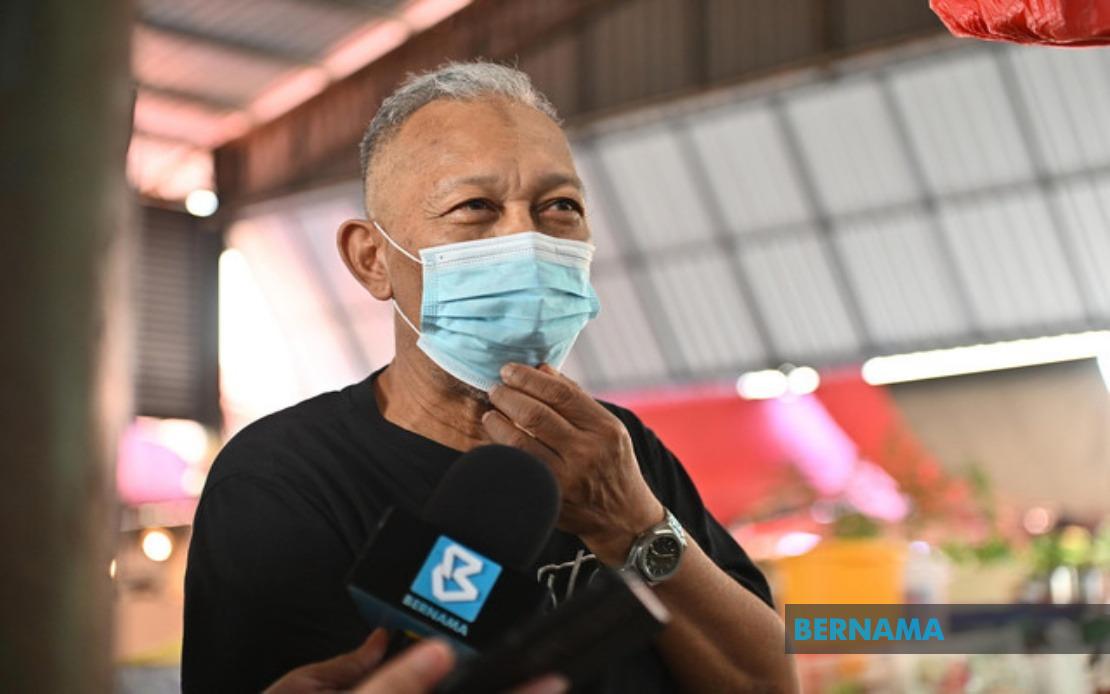
The persistence of business operations has not gone without visible precautions. During field observations at the market, several traders were observed wearing face masks while conducting transactions with customers, indicating an awareness of the health risks posed by the poor air conditions. These measures, while providing some protection, underscore the tension between economic necessity and personal health concerns that characterises the response to the haze across Serian. The masked faces at market stalls have become a visible symbol of communities adapting to temporary crises while attempting to maintain economic functionality.
Other traders have adopted more conservative operational strategies. Marina Latong, a 53-year-old fruit seller, has taken more decisive action by reducing her daily operating hours to conclude business by 3 pm, substantially curtailing what would normally be a full trading day. Her decision reflects a calculation that the health and safety considerations warrant shortened operations, particularly as exposure duration increases with extended hours spent outdoors in polluted conditions. Latong has indicated she stands ready to implement full temporary closure if atmospheric conditions worsen or persist beyond the immediate term, suggesting that there exists a threshold beyond which continuing operations becomes untenable even for those dependent on daily sales for survival.
The broader population response indicates a gradual shift in behaviour patterns. Residents across Serian and surrounding villages continue to undertake essential errands, including grocery shopping and procurement of necessary supplies, but with greater selectivity about non-essential outdoor activities. This cautious approach reflects accumulated awareness of health impacts from sustained air pollution exposure. The typical bustle of community life continues, yet tempered by a visible reluctance to venture outside without compelling reason. The collective response suggests that citizens are making individual risk assessments, balancing genuine necessity against pollution exposure rather than wholesale abandonment of daily routines.
The educational sector has implemented a more formal response to the air quality crisis. A total of 107 schools operating within Serian district have been ordered to suspend operations from August 13 through Friday, removing a substantial portion of the daytime population from outdoor exposure and eliminating the routine daily congregation of children in congregated indoor environments where air quality may be compromised by ventilation patterns. The decision reflects official acknowledgment that the API reading of 178 poses sufficient health risk to justify institutional closure. This measure targets one of the most vulnerable populations, as children's respiratory systems remain developing and exposure during formative years carries potential for lasting health implications.
The broader context of regional haze patterns adds significance to Serian's situation. Located in Sarawak, the town occupies a region historically susceptible to transboundary haze phenomena, particularly during dry seasons when agricultural burning and land clearing activities intensify across Indonesian territories. The August timing aligns with seasonal patterns, suggesting that residents may anticipate further deterioration before conditions improve. This cyclical reality shapes how communities respond—with an expectation that adaptation rather than complete disruption represents the practical necessity, given the frequency and recurrence of such events.
The economic ramifications extend beyond immediate trader income loss. Reduced consumer activity across the market has knock-on effects throughout the supply chain, affecting transport providers, wholesalers, and producers who depend on steady demand from retail vendors. The 30 per cent customer decline reported by individual traders likely aggregates into considerably larger economic contraction across the district. For a region whose economic foundation rests substantially on small-scale commerce and agriculture, such repeated disruptions accumulate as structural challenges beyond the immediate crisis period.
Government response mechanisms, particularly the API monitoring system, provide transparency about air quality conditions, enabling both authorities and residents to make informed decisions about operations and exposure. The classification of API 178 as unhealthy generates formal guidance for public behaviour and institutional operations. However, the continued operation of many businesses despite this classification highlights the limitation of advisory systems when economic survival pressures override health considerations. Many traders face a false choice between health protection and economic viability, with haze-driven disruptions compounding the perpetual economic vulnerability characterising small-scale retail commerce throughout Southeast Asia.
The situation in Serian encapsulates broader patterns emerging across the region as climate variability and land-use changes increase the frequency and intensity of transboundary pollution events. Communities are developing adaptive capacity through experimentation with flexible operating hours, increased personal protection measures, and differentiated responses based on individual vulnerability and economic dependence. Yet these individual and household-level adaptations address symptoms rather than underlying causes. Systemic solutions would require cross-border coordination on land-use management and agricultural practices, regulatory frameworks addressing the root causes of haze events, and economic support mechanisms enabling businesses to absorb disruption costs without compromising worker livelihoods.
Looking forward, Serian's experience on August 13 represents one data point within a longer-term pattern of climate and environmental challenges confronting Malaysian communities. The resilience demonstrated by residents and traders—their continued functionality despite degraded conditions—indicates adaptive capacity. However, sustainability requires moving beyond individual coping strategies toward structural interventions that address both the haze phenomenon and the economic vulnerability that forces individuals to choose between health and survival.

