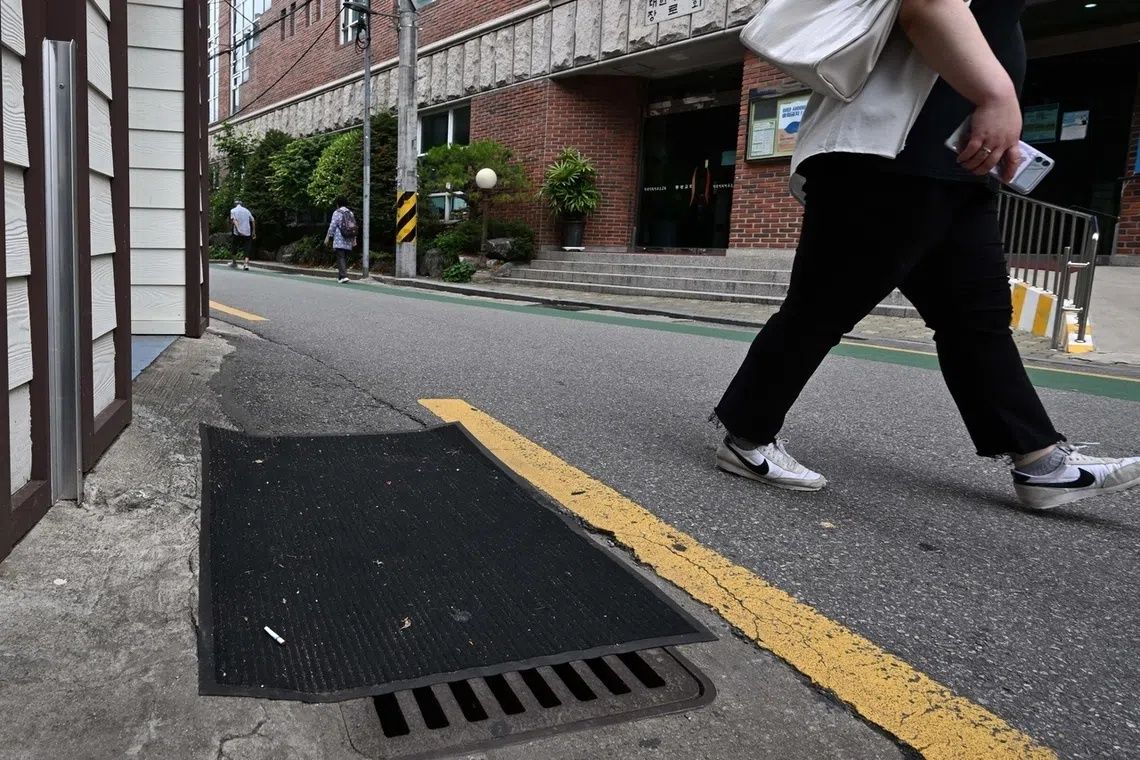
Residents and visitors walking Seoul's bustling streets frequently encounter an unwelcome nuisance: sudden waves of pungent sewer-like odours that dissipate as quickly as they arrive. These fleeting but persistent smells have become a fixture of urban life in South Korea's capital, generating widespread complaints across both local and international online forums. A 2025 Seoul Institute report reveals the scale of the problem, finding that sewer-related odours account for roughly half of all municipal complaints about bad smells in the city. Despite more than a decade of targeted intervention, the issue shows troubling signs of worsening, with the number of odour complaints rising to 2,302 in 2024 after falling to 1,660 in 2020 following initial mitigation efforts launched in 2015.
The chemistry behind Seoul's odour problem centres on hydrogen sulphide, a colourless gas notorious for its rotten egg stench. This compound forms naturally when organic matter in sewage decomposes within oxygen-starved environments deep underground. The gas can accumulate in sewer pipes during weather patterns unfavourable for its dispersal, then escape through various openings including storm drains, maintenance access points, and ventilation systems. During Seoul's frequent heavy rainfall, increased water flow through the sewer network helps flush accumulated gases through the system, naturally reducing odour formation. Conversely, during hot, dry periods with minimal precipitation, hydrogen sulphide builds up unchecked in the pipes, creating the sharp smells that catch unsuspecting pedestrians off guard.
Seoul's fundamental infrastructure challenge stems from rapid urban expansion that has outpaced sewer system development. The city's growth trajectory far exceeded the capacity of existing underground networks to accommodate modern waste volumes. As an interim solution, many buildings installed septic tanks as temporary treatment facilities before wastewater enters the main sewer system. While these tanks effectively remove solid materials, they leave dissolved organic compounds suspended in the liquid waste flowing into underground pipes. This partially treated water then becomes fertile ground for decomposition processes that generate hydrogen sulphide. The problem is compounded by sediment accumulation within the aging pipe network, which restricts water flow and creates stagnant zones where odour-causing reactions intensify.
A more systemic problem lies in Seoul's continued reliance on a combined sewer system, where wastewater from buildings and stormwater runoff from streets share the same network of underground pipes. This design dates to an era when cities prioritised rapid drainage over environmental management. The mixing of different water sources creates unpredictable conditions inside the pipes, with varying flow rates and water chemistry that either promote or inhibit decomposition depending on weather and time of day. Since the early 1990s, Seoul has recognised that converting to a separated system, with distinct pipes for wastewater and stormwater, would substantially improve odour control. However, progress has been glacially slow, reaching only 20.4 per cent of the city's total sewer network by 2025. The prohibitive cost of excavating and replacing underground infrastructure throughout a dense metropolitan area of millions has repeatedly stalled conversion efforts.
Seoul's policy response, while sincere, has operated largely reactively rather than strategically. The city established a dedicated team overseeing odour mitigation projects and installed odour reduction devices at major septic tanks, measures that initially produced results as complaints fell between 2015 and 2020. However, the existing legal framework in Korea focuses primarily on managing odours that exceed established threshold limits rather than requiring proactive prevention by local authorities. This complaint-driven approach means resources concentrate on responding to documented problems rather than systematically preventing their occurrence across the entire city. Ki Dong-won, a researcher at the Seoul Institute, emphasises that this reactive stance has prevented Seoul from developing standardised, long-term solutions. The city lacks predictive models that can forecast how odours disperse above ground or identify neighbourhoods most vulnerable to problems before complaints accumulate.
Experts point to the absence of adequate analytical frameworks as a critical bottleneck. Efforts to create sewer odour maps have commenced, but these mapping initiatives remain disconnected from measurable performance indicators or evaluation standards for odour control facilities. Without such linkages, Seoul cannot systematically determine whether specific interventions actually reduce odours or merely displace the problem to neighbouring areas. The city thus operates in an evidence vacuum, unable to prioritise investments toward the interventions most likely to succeed. This gap contrasts sharply with international best practices, where cities combine predictive modelling, targeted measurement, and performance-based accountability to manage infrastructure-related environmental problems.
Park Seok-soon, an environmental engineering professor emeritus at Ewha Womans University, proposes an alternative management approach given the practical difficulties of replacing combined sewers. He advocates for artificial water circulation through sewer pipes to prevent stagnation and decomposition. By introducing water from hydrants or other facilities into the pipes during low-flow periods, cities can maintain movement that discourages hydrogen sulphide formation. This strategy recognises that many major cities in developed nations, including those in Japan, continue using combined sewer systems despite their environmental drawbacks. The determining factor, Park argues, is not the system type but rather how rigorously it is managed and maintained. By this measure, Seoul's performance lags behind international standards despite comparable infrastructure legacies.
The rising complaint trend in 2024 suggests that Seoul's mitigation measures have reached the limits of their effectiveness without addressing root causes. Odour reduction devices at septic tanks and targeted cleaning efforts provide incremental improvements but cannot compensate for a fundamentally strained infrastructure system. The gap between policy ambition and implementation capacity has widened, with maintenance challenges multiplying as pipes age. Additionally, climate change patterns may be altering Seoul's precipitation cycles, reducing the beneficial flushing action that heavy rainfall provided historically. As dry periods potentially lengthen, the conditions favourable for hydrogen sulphide accumulation expand correspondingly.
For Southeast Asian cities facing similar pressures from rapid urbanisation and legacy infrastructure constraints, Seoul's experience offers sobering lessons. Deferring costly sewer system upgrades in pursuit of short-term fiscal stability creates long-term environmental liabilities that eventually demand far more expensive remediation. Cities like Bangkok, Jakarta, and Manila, which likewise struggle with infrastructure backlogs, should note how reactive complaint management fails to prevent persistent problems. Seoul's example demonstrates that once a sewer odour issue becomes entrenched in the public consciousness, reversing it requires sustained commitment extending decades. The city's inability to accelerate sewer system separation despite recognising its necessity since the 1990s illustrates how institutional inertia and budget constraints can paralyse even wealthy, well-governed municipalities when infrastructure overhauls become necessary.
Looking forward, Seoul officials acknowledge that odours stem from diverse and complex factors requiring expert diagnosis tailored to specific locations rather than one-size-fits-all solutions. The city is considering structural modifications to sewer pipes and dredging operations to remove accumulated sediment. However, without fundamental changes to the underlying system architecture or aggressive adoption of water circulation strategies, these incremental measures appear likely to provide only temporary relief. The trajectory of complaint numbers suggests Seoul has already squeezed maximum benefit from its current approach, and further progress requires substantially elevated investment or new technological solutions. For Malaysian urban planners and environmental managers observing these developments, the cautionary message is clear: infrastructure debt incurred through deferred maintenance eventually demands payment with interest.

