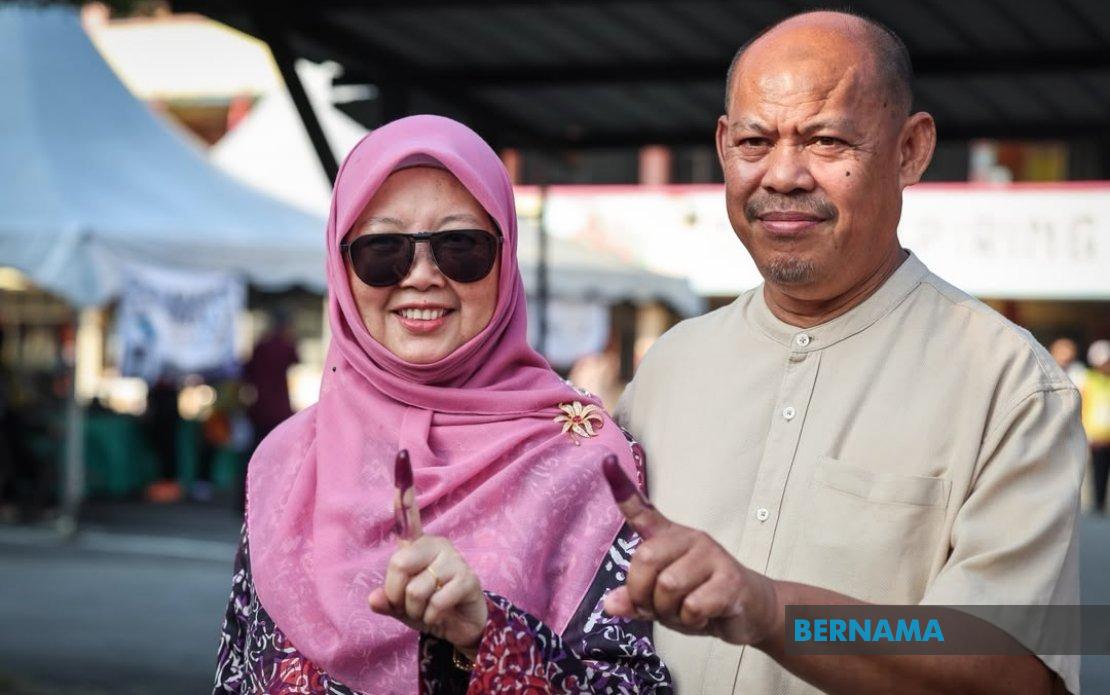
The 16th Johor state election saw prominent political figures from major parties fulfilling their civic duty among the first wave of voters to arrive at polling stations across the state on July 11. The participation of these senior leaders underscored the significance being attached to the electoral exercise by their respective parties, with early voting serving as a symbol of commitment to the democratic process.
PKR's Johor state chairman, Datuk Seri Dr Zaliha Mustafa, was among those who made the trip to the ballot box at an early hour, arriving at Sekolah Menengah Kebangsaan Bandar Baru Uda in Johor Bahru at 9 am. Accompanied by her husband, Dr Ahmad Adzlan Musa, Dr Zaliha cast her vote in the Larkin constituency. Her presence at the polling station carried particular weight given her previous tenure as Minister in the Prime Minister's Department overseeing Federal Territories, a position that demonstrated her standing within the national political establishment.
Drawing from her experience in high-level government office, Dr Zaliha offered guidance to the electorate on their participation in the voting process. She appealed to Johor residents to seize the opportunity to vote early in the day, citing meteorological forecasts predicting significant rainfall from midday onwards through the afternoon hours. Her advice reflected a practical concern that inclement weather could deter voters from turning out later in the day, potentially affecting overall participation rates in certain areas across the state.
The Democratic Action Party's state chapter in Johor was similarly represented at the early voting phase, with party chairman Teo Nie Ching appearing at Sekolah Jenis Kebangsaan Cina Kulai Besar in the Kulai district approximately thirty minutes after the PKR leader had cast her ballot. The timing of these appearances suggested a coordinated approach among opposition-aligned parties to demonstrate enthusiasm for the electoral process and set an example for their supporters.
The choice of voting locations by these party figures carried subtle messaging implications. Dr Zaliha's presence at a national-type school in the Bandar Baru Uda area, coupled with voting in the Larkin constituency, placed her in a demographic heartland where urban voters with mixed ethnic backgrounds represent a significant electoral force. Teo Nie Ching's selection of a Chinese-language school as her polling venue similarly reflected attention to the composition and preferences of her party's core support base in Kulai, an area with substantial Chinese and Indian communities alongside Malay voters.
The early voting pattern established by these leaders aligned with a broader strategy observed across Malaysian elections where party hierarchies make conspicuous appearances during the opening hours of polling. This approach serves multiple tactical purposes: it generates immediate media coverage, projects an image of confidence and organisational readiness, and sends implicit signals to party workers and supporters about the importance of rapid mobilisation on election day. The prominence given to these appearances in media reports amplified their symbolic value beyond the individual act of casting votes.
Weather considerations emerged as a significant factor influencing both the timing recommendations and the overall conduct of polling operations. Tropical regions like Johor frequently experience afternoon thunderstorms during certain seasons, and election organisers have historically found that rainfall can suppress voter turnout, particularly among older citizens and those with mobility challenges. Dr Zaliha's explicit public warning about expected precipitation thus served a dual function: encouraging early participation while also potentially explaining lower afternoon turnout figures that might otherwise be interpreted as reflecting diminished electoral enthusiasm.
The participation of PKR and DAP representatives highlighted the coalition dynamics within Johor's opposition-aligned movement. Both parties form part of broader alliance structures at the national level, and their simultaneous early voting actions reinforced messaging about unity and coordination. However, the separate voting venues and lack of joint appearances also reflected the reality that these parties maintain distinct organisational identities and operate somewhat independently at the state and district levels, even while coordinating on broader electoral strategy.
For Malaysian observers of electoral politics, the prominence accorded to senior politicians' voting activities underscores how election day participation functions as a performance of democratic commitment. Unlike nations where early and mail-in voting is routine, Malaysian elections concentrate physical voting into a single day, making the act of appearing at a polling station inherently more visible and newsworthy. This structural feature amplifies the symbolic importance of voting appearances by political figures, turning what might elsewhere be a private civic act into a public display of political engagement.
The Johor state election itself carried particular strategic significance within Malaysia's broader political landscape. As one of the country's economically important and historically consequential states, electoral outcomes in Johor have often reflected and influenced national political trajectories. The visible participation of high-profile party leaders signalled that both PKR and DAP were treating this contest with strategic seriousness, committed to mobilising their organisational resources and demonstrating voter appeal across diverse constituencies within the state.

