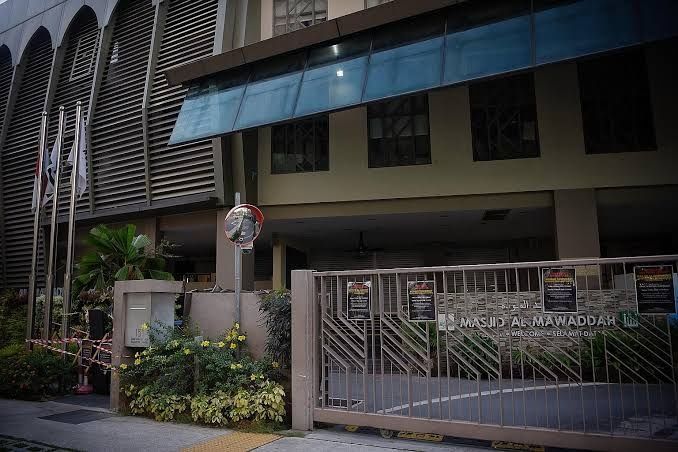
A 42-year-old senior finance executive at Al-Mawaddah Mosque in Compassvale Bow, Sengkang, has been formally charged with criminal breach of trust following allegations that he misappropriated more than S$14,000 from the mosque's donation boxes. Mohamed Muhaimin Mohamed Sulaiman was charged on August 12 with a single count of the offence, which prosecutors allege occurred on at least 15 separate occasions spanning a four-month period.
The alleged misappropriation took place between February 6 and May 15, according to court documents. Singapore police confirmed they received an initial report about the matter on May 16, which subsequently triggered an investigation that culminated in formal charges being laid three months later. The timing of the discovery and the relatively lengthy investigation period suggest that authorities conducted a thorough review of financial records and donation collection procedures at the mosque before proceeding with prosecution.
Muhaimin, who held a position of financial responsibility at the place of worship, has been released on bail set at S$10,000. His case will return to court for further mention on September 16, at which point prosecutors or his legal representatives may present additional evidence or seek adjournments. The bail conditions allow him to remain free pending the progression of legal proceedings, though the specific terms and restrictions imposed as part of his release have not been disclosed.
The charges carry serious potential consequences. If convicted, Muhaimin faces a maximum prison sentence of 15 years and an undisclosed fine under Singapore's criminal breach of trust statutes. Such penalties underscore the gravity with which authorities treat financial crimes committed within religious institutions, where funds are entrusted to officials for community purposes. The conviction threshold requires prosecutors to prove beyond reasonable doubt that the accused held property in a position of trust and dishonestly misappropriated it for personal benefit.
The Islamic Religious Council of Singapore, the primary governing body overseeing mosque administration and religious affairs across the island-state, has not yet publicly confirmed whether Muhaimin remains employed at the mosque or whether he has been suspended pending trial. News organisations have reached out to the council seeking clarification on his current employment status, though responses remain pending. This uncertainty reflects the procedural gaps that can emerge when criminal charges are filed against religious institution employees, as organisations often await formal conviction before making definitive personnel decisions.
The Al-Mawaddah Mosque sits within Sengkang, one of Singapore's major public housing estates serving a predominantly Malay-Muslim community. The institution functions as both a spiritual centre and a repository for community donations used for charitable purposes, religious education, and mosque maintenance. The alleged breach of trust strikes at the heart of the implicit social contract between mosque administrators and their congregants, who donate in good faith believing their contributions will be used appropriately.
Donation box systems remain commonplace across Singapore's mosques and other religious establishments, yet the Al-Mawaddah case highlights vulnerabilities in financial oversight mechanisms. The alleged theft spanning at least 15 instances suggests that detection safeguards may have been insufficient or that internal control measures designed to prevent unauthorised withdrawals were inadequately implemented. This raises broader questions about financial governance standards within Singapore's religious institutions and whether uniform auditing procedures should be mandated across all houses of worship.
The four-month period between the police report in mid-May and the formal charges in mid-August indicates that investigators needed considerable time to reconstruct the pattern of alleged misappropriation, likely reviewing donation collection records, CCTV footage, bank statements, and employment documentation. The specification of 15 separate occasions suggests that rather than a single large theft, Muhaimin allegedly removed smaller sums repeatedly, a pattern often associated with attempted concealment from auditors or supervisors conducting routine checks.
For Malaysian readers, this case carries particular resonance given the ongoing regional discussions surrounding financial accountability and corruption within both religious and secular institutions. Malaysia has witnessed several high-profile cases involving misappropriation of funds from mosques and Islamic religious bodies, prompting calls for stronger oversight mechanisms. The Singapore prosecution demonstrates how systematic investigation and transparent criminal proceedings can address such breaches, contrasting with varying approaches taken across different Southeast Asian jurisdictions.
The case also reflects growing international scrutiny on protecting charitable donations and ensuring that funds designated for religious and community purposes are actually deployed as intended. Concerns about donation misuse, whether at mosques, temples, churches, or other faith-based organisations, resonate across Singapore's multi-religious society and prompt institutional reviews of donation handling procedures. The Al-Mawaddah matter will likely prompt other mosques to audit their own financial controls and donation management systems, establishing precedent for enhanced accountability standards.

