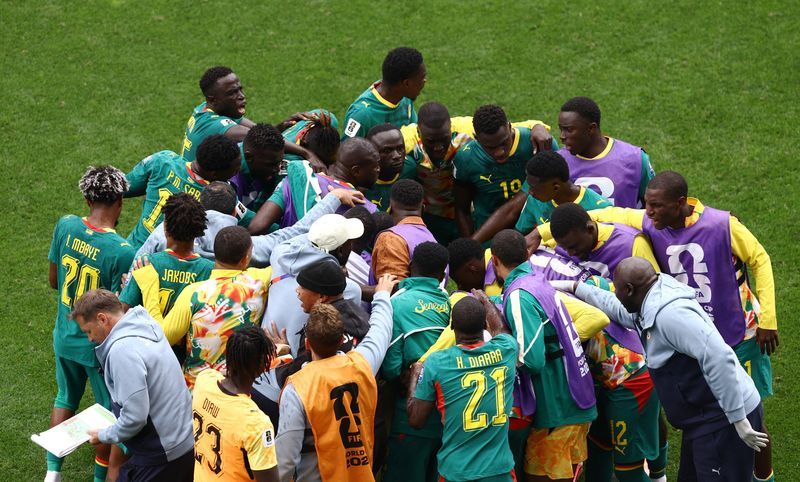
Senegal's football federation has found itself at the centre of a medical credibility crisis following the country's disappointing performance at the World Cup in North America, with federation president Abdoulaye Fall publicly questioning the team doctor's professional background and suitability for the role. The controversy emerged as officials began reviewing what went wrong during a campaign that fell far short of expectations, prompting Fall to hold a press conference on Monday where he made startling allegations about the medical support infrastructure provided to the national squad.
According to Fall's account, the team doctor lacked the specialised qualifications necessary to manage a World Cup campaign, having trained in gynaecology rather than sports medicine. The federation chief further suggested that this deficiency was discovered relatively late in the tournament preparation process, creating anxiety amongst players about the quality of medical care available to them. Fall stated that he had received feedback from squad members expressing insufficient confidence in the team doctor's ability to meet their healthcare needs during such a high-stakes competition.
In response to growing player concerns, Fall explained that the federation took steps to bring in additional medical expertise to restore confidence within the squad. He emphasised that securing reassurance from players about their medical safety was a priority that superseded other considerations. "We had to find convincing expertise so they could feel reassured, because health comes before everything," Fall declared at the press conference, underscoring the federation's belated attempt to address what had become a morale issue.
However, the allegations immediately drew a sharp rebuttal from Senegal's sports medicine establishment. The Senegalese Association of Sports Medicine issued a statement late Monday characterising Fall's claims as both unfounded and defamatory. The professional body moved swiftly to defend the reputation of the doctor in question, providing detailed information about his actual qualifications and experience.
The association revealed that team doctor Abderahmane Fediore holds a specialist diploma in sports medicine and sports biology from Cheikh Anta Diop University's faculty of medicine, directly contradicting the federation president's assertion that he was trained as a gynaecologist. This credential carries significant weight in West African medical contexts, as Cheikh Anta Diop University is one of Senegal's most prestigious institutions. The qualification in sports medicine and biology is precisely what one would expect of a doctor managing a national football team at international level.
Fediore's professional history further undermines Fall's criticisms. He previously served as head of the physiotherapy department at Fann Hospital, one of Senegal's leading medical facilities, demonstrating substantial experience in clinical practice and patient management. More importantly for the current dispute, Fediore has served as Senegal's team doctor continuously since 2017, a tenure spanning multiple major tournaments. His resumé includes participation in three World Cup campaigns and five Africa Cup of Nations competitions, making him far from a novice in international football medicine.
The timing of Fall's allegations raises questions about whether they represent a genuine concern that festered throughout the tournament or whether they emerged as a convenient explanation for failure once results disappointed. Senegal had entered the World Cup with genuine aspirations of making a strong showing, riding high on the momentum of winning the Africa Cup of Nations in January by defeating Morocco in the final. That continental success had positioned the team as a potential force in global competition, making the subsequent World Cup disappointment all the more acute.
Senegal's tournament campaign proved deeply frustrating for the football federation and supporters alike. The team lost its opening two group matches to France and Norway, immediately placing themselves under severe pressure. The subsequent match against Belgium offered a moment of redemption possibility when Senegal established a commanding 2-0 lead, but the squad surrendered that advantage spectacularly with just five minutes remaining in regular time. Belgium equalised and then scored again in extra time to secure a 3-2 victory and advance at Senegal's expense, eliminating the African representatives in the knockout stages.
The poor showing led the federation to sack coach Pape Bouna Thiaw on Saturday, concluding that the World Cup results necessitated a change in technical direction. Yet the doctor controversy suggests that questions about squad preparation, management, and support extend beyond the coaching staff alone. For Malaysian and Southeast Asian readers following African football developments, the dispute illustrates how post-tournament recriminations can create internal divisions within federations, potentially damaging institutions when accountability should focus on systematic improvement.
The clash between Fall and the sports medicine association represents a broader tension in how some African football federations handle failure and accountability. By directing criticism at support staff rather than engaging in thorough institutional review, federations risk alienating qualified professionals and creating an environment of blame rather than constructive analysis. For Senegal, rebuilding credibility after a disappointing World Cup will require resolving this internal dispute and demonstrating unified vision moving forward.

