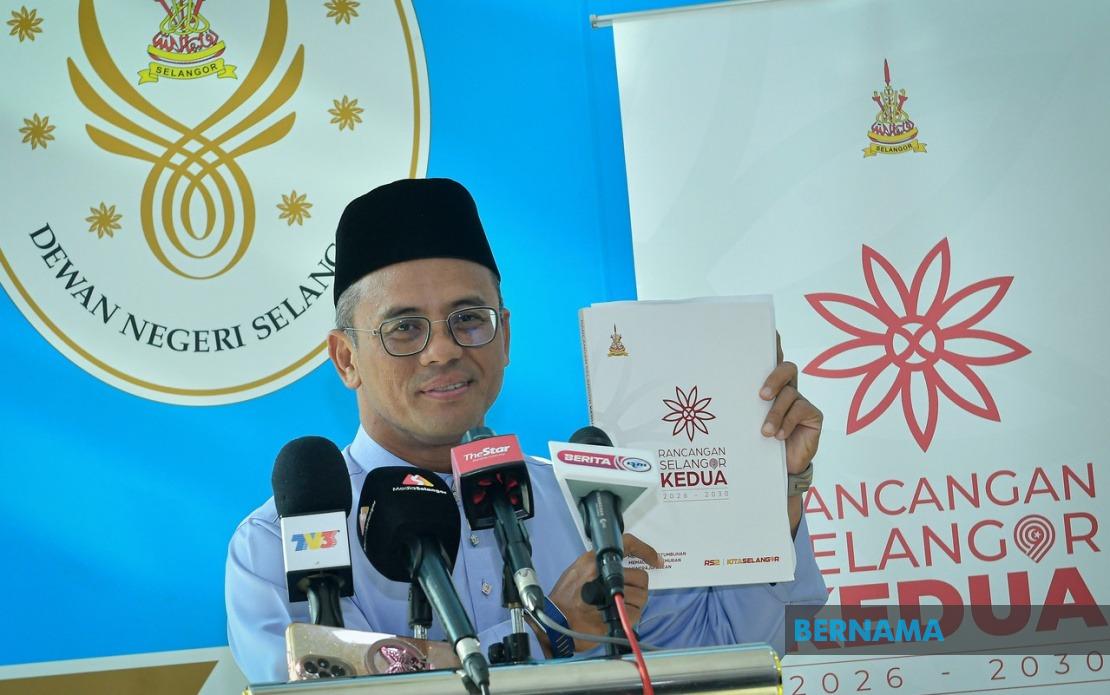
Selangor's local authorities face an ambitious mandate to elevate their service performance to new heights under the state government's Second Selangor Plan (RS-2), with Menteri Besar Datuk Seri Amirudin Shari setting a 2030 deadline for all municipal and local councils to achieve a 95 per cent rating on the PBT Star Rating System (SPB-PBT). The initiative represents a significant shift toward standardising public service delivery quality across the state's diverse administrative jurisdictions, moving away from a system where excellence in service provision was concentrated in select areas toward a model where all Selangor residents benefit from consistent, high-quality governance.
The performance target underpins a broader philosophical commitment embedded in RS-2 to democratise service excellence. Rather than tolerating disparities where some constituencies enjoy superior municipal services whilst others lag behind, the state government has made universal access to quality service the cornerstone of its governance agenda. This approach recognises that local authorities serve as the primary interface between government and citizens, handling essential functions from waste management and licensing to urban planning and community development. When service standards vary significantly across jurisdictions, it creates inequitable outcomes that undermine public confidence in local governance and can exacerbate economic disparities between neighbourhoods.
Accompanying the rating system target is an equally ambitious digital transformation initiative. Amirudin outlined plans to achieve 85 per cent End-to-End Digital Government Service Sharing by 2030, fundamentally restructuring how residents and businesses interact with local authorities. This digitalisation push extends beyond surface-level convenience, representing a comprehensive reimagining of administrative workflows to minimise bureaucratic friction, reduce processing times, and enhance data interoperability across municipal systems. For Malaysian citizens accustomed to multi-step, in-person procedures at local government offices, such integration promises substantial time savings and improved transparency in public service delivery.
The Menteri Besar stressed that achieving these targets demands heightened accountability and responsiveness from local authorities. He emphasised that complaints and feedback—whether lodged through social media, online portals, or traditional channels—must receive serious attention and prompt resolution. This directive tacitly acknowledges the growing reality that citizen expectations have shifted fundamentally; in an age of instant digital communication, bureaucratic sluggishness in addressing complaints generates public frustration and erodes trust. By institutionalising rapid response mechanisms, the state government is attempting to bridge the gap between citizen expectations and administrative capacity.
Beyond service quality metrics, RS-2 addresses a structural vulnerability in Selangor's finances that has long concerned economists and policymakers. The state's overwhelming reliance on land-based revenue—approximately 75 per cent derives from land premiums and rental income—creates significant fiscal risk. Property market cycles, land availability constraints, and shifting urban development patterns could severely jeopardise the state's financial capacity to fund essential services. By highlighting this dependency as a critical problem requiring urgent diversification, Amirudin has signalled recognition that Selangor's economic model requires fundamental rebalancing to ensure long-term fiscal sustainability.
To address this revenue challenge, the state government intends to implement multiple strategies. Diversification through innovative financing mechanisms suggests exploring alternative funding sources beyond traditional property-based revenue, potentially including public-private partnerships, performance-based financing, or new tax instruments. Simultaneously, enhanced participation from government-linked companies (GLCs) and private sector entities in state development initiatives aims to leverage external capital and expertise whilst spreading financial risk across multiple stakeholders. This approach reflects contemporary best practices in sub-national governance, where diversified revenue bases and collaborative financing arrangements provide greater resilience than narrow revenue streams.
A particularly notable innovation is the planned establishment of a fully integrated State Investment Holding Company, which would consolidate and coordinate the state government's portfolio of GLCs and state-owned enterprises. Currently, Selangor's various state entities often operate with limited coordination, leading to functional duplication, inefficient capital deployment, and suboptimal returns on public investments. A unified holding structure would enable the state government to rationalise subsidiary companies' roles, eliminate overlapping functions, and direct resources toward emerging priorities—particularly in technology-driven and service-based economic sectors identified as crucial for future competitiveness.
The alignment of GLCs with state strategic priorities carries substantial implications for Selangor's economic development trajectory. Rather than treating state-owned enterprises as independent fiefdoms or vehicles for political patronage, RS-2 envisages them as coordinated instruments of state economic policy. This reorientation would enable the government to pursue deliberate sectoral strategies—such as developing technology hubs, supporting green industries, or nurturing service sector excellence—through systematically aligned GLC investments and operations. When successful, such coordination can generate multiplier effects, as state-owned entities and private companies coordinate to build industrial ecosystems with genuine competitive advantages.
For Malaysian business observers and regional economic analysts, RS-2's emphasis on technology and service-based sectors reflects broader Southeast Asian development trends. As labour-intensive manufacturing increasingly relocates to lower-cost jurisdictions and traditional commodity-based revenues face cyclical pressures, advanced economies in the region are repositioning around knowledge work, financial services, digital innovation, and high-value manufacturing. Selangor's pivot in this direction acknowledges that sustained prosperity requires repositioning from land-dependent revenue toward human capital development and innovation-driven economic activity. This strategic reorientation will likely influence investment patterns and talent attraction across the state over the coming decade.
The implementation of RS-2's ambitious targets faces genuine operational challenges. Achieving a 95 per cent rating across all of Selangor's local authorities requires not merely setting targets but fundamentally improving administrative capacity, training staff, upgrading information systems, and transforming organisational cultures. Some local authorities may lack adequate financial resources or technical expertise to implement necessary improvements independently. Additionally, the digitalisation push demands substantial upfront investment in infrastructure and change management, with significant risks if implementation proves uneven or poorly executed. Success will ultimately depend on the state government's willingness to provide adequate funding, technical support, and sustained political attention over the 2030 deadline.
The Second Selangor Plan also implicitly acknowledges that governance quality directly affects economic competitiveness and quality of life. International evidence demonstrates that jurisdictions with high-performing local governments consistently attract greater investment, retain talented residents, and experience better long-term economic outcomes. By targeting universal service excellence and fiscal sustainability, Amirudin is positioning Selangor to compete effectively within Malaysia and Southeast Asia for high-value economic activity and human capital. Whether these ambitious 2030 targets become catalysts for genuine institutional transformation or merely aspirational statements will significantly shape Selangor's trajectory in the coming decade.

