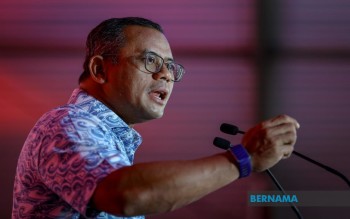
Selangor has cemented its position as Malaysia's dominant economic engine with gross domestic product growth that far outpaces the rest of the nation. The state's economy expanded by RM28 billion in 2025 to reach RM460.1 billion, according to official figures released by the Department of Statistics Malaysia. Menteri Besar Datuk Seri Amirudin Shari highlighted that this expansion represents growth nearly twice that of any other state in the country, underscoring Selangor's unrivalled economic momentum during what has been a period of cautious expansion for the broader Malaysian economy.
The scale of Selangor's economic contribution continues to reshape Malaysia's regional hierarchy. The state now accounts for 26.5 per cent of the national economy, up from 26.2 per cent the previous year—a modest but significant shift that reflects deepening concentration of economic activity in the nation's most developed region. Kuala Lumpur, the federal territory that ranks second nationally, recorded GDP growth of RM13.2 billion to reach RM265.1 billion, less than half the absolute growth achieved by its neighbour. The comparative scale becomes even starker when measured against major southern states: Selangor's economy now towers at 1.7 times the size of Kuala Lumpur's and an impressive 2.7 times that of Johor.
What distinguishes Selangor's performance is its outpacing of Malaysia's national economic growth rate. While the country as a whole expanded at 5.2 per cent in 2025, Selangor achieved 6.3 per cent growth—a meaningful differential that suggests the state continues to attract investment and commercial activity at rates exceeding the broader economy. This performance exceeded even optimistic forecasts: Universiti Putra Malaysia and the Selangor Research Institute had projected Selangor would reach approximately RM455.3 billion, making the actual outcome a notable upside surprise.
Three economic sectors drove this expansion, revealing the structural foundations underpinning Selangor's growth trajectory. Services generated RM15.9 billion in incremental output, manufacturing added RM5.3 billion, and construction contributed RM3.7 billion. These figures illustrate Selangor's economic diversification beyond traditional manufacturing, with services—encompassing finance, logistics, telecommunications, and technology—increasingly becoming the principal growth vector. The state's construction sector, meanwhile, reflects ongoing urbanisation and infrastructure development across the region, positioning Selangor as the locus of Malaysia's building boom.
Selangor's sectoral dominance across the national economy underscores its structural importance to Malaysia. The state accounts for 35.9 per cent of all construction activity nationwide, indicating that over one-third of Malaysia's building industry operates within its boundaries. Manufacturing represents an even more entrenched share, with Selangor commanding 32.8 per cent of the national sector—a commanding position built over decades of industrial concentration. The services sector contribution of 27.1 per cent reveals a state increasingly oriented toward higher-value economic activity, reflecting the transition from traditional manufacturing to knowledge-intensive industries that characterise mature industrial economies.
Menteri Besar Amirudin attributed much of this achievement to the First Selangor Plan, a comprehensive five-year socioeconomic development strategy that guided policy from 2021 through 2025. Over this period, the state's economy expanded by a cumulative 33.94 per cent—equivalent to an additional RM116.6 billion in output. This represents far more than incremental growth; it constitutes a fundamental expansion of the state's economic base, with the economy rising from RM343.5 billion before the plan commenced to the current RM460.1 billion. The strategy's emphasis on economic restructuring and diversification appears to have successfully oriented Selangor toward higher-value sectors while maintaining traditional industrial strengths.
Despite these achievements, state leadership is actively resisting complacency. Amirudin has set an ambitious new benchmark: positioning Selangor as the first Malaysian state to achieve a RM500 billion economy. This target, roughly RM40 billion above the current level, would require sustained growth of roughly 4 per cent annually over a three-year period—achievable but demanding continued productivity improvements and investment. The articulation of such a goal signals that state authorities view current performance not as a ceiling but as a platform for further expansion, reflecting confidence in Selangor's trajectory even as it dominates Malaysia's economic landscape.
Invest Selangor, the state's investment promotion agency, emphasised the momentum underlying these figures. The state now stands as the first Malaysian jurisdiction to exceed the RM400 billion mark in consecutive years, having recorded RM406.1 billion in 2023 and now RM460.1 billion in 2025. This two-year trajectory demonstrates sustained acceleration rather than one-time expansion, suggesting structural factors continue supporting rapid growth. The agency positioned these results as vindication of Selangor's competitive advantages as an investment destination, reinforcing the state's appeal to multinational corporations and domestic enterprises alike.
The implications of Selangor's economic concentration extend beyond headline statistics. The state's rising share of national GDP—now at 26.5 per cent—reflects broader patterns of regional concentration that characterise Malaysia's development trajectory. As Selangor pulls further ahead economically, questions emerge about resource distribution, regional equity, and the sustainability of a model wherein a single state generates over one-quarter of national output. Policymakers in less-developed states may view Selangor's growth as both inspiration and cautionary tale: inspiration regarding what economic planning and sectoral development can achieve, but also a reminder that without similar strategies elsewhere, regional inequality may deepen.
State authorities have signalled that economic growth, however impressive in aggregate terms, must translate into tangible improvements for residents. Amirudin emphasised that future policy would prioritise raising living standards and quality of life for Selangor's population. This focus reflects an understanding that GDP growth divorced from household welfare improvements generates political vulnerability and social friction. As Malaysia's richest state becomes even more prosperous in absolute terms, expectations among its residents for corresponding improvements in wages, housing affordability, healthcare, and education inevitably rise. The challenge for state leadership involves ensuring that the benefits of RM460 billion of annual economic activity filter through to ordinary Selangorians in visible, material ways.
For Malaysian business and investment communities, Selangor's performance reinforces established trends. The state remains the preferred location for corporate headquarters, manufacturing operations, and service sector expansion. Foreign investors seeking market entry to Malaysia disproportionately establish operations in Selangor, drawn by superior infrastructure, developed supply chains, and proximity to Kuala Lumpur's administrative and financial institutions. As the state's economy grows and diversifies further, these competitive advantages appear self-reinforcing: successful firms attract talented workers and subsidiary suppliers, creating agglomeration effects that benefit the entire ecosystem. Rival states and federal territories will find it increasingly challenging to compete for high-value economic activity without fundamental improvements in their own competitive positioning.
Looking ahead, Selangor faces the perpetual challenge confronting successful developing regions: sustaining growth momentum while managing the costs of success. Traffic congestion, housing affordability, environmental pressures, and labour shortages already constrain operations for many businesses. The path to RM500 billion will require not merely replicating the conditions that produced recent growth, but actively addressing these constraints. Success will demand strategic infrastructure investment, educational system enhancement to develop local talent, and policy innovations that enable continued expansion while improving resident welfare. In this context, the First Selangor Plan's successor—presumably to be unveiled for the 2026-2030 period—will prove crucial in determining whether Selangor can sustain its trajectory of outperforming the national economy.

