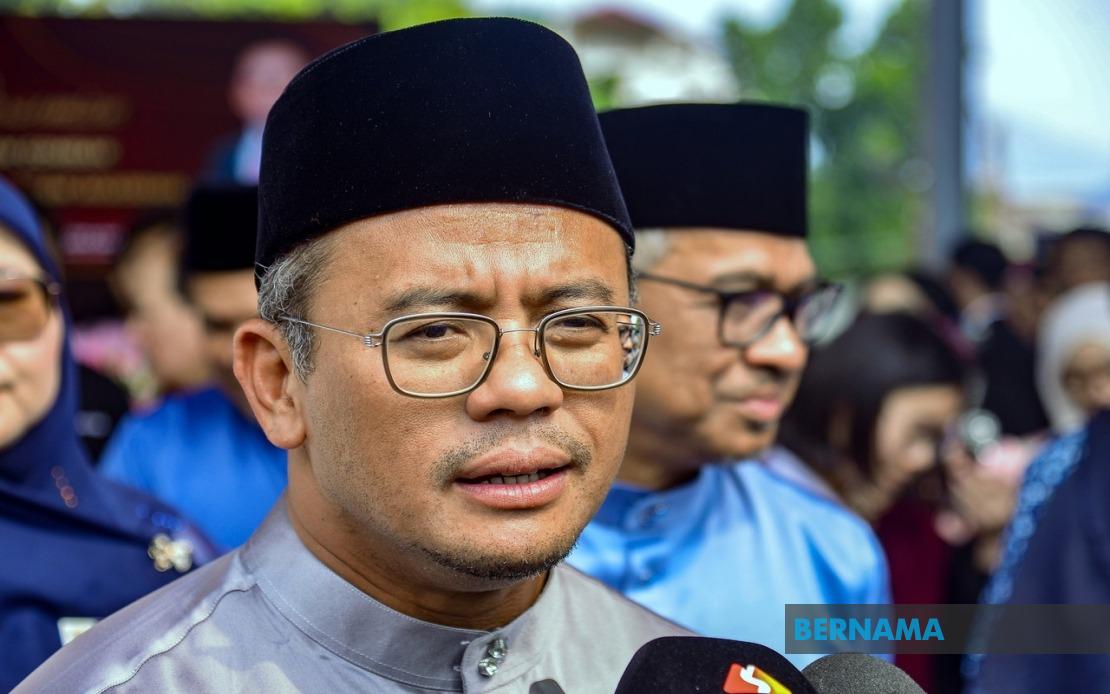
Selangor's government has signalled its intention to substantially revamp and modernize its approach to student development in the coming financial year, with education enhancement and scientific disciplines emerging as central pillars of the 2027 State Budget framework. The commitment, articulated by Menteri Besar Datuk Seri Amirudin Shari during a public engagement at a ceremony in Gombak, reflects growing recognition that the state's vast student population represents both a critical resource for future economic competitiveness and an area requiring targeted governmental investment to unlock full potential.
The strategic emphasis on STEM fields comes at a time when Southeast Asian economies, including Malaysia, face mounting pressure to develop skilled workforces capable of competing in digital and technology-driven sectors. By explicitly dedicating budget resources to expanding student participation in science, technology, engineering and mathematics, Selangor is positioning itself to address workforce shortages that emerging industries identify as crucial bottlenecks to regional economic growth. The focus extends beyond simply offering access to these subjects; rather, it encompasses a holistic approach designed to sustain academic excellence while simultaneously channelling students toward disciplines that carry demonstrable employment prospects.
The scale of Selangor's student body—numbering approximately one million—amplifies the significance of these educational initiatives. Amirudin framed this numerical reality not merely as a logistical consideration but as a multiplicative opportunity, contending that widespread improvements in academic attainment across this cohort would generate substantive positive spillover effects throughout the state economy and the nation broadly. This perspective acknowledges that educational outcomes in Malaysia's largest economic hub carry ramifications extending well beyond individual students, influencing demographic-level productivity, innovation capacity, and social stability across the region.
Infrastructural development constitutes a parallel dimension of the state government's educational agenda, though budget allocation details remain subject to ongoing assessment. Officials are presently engaged in comprehensive data gathering intended to establish precise infrastructure requirements across Selangor's educational institutions before finalizing financial commitments. This measured approach, with finalization anticipated around September or October, suggests that budgetary decisions will rest upon granular understanding of actual conditions rather than broad estimates or general assumptions about school facility needs.
Particular attention has been directed toward a newly established support programme termed Himpunan Pelajar Tingkatan Enam Selangor (HIPSTERS), which exemplifies the state government's willingness to implement innovative mechanisms for student assistance beyond traditional governmental provision. The platform operates as a comprehensive support structure designed to facilitate Form Six students' transition toward tertiary education, addressing both material needs and informational requirements that historically have constrained disadvantaged learners' educational trajectories. By distributing book vouchers and furnishing complimentary internet data access, the programme tackles concrete barriers to learning—resource scarcity and digital connectivity gaps—that disproportionately affect economically vulnerable student populations.
The scaling of the HIPSTERS initiative from its original university-focused design to encompass Form Six cohorts represents a downstream extension of educational support architecture, reflecting recognition that interventions at secondary-to-tertiary transition points carry particular significance. During 2026, the programme distributed book vouchers to 10,000 Form Six students, a substantial expansion from preceding years when participation remained confined to higher education institutions. This quantitative growth underscores administrative confidence in the model's efficacy and organizational capacity to manage enlarged recipient bases.
Looking forward, state officials have explicitly indicated receptiveness to further geographic expansion of the HIPSTERS programme to additional Form Six institutions, contingent upon demonstrated demand and assessed need across the state's secondary education network. This conditional approach to programme expansion suggests a data-responsive administrative philosophy wherein growth decisions derive from empirical assessment of participant demand rather than blanket rollout irrespective of actual utilization patterns. Such calibrated expansion potentially maximizes resource efficiency while ensuring that support reaches students genuinely requiring supplementary assistance.
For Malaysian educators and policymakers monitoring Selangor's trajectory, the 2027 budget announcements carry implications extending across several dimensions. First, they signal a substantive state-level commitment to education that may establish benchmarks influencing policy discussions in other Malaysian states considering comparable investments in student support infrastructure and STEM development. Second, they acknowledge the increasingly critical role of technological and scientific literacy in contemporary economies, positioning educational systems as economic development instruments rather than purely social provision mechanisms. Third, they demonstrate willingness to implement non-traditional support mechanisms—such as voucher systems and internet data provision—that address specific, identifiable barriers to equitable educational access.
The emphasis on STEM participation warrants particular scrutiny given Malaysia's stated ambitions to position itself as a regional innovation hub and technology sector competitor. Educational systems that successfully channel substantial student cohorts toward science and engineering disciplines create labour pipelines supporting advanced manufacturing, biotechnology, software development, and related high-value sectors. Selangor, as Malaysia's economic powerhouse, has particular capacity to influence these dynamics at scale, making its educational investments consequential for national competitiveness beyond purely local considerations.
Implementing these educational expansions presents evident administrative and fiscal challenges that state bureaucracies must navigate effectively. Coordinating STEM curriculum enhancement, strengthening examination preparation, extending digital infrastructure to all participating schools, and managing voucher distribution systems across thousands of schools demands organizational sophistication and sustained resource commitment. The phased approach to infrastructure planning, with finalizations occurring in coming months, suggests recognition that hasty implementation without adequate preparatory assessment risks inefficiency and suboptimal outcomes.
The broader context of this educational focus involves Malaysia's demographic trajectory and labour market evolution. As younger cohorts eventually enter the workforce, educational attainment levels and skill distribution will substantially determine economic participation rates and earnings distributions. Investing now in STEM capabilities and sustained academic excellence for Selangor's one million students thus represents an intergenerational commitment with consequences spanning decades, affecting not only individual life outcomes but aggregate economic productivity and competitiveness across Southeast Asia.

