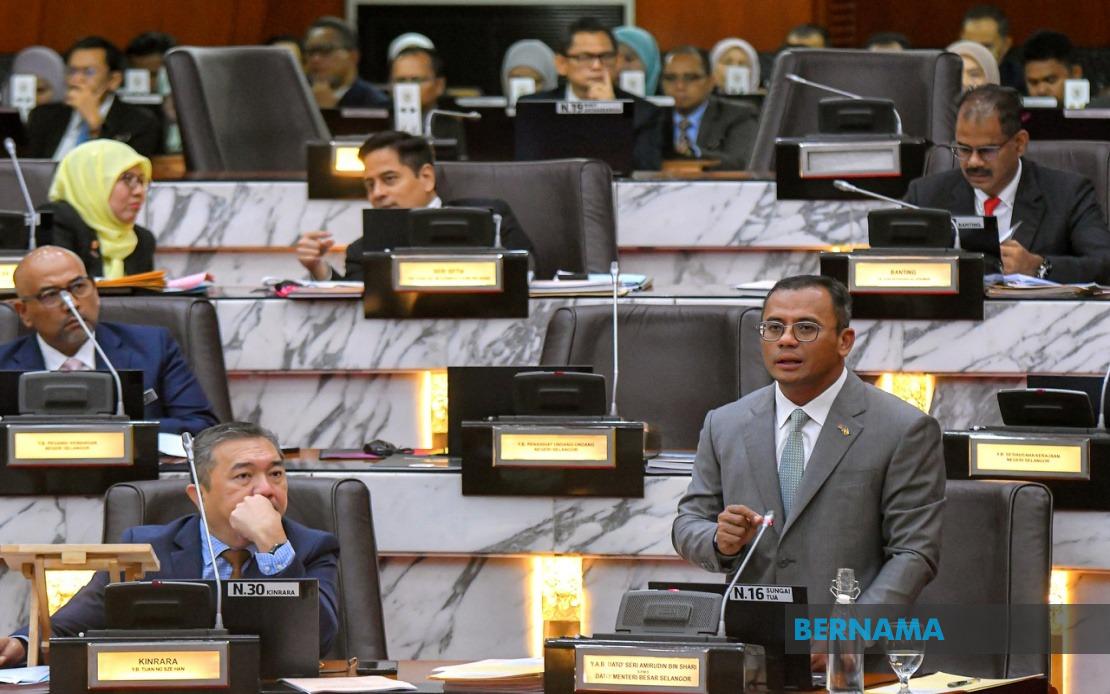
The Selangor government has announced plans to significantly expand its education assistance programme, doubling the number of beneficiaries to 5,000 by next year. Menteri Besar Datuk Seri Amirudin Shari disclosed the initiative during the Selangor State Legislative Assembly session, addressing growing pressure from constituents seeking financial support for higher education. The decision reflects a broader commitment to making university and diploma education more accessible across the state, particularly for students from middle and lower-income backgrounds who struggle with escalating tuition fees.
The expansion represents a marked reversal from current allocations. The programme currently assists 3,000 students annually, yet the state government has recorded overwhelming interest, receiving in excess of 5,000 applications in both 2025 and this year alone. This significant gap between available spots and applicant numbers underscores persistent demand for educational financial aid among Selangor families. The disparity prompted state leadership to reassess budgetary priorities and revenue capacity, ultimately concluding that expanding the scheme remained feasible and necessary.
Financial constraints and fiscal planning have historically limited the programme's reach. Amirudin acknowledged that the state government is conducting a thorough assessment of Selangor's revenue position to determine whether resources can stretch to accommodate between 5,000 and 6,000 recipients. This cautious approach reflects the administration's commitment to sustainable spending while meeting genuine community need. The Menteri Besar indicated confidence that the target is achievable, noting that the state had previously supported 5,000 recipients before the current reduction, and pledging restoration of that level in the 2027 Budget.
The Higher Education Institution Study Incentive, known as HPIPT, provides RM1,000 in annual financial assistance to eligible Selangor students. The grant applies to students enrolled at recognised public and private universities, as well as those pursuing vocational qualifications including Level 4 Skills Certificates and diploma programmes. This broad eligibility framework ensures that the programme benefits not only conventional university undergraduates but also students pursuing technical and professional credentials increasingly sought by employers in Malaysia's evolving economy.
Beyond simply increasing recipient numbers, Selangor's government is contemplating procedural reforms to enhance programme accessibility. The administration is reviewing the application timeline, recognising that students often require weeks after receiving university admission offers before submitting documentation and meeting deadlines. Current processes sometimes compress the submission window, forcing applicants to rush applications or missing opportunities entirely. Extending the application period would provide genuine relief, particularly for students processing multiple offers or awaiting confirmation letters from less organised institutions.
A particularly innovative proposal involves establishing dual application windows throughout the academic year. Since students enrol at different periods depending on the institution and programme type, many miss single annual deadlines. Opening applications twice yearly would accommodate those beginning studies in February or September, aligning with varied intake schedules across Malaysia's higher education landscape. This structural reform would prove especially valuable for students pursuing part-time study or deferred entry, populations currently disadvantaged by inflexible administrative calendars.
The HPIPT programme reflects broader state government priorities regarding social mobility and skills development. As Malaysia transitions toward higher-value economic activities, technical expertise through diploma and certificate qualifications has become equally critical as traditional degrees. By extending financial assistance across multiple educational pathways, Selangor signals recognition that economic competitiveness depends on developing diverse talent pools, not merely university graduates. This inclusive approach acknowledges that skilled trades, healthcare support roles, and digital technicians require substantial investment in human capital.
The expansion carries implications for Malaysia's regional competitiveness within Southeast Asia. Countries such as Thailand and Vietnam have invested heavily in education financing programmes, recognising that educated workforces attract high-value investment and business expansion. Selangor, as Malaysia's economic engine and home to Kuala Lumpur, must maintain educational infrastructure sufficient to supply emerging industries with qualified personnel. Strengthening study assistance programmes signals to investors and multinational corporations that the state actively develops workforce capabilities required for advanced manufacturing, digital services, and research and development operations.
For Malaysian families grappling with rising education costs, the initiative provides meaningful relief during an economically uncertain period. University fees at private institutions routinely exceed RM30,000 annually, while public university living allowances strain household budgets for lower-income families. The RM1,000 annual HPIPT grant, whilst modest in isolation, often determines whether a student can afford accommodation, textbooks, or internet connectivity essential for contemporary study. Multiplying benefit recipients across 5,000 students translates to RM5 million in direct financial assistance redirected toward educational access.
Implementing the expanded scheme will require coordinated efforts across multiple state departments. The State Education Department must process significantly higher application volumes, necessitating additional administrative resources or streamlined digital systems. Financial auditing and verification procedures must verify applicant eligibility without becoming prohibitively cumbersome, balancing integrity with accessibility. Training civil service staff to manage doubled caseloads efficiently will prove essential to programme success and public satisfaction.
The timing of this expansion assumes political and financial stability for the Selangor government through the 2027 Budget cycle. Future economic downturns or revenue shortfalls could jeopardise sustained funding at expanded levels, potentially disappointing beneficiaries if support subsequently contracts. Establishing the programme at higher levels creates constituency expectations and political pressure to maintain benefits, regardless of fiscal conditions. This dynamic requires the state government to explore diversified funding mechanisms, including corporate partnerships or endowment structures that provide long-term sustainability independent of annual government budgets.

