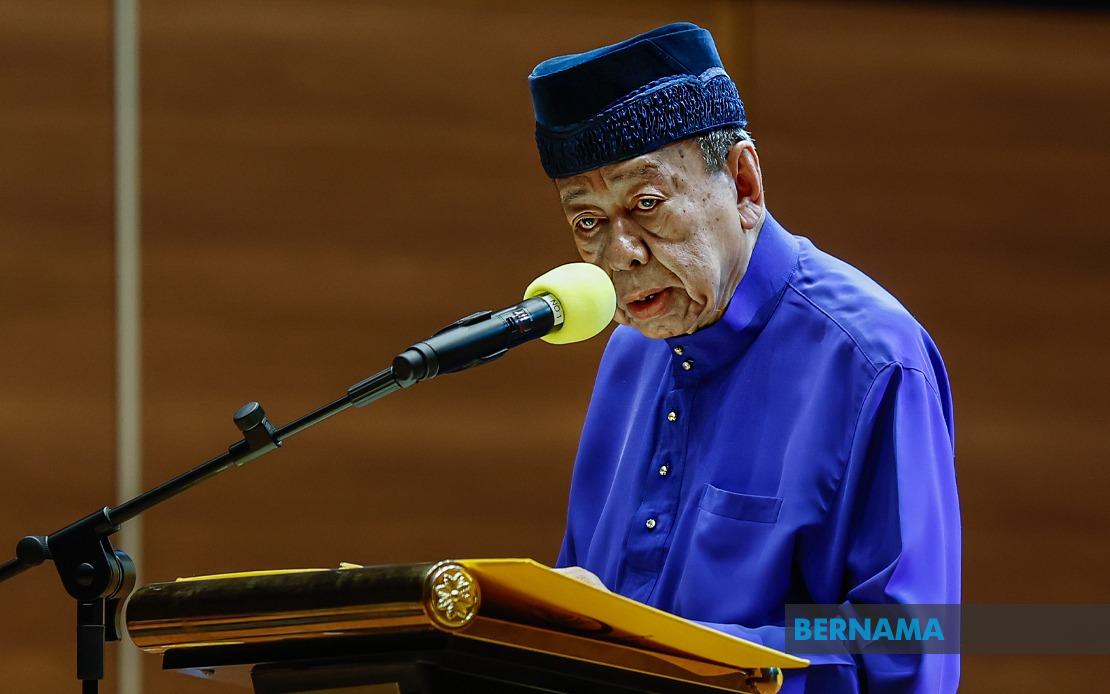
Sultan Sharafuddin Idris Shah has challenged Universiti Teknologi MARA to realign its academic curriculum with the pace of global transformation, stressing that survival in today's employment landscape demands far more than a university diploma. Speaking at UiTM's Royal Address 2026 at Seri Budiman Concert Hall in Shah Alam, the Selangor Sultan articulated a vision where the institution pivots from its traditional mission of producing professionals to one capable of birthing job creators and economic stakeholders. The remarks, delivered before Raja Permaisuri Tengku Permaisuri Norashikin and Higher Education Minister Datuk Seri Dr Zambry Abd Kadir, underscore mounting pressure on Malaysia's premier Bumiputera institution to remain relevant amid rapid technological disruption and shifting workforce demands.
The Sultan's emphasis on curriculum innovation reflects a stark generational shift in employment realities. While previous decades saw the central challenge as securing university admission, today's graduates confront a vastly different struggle: differentiating themselves within an oversupplied talent pool dominated by artificial intelligence and automation. Sultan Sharafuddin specifically identified digital technology, artificial intelligence, science, engineering, medicine, finance, accounting, law, and creative industries as sectors where UiTM must maintain cutting-edge relevance. The inclusion of emerging fields signals recognition that static curricula inevitably produce graduates misaligned with evolving market needs—a pattern increasingly visible across Southeast Asian economies where degree holders struggle despite formal credentials.
Central to the Sultan's message was a conceptual recalibration of UiTM's foundational mission. He acknowledged the institution's undeniable success in creating the Bumiputera professional class, citing this as documented achievement rather than aspirational rhetoric. Yet he simultaneously rejected complacency, arguing that producing salaried professionals—while historically transformative—represents an incomplete vision for national economic development. The distinction between job seekers and job creators carries profound implications for Malaysia's trajectory. A nation reliant predominantly on graduates seeking employment remains economically subordinate to regions generating entrepreneurs who establish enterprises, generate wealth, and create employment ecosystems. This observation resonates particularly for Southeast Asian policymakers contemplating how higher education systems can catalyse indigenous capital formation and economic sovereignty.
Language proficiency emerged as a practical competency receiving royal emphasis. The Sultan urged every UiTM student and graduate to master at least two foreign languages, recognising that communicative capacity in an interconnected world directly correlates with career mobility and business acumen. This directive acknowledges Malaysia's regional position within broader Asian economic networks where linguistic versatility facilitates cross-border collaboration, foreign investment engagement, and international market access. For a nation with significant diaspora communities and growing business integration with ASEAN partners, monolingual graduates face inherent competitive disadvantages—a reality particularly acute in technology, finance, and professional services sectors where international communication forms part of routine work.
The Sultan's framing of UiTM's constitutional moorings represented a crucial doctrinal assertion. By emphasising the Universiti Teknologi MARA Act 1976 and Article 153 of the Federal Constitution as the institution's foundational scaffolding, Sultan Sharafuddin positioned UiTM's Bumiputera-focused mandate not as administrative convenience but as constitutional imperative. This juridical grounding matters significantly given periodic public debate about whether affirmative action policies warrant revision. The Sultan argued that substantive modification to UiTM's identity or objectives transcends ordinary administrative decision-making and necessarily engages constitutional frameworks. Simultaneously, he differentiated between defending UiTM's specific mission and denying educational access to other communities, noting Malaysia's diversified higher education ecosystem accommodates all citizens.
The Sultan's observation that the educational and socioeconomic gap between Bumiputera and non-Bumiputera populations persists functions as both empirical claim and philosophical justification. By anchoring UiTM's continued purpose to measurable inequality, he contended that the institution's founding mandate remains incomplete. This reasoning carries implications beyond Malaysia, resonating with broader Southeast Asian and postcolonial development questions about how institutions designed to redress structural inequality should evolve once they mature. The Sultan essentially argued that institutional mission longevity depends on condition persistence—an uncomfortable truth suggesting that UiTM's transformation trajectory depends partly on whether the socioeconomic disparities it was established to address continue characterising Malaysian society.
Industry partnership surfaced as a mechanisms for bridging theory-practice divides endemic to academic institutions globally. The Sultan cautioned against producing graduates possessing qualifications yet lacking applied capabilities, confidence, linguistic facility, analytical reasoning, and industry-demanded technical skills. This critique echoes complaints from employers across Malaysia and Southeast Asia that university output frequently misaligns with workplace requirements. Stronger industry-academia collaboration typically yields curriculum that integrates contemporary tools, methodologies, and competencies while providing students exposure to real-world problem-solving before graduation. Such partnerships also facilitate employer feedback mechanisms enabling universities to calibrate offerings against evolving sectoral needs rather than responding reactively years after skills gaps emerge.
The Sultan's invocation of UiTM's historical purpose—narrowing educational and socioeconomic gaps among Malays and Bumiputera—positioned the institution within Malaysia's postcolonial development narrative. UiTM emerged during a period when higher education access and professional opportunity remained severely circumscribed for Bumiputera populations despite constitutional protections. The institution's subsequent success in producing generations of Bumiputera professionals, corporate leaders, and government officials ranks among Malaysia's notable social development achievements. However, the Sultan's framing suggests that institutional evolution beyond elite professional production toward entrepreneurship and economic ownership reflects not abandonment but maturation of this original mandate—progressing from accessing existing opportunity structures toward constructing new ones.
The theme of excellence anchoring national development, explicit in the royal address's title, suggests a philosophical repositioning where institutional prestige derives not merely from producing educated individuals but from catalysing systemic economic advancement. This formulation implicitly critiques educational frameworks treating university completion as terminal achievement rather than foundation for value creation. For Malaysia specifically, economic development increasingly depends on innovation, entrepreneurship, and competitive service sector participation—domains where UiTM graduates might contribute more substantially through startup formation and business ownership than through traditional professional pathways. The Sultan's vision, therefore, represents adaptation to structural economic realities rather than departure from institutional principles.
Looking regionally, the Sultan's remarks illuminate challenges facing comparable institutions across Southeast Asia. Universities throughout the region struggle balancing tradition with transformation, managing equity mandates while pursuing excellence, and producing graduates capable of competing globally. Singapore's polytechnic model, Thailand's technical universities, Vietnam's emerging tech-focused institutions, and Indonesia's state universities all confront similar tensions. UiTM's specific context—constitutional moorings, affirmative action mission, established prestige, and Bumiputera focus—remains unique. Yet the underlying challenge of maintaining relevance while preserving identity transcends borders. The Sultan's articulation of how constitutional obligation coexists with innovation imperative offers conceptual frameworks potentially valuable for other Southeast Asian institutions navigating parallel transitions.
The practical implications for UiTM's governance and strategic direction appear substantial. Curriculum overhaul toward emerging fields, industry partnership expansion, language proficiency requirements, and entrepreneurship emphasis collectively suggest significant institutional reorientation. Implementation requires substantial resource allocation, faculty retraining, and infrastructure investment. Yet the royal imprimatur, delivered publicly before the Higher Education Minister, signals political support for such transformation. This institutional backing matters considerably in Malaysia's higher education ecosystem, where state institutions operate within political frameworks and royal endorsement carries genuine consequence. The Sultan's speech thus functions simultaneously as diagnosis, prescription, and mandate—identifying institutional challenges while proposing solutions and providing political cover for their implementation.

