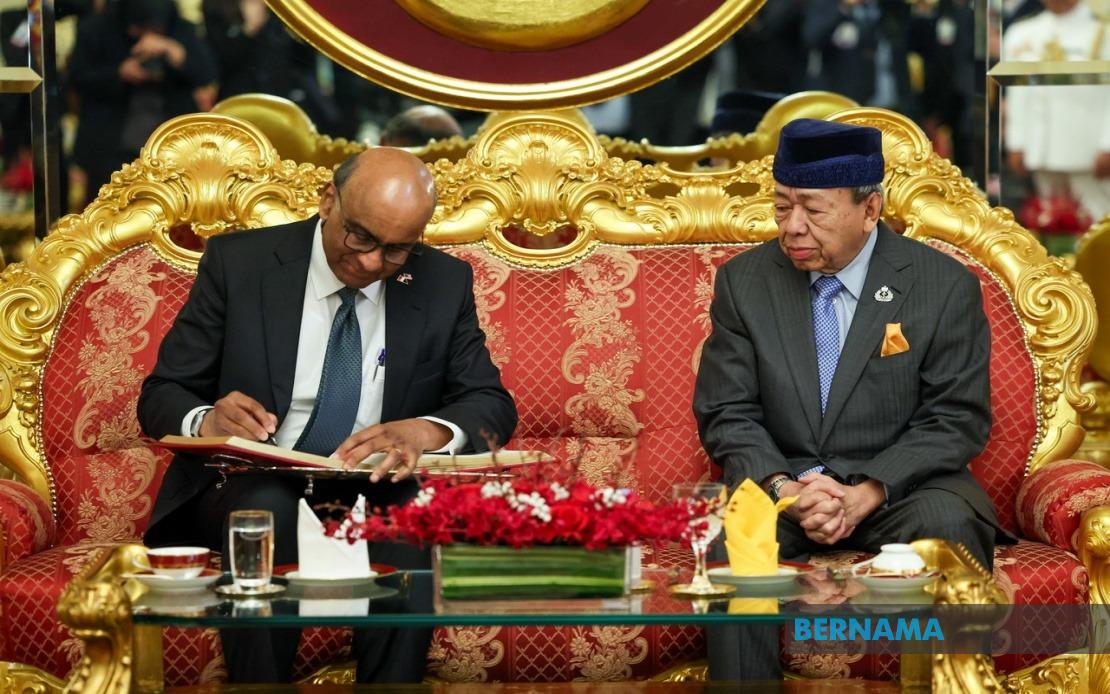
Sultan Sharafuddin Idris Shah, the Sultan of Selangor, welcomed Singapore President Tharman Shanmugaratnam at Istana Alam Shah in Klang on July 14, marking a significant moment in bilateral relations between the two neighbouring nations. The meeting, which commenced at 11 am, formed part of the Singapore president's official three-day state visit to Malaysia running from July 13 to 15, an engagement undertaken at the formal invitation of His Majesty Sultan Ibrahim, King of Malaysia. The audience represented one of the key engagements during the presidential visit and underscored the diplomatic importance both countries place on high-level state interactions.
The Raja Muda of Selangor, Tengku Amir Shah, received President Tharman upon his arrival at the palace, demonstrating the ceremonial significance afforded to the visit. Entrepreneur Development and Cooperatives Minister Steven Sim attended the meeting in his capacity as minister-in-attendance, a role designated to facilitate government coordination during the state visit. The presence of these officials reflected the formal nature of the engagement and Malaysia's commitment to honouring its guest at the highest levels of state protocol.
The audience proved substantive in duration, lasting approximately one hour and forty minutes before concluding at 12.40 pm. This extended timeframe suggested the depth of discussions held between the Selangor Sultan and the Singapore president, likely covering bilateral matters of mutual interest and regional concerns. The length of such audiences often indicates the significance both parties attach to strengthening their relationship and addressing substantive issues beyond ceremonial pleasantries.
This visit carries particular diplomatic weight as it reciprocates Sultan Ibrahim's state visit to Singapore in May 2024, when Malaysia's Yang di-Pertuan Agong travelled to the island republic on May 6 and 7. Such reciprocal engagements form the backbone of sustained diplomatic relations between neighbouring states, allowing for continuity in dialogue and the reinforcement of bilateral bonds. The Foreign Ministry's emphasis on this reciprocal arrangement highlights how both countries maintain a balanced approach to high-level state interactions, ensuring neither nation is perceived as taking precedence in the relationship.
Singapore's strategic importance to Malaysia extends far beyond ceremonial state visits. The city-state ranks as Malaysia's second-largest trading partner globally and, more significantly, stands as the largest trading partner among all Association of Southeast Asian Nations member states. This economic dimension underscores why visits at the presidential level command such attention and why both nations invest diplomatic capital in maintaining robust state-to-state relations. The trade relationship generates substantial economic activity and employment across both countries, making these high-level engagements vehicles for discussing trade facilitation, investment flows, and economic cooperation.
The timing of President Tharman's visit reflects broader patterns of engagement within the ASEAN region. As Southeast Asia navigates complex geopolitical dynamics, including great power competition and regional economic integration challenges, state visits between major regional players take on additional significance. Malaysia and Singapore, as founding members of ASEAN with longstanding ties, often serve as barometers for regional stability and cooperation. Their bilateral relationship influences broader ASEAN dynamics and demonstrates the region's commitment to multilateralism and peaceful resolution of differences.
For Malaysians following this diplomatic engagement, the visit represents continuity in government relations and a reaffirmation of the strategic partnership that has developed over decades of coexistence and cooperation. While Malaysia and Singapore have experienced their share of tensions historically, their modern relationship has evolved into one characterised by pragmatism and mutual recognition of interdependence. The Selangor Sultan's audience with President Tharman exemplifies this matured relationship, where formal protocols and state ceremonies serve to cement diplomatic bonds.
The choice of Istana Alam Shah as the venue for this audience carries symbolic weight. As the official residence of the Selangor Sultan, hosting the Singapore president at this palace underscores the state's role within Malaysia's federal system and the respect accorded to Selangor within the national framework. Selangor, as the most economically developed state and home to Malaysia's manufacturing and financial sectors, serves as a gateway for international engagement. The location thus amplifies the bilateral importance of the meeting and demonstrates how state-level protocols integrate within Malaysia's broader diplomatic architecture.
For Singapore, the visit provides an opportunity to engage with Malaysia's leadership at multiple levels, from the federal government through to state rulers. This multi-layered approach to diplomacy reflects the complexities of Malaysia's constitutional monarchy and federal structure, where state rulers maintain important ceremonial and cultural roles. By conducting a visit that includes engagement with both national leadership and state sultans, Singapore reinforces its understanding of Malaysia's unique political system and its commitment to respecting the full breadth of Malaysian institutional arrangements.
The security and logistical arrangements surrounding such state visits, while not explicitly detailed in formal announcements, represent significant undertakings for both countries. These visits require extensive coordination between Malaysian and Singaporean diplomatic and security personnel, demonstrating the institutional capacity both nations possess for managing high-level international engagement. The seamless execution of such visits, often taken for granted by observers, reflects years of refined protocols and established relationships between government agencies.
Looking forward, state visits of this nature typically generate follow-up mechanisms and working groups tasked with implementing agreements or addressing issues raised during the audience. While the details of what President Tharman and Sultan Sharafuddin discussed remain confidential, the visit likely covered trade matters, regional security concerns, and possibly issues affecting the substantial populations living in both countries with ties across the border. Such conversations form the foundation upon which practical bilateral cooperation is built.
The broader context of this visit includes Malaysia's continued emphasis on strengthening ASEAN unity and regional cooperation frameworks. By hosting the Singapore president at the state level and through the national government, Malaysia demonstrates its commitment to maintaining relationships with key regional partners. This approach serves Malaysia's strategic interests by diversifying its diplomatic engagement and ensuring multiple channels for dialogue exist between the two nations, reducing the risk that any single disagreement escalates into a broader rupture in relations.
As both countries move forward, the relationship between Malaysia and Singapore will likely continue to deepen in economic integration, cultural exchange, and diplomatic cooperation. State visits of this nature serve as periodic reaffirmations of commitment to these partnerships and provide opportunities to reset diplomatic agendas and address emerging challenges. The audience at Istana Alam Shah thus represents not merely a ceremonial moment but a substantive engagement in the ongoing project of building and maintaining prosperous, stable relations between two of Southeast Asia's most important nations.

